Buttery Poppy Seed Açma Pull-Apart Bread
Soft, flaky Turkish-style pull-apart bread swirled with sweet poppy seed paste. A buttery, golden treat perfect for breakfast or brunch.
Published 10 min read
- Total time
- Prep
- Cook
- Rest
- Serves
- 12
- Makes 12 rolls
- Cuisine
- Turkish
- Calories
- 380
- per serving, estimated

On this page16 sections
These Turkish açma rolls are a celebration of butter and poppy seeds. The dough is enriched with milk and oil, then coated in a butter-oil bath, creating impossibly flaky, tender layers. A sweet poppy seed paste adds a nutty, aromatic swirl. Pull them apart while warm and watch the steam rise. Perfect for breakfast or brunch, they're a bakery-worthy treat made simple at home.
Açma is a classic Turkish pastry, often found in bakeries, with a soft, pull-apart texture and a shiny, golden crust. This version uses a generous coating of melted butter and oil on the dough balls, which creates the signature flaky layers. The filling of poppy seed paste (haşhaş ezmesi) adds a sweet, earthy depth. The recipe is straightforward: make a soft yeast dough, shape it into spirals, and bake until deeply golden. The result is a stunning, aromatic bread that begs to be pulled apart.
The appeal
Why you’ll love it
The dough is enriched with warm milk and oil, which tenderizes the crumb and adds richness. The butter-oil bath that coats each dough ball is the key to the flaky layers: as the dough bakes, the fat between the layers steams and separates, creating thin, buttery sheets. This technique is similar to laminating, but much simpler—no rolling and folding required.
The poppy seed paste filling is sweet and nutty, providing a beautiful contrast to the buttery dough. The paste is mixed with a little sugar and oil to make it spreadable, and it bakes into a dark, aromatic swirl. The result is a bread that is both indulgent and satisfying, with a texture that is at once tender and crisp at the edges.
What you need
Ingredients
Makes 12 rolls.
Filling
Glaze
Contains:
- Gluten
- Eggs
- Milk
- Sesame
Tools
Equipment
- Large mixing bowl
- Wooden spoon or dough whisk
- Clean kitchen towel
- Baking sheet lined with parchment paper
- Pastry brush
- Rolling pin
Swaps
Substitutions
Instead ofPoppy seed paste
UseUse 1 cup ground poppy seeds mixed with 3 tbsp honey and 2 tbsp milk to mimic the sweet paste.
Instead ofActive dry yeast
UseUse 2 1/4 tsp instant yeast; mix directly into the flour and skip the proofing step.
Instead ofAll-purpose flour
UseBread flour works well; you may need an extra 2-3 tbsp water if the dough feels stiff.
Instead ofVegetable oil
UseSunflower or canola oil are neutral substitutes; melted coconut oil also works.
Good to know
Notes
Use full-fat milk for the richest dough. The warm milk and water should be about 110°F (43°C)—warm to the touch but not hot, to activate the yeast without killing it. If you can't find poppy seed paste, you can grind your own poppy seeds and mix with honey and milk, as suggested in the substitutions.
The dough should be soft and slightly tacky after kneading. If it's too sticky, add a little more flour; if too dry, add a teaspoon of warm water. The resting period after coating the dough balls is essential—it allows the dough to relax and absorb the butter-oil mixture, making it easier to shape and resulting in a more tender crumb.
Prep
Before you start
Before starting, measure all ingredients. Warm the milk and water to about 110°F (43°C). Melt the butter for the coating and the glaze. Have a clean work surface and a baking sheet lined with parchment paper ready. Clear a warm spot for proofing—a turned-off oven with the light on works well. Prepare the poppy seed filling by mixing the paste with sugar and a little oil from the coating mixture.
Step by step
Method
Phase 1
Make the Dough
Step 1: Make the Dough
In a large bowl, combine the warm milk, warm water, egg white, sugar, salt, 1/2 cup oil, and yeast. Stir gently and let sit for 5 minutes until the yeast is foamy. Add the flour gradually, mixing with a wooden spoon until a shaggy dough forms. Turn onto a lightly floured surface and knead for 8-10 minutes until smooth and elastic. The dough should be soft and slightly tacky but not sticky.
You’ll need: warm milk · warm water · egg white · sugar · salt · vegetable oil · active dry yeast · all-purpose flour
Look for: The dough is smooth, springs back when poked, and clears the side of the bowl.
Tip: If the dough is too sticky, add flour 1 tablespoon at a time; if too dry, add warm water 1 teaspoon at a time.
Step 2: Divide and Coat
Divide the dough into 12 equal pieces. Roll each piece into a smooth ball. In a shallow dish, combine the 100 g melted butter and 100 ml oil. Dip each dough ball into the butter-oil mixture, turning to coat completely. Place the coated balls in a single layer in a baking dish or on a tray. Cover loosely with plastic wrap or a damp towel and let rest for 30 minutes at room temperature.
You’ll need: unsalted butter, melted · vegetable oil
Look for: The dough balls are evenly coated and have puffed slightly during the rest.
Tip: Use a pastry brush to ensure every nook is covered; this creates the flaky layers.
Step 3: Prepare the Filling
In a small bowl, mix the remaining oil (from the coating mixture) with the poppy seed paste and 3 tbsp sugar. Stir until well combined and spreadable. If the paste is too thick, add a teaspoon of warm water to loosen it.
You’ll need: poppy seed paste (haşhaş ezmesi) · sugar
Look for: The filling is smooth, dark, and slightly glossy.
Tip: Taste the paste; if it's bitter, add a little more sugar.
Checkpoint
The dough is smooth, elastic, and slightly tacky. The dough balls are coated in the butter-oil mixture and have rested for 30 minutes, becoming puffy and supple. The filling is smooth and spreadable, with a sweet, nutty aroma.
Phase 2
Shape and Proof
Step 4: Shape the Rolls
Take one rested dough ball and place it on a lightly oiled surface. Gently stretch or roll it into a thin rectangle, about 8 inches long and 6 inches wide. Spread a generous spoonful of the poppy seed filling over the surface, leaving a small border. Roll the dough tightly into a log, then coil the log into a spiral. Tuck the end underneath. Repeat with the remaining dough balls and filling.
You’ll need: poppy seed paste (haşhaş ezmesi) · sugar
Look for: The spirals are tight and the filling is visible in the swirl.
Tip: Keep the dough covered while shaping to prevent drying.
Step 5: Arrange on Tray
Place the shaped spirals on a parchment-lined baking sheet, leaving about 2 inches between each. Cover loosely with a clean kitchen towel and let proof for 20 minutes in a warm spot. The rolls should puff up noticeably but not double.
You’ll need: all-purpose flour
Look for: The rolls are slightly puffy and hold their shape when gently pressed.
Tip: If your kitchen is cool, place the tray in a turned-off oven with a pan of hot water.
Step 6: Brush with Egg Wash
In a small bowl, whisk the egg yolk with the 2 tbsp melted butter. Using a pastry brush, gently brush the tops of the proofed rolls with the egg-butter mixture. Be careful not to deflate the dough.
You’ll need: egg yolk · unsalted butter, melted
Look for: The rolls are glossy and golden from the wash.
Tip: Brush lightly; too much liquid can make the crust soggy.
Checkpoint
The spirals are tight and evenly shaped, with the dark poppy seed filling visible in the swirls. They have proofed for 20 minutes and are noticeably puffed. The egg-butter wash gives them a glossy, golden sheen.
Phase 3
Bake and Serve
Step 7: Bake the Açma
Preheat the oven to 350°F (175°C). Bake the rolls for 20-25 minutes, until deeply golden brown and the internal temperature reaches 160°F (71°C) for the egg wash. The rolls should sound hollow when tapped on the bottom. If the tops brown too quickly, tent loosely with foil.
You’ll need: egg yolk
Internal temperature 160°F (71°C)
Look for: The rolls are deep golden brown, and the filling bubbles slightly at the edges.
Tip: Rotate the baking sheet halfway through for even browning.
Step 8: Cool and Pull Apart
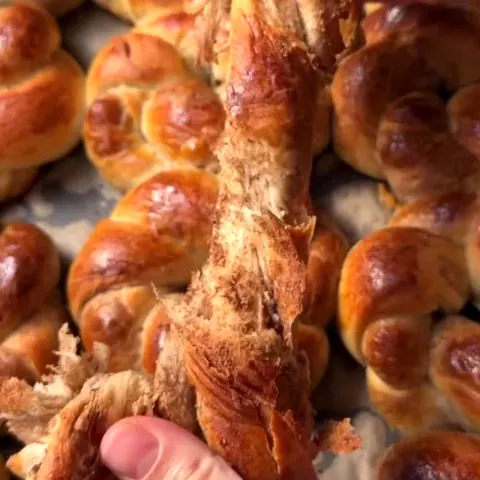
Remove the baking sheet from the oven and let the açma rolls cool on the pan for 5 minutes. Then transfer to a wire rack. Serve warm, pulling apart the layers to reveal the buttery, poppy seed swirls.
You’ll need: unsalted butter, melted
Look for: The layers separate easily and are tender and flaky.
Tip: For extra softness, brush the warm rolls with a little melted butter.
Checkpoint
The rolls are deeply golden brown, with a shiny crust. The internal temperature reads 160°F (71°C) for the egg wash. When pulled apart, the layers are thin, buttery, and flaky, revealing the sweet poppy seed swirl.
Doneness
How to tell it’s done
The açma rolls are done when they are deeply golden brown on top and the internal temperature reaches 160°F (71°C) for the egg wash. The rolls should feel firm to the touch and sound hollow when tapped on the bottom. If you insert a toothpick into the center, it should come out clean. The filling will be bubbling slightly at the edges, and the aroma of butter and poppy seeds will fill the kitchen.
Avoid these
Common mistakes
Over-kneading the dough can make it tough; knead just until smooth and elastic. Under-proofing the rolls will result in dense bread; give them the full 20 minutes to puff. Brushing the egg wash too heavily can make the crust soggy; use a light hand. If the rolls brown too quickly in the oven, tent with foil. Finally, don't skip the resting period after coating the dough balls—it's essential for the flaky texture.
Cook safely
Food safety
Safe internal temperatures
Cook to at least these temperatures, measured with an instant-read thermometer in the thickest part.
| Food | Minimum internal temperature |
|---|---|
| Egg dishes | 160°F (71°C) |
Better results
Tips
Tip 1
For the flakiest layers, make sure the dough balls are thoroughly coated in the butter-oil mixture before resting. This fat creates steam during baking, separating the layers. When shaping, roll the dough as thin as possible without tearing, and spread the filling evenly to the edges. The tighter the spiral, the more defined the swirl.
Tip 2
To achieve a deep golden color, brush the rolls with the egg-butter wash just before baking. If you prefer a softer crust, you can brush the rolls with melted butter immediately after baking. Serve warm for the best texture—the layers are most tender when fresh from the oven. If making ahead, reheat in a 300°F (150°C) oven for 5-10 minutes to restore crispness.
Make it yours
Variations
Savory Açma
Omit the sugar in the filling and mix the poppy seed paste with 1 teaspoon of salt and 1 tablespoon of olive oil. Add a sprinkle of za'atar or dried oregano on top before baking.
Cinnamon Swirl
Replace the poppy seed paste with a mixture of 1/2 cup brown sugar, 2 tablespoons ground cinnamon, and 3 tablespoons softened butter. Spread over the dough and roll as directed.
Chocolate Hazelnut
Use 1 cup chocolate-hazelnut spread instead of poppy seed paste. Omit the extra sugar. After baking, drizzle with melted chocolate and sprinkle with chopped hazelnuts.
Vegan Version
Use plant-based milk and butter, and replace the egg white with 2 tablespoons aquafaba. For the glaze, use 2 tablespoons maple syrup mixed with 1 tablespoon oil. The dough will be slightly less rich but still tender.
On the table
Serving suggestions
Serve açma warm, as the layers are most tender and the butter is melted. They are delicious on their own, but also pair well with a cup of Turkish tea or coffee. For a savory twist, serve with a side of feta cheese and olives. The sweet poppy seed filling makes them a delightful addition to a brunch spread.
To pull apart, hold the roll with both hands and gently twist—the layers will separate into thin, buttery ribbons. Enjoy them as a snack or as part of a leisurely breakfast. If you have leftovers, they can be repurposed into a bread pudding or used as a base for French toast, though they are best enjoyed fresh.
Leftovers
Storage & make-ahead
- Fridge
- Store in an airtight container in the refrigerator for up to 5 days. Reheat in a 300°F oven for 5-7 minutes to refresh.
- Freezer
- Freeze baked and cooled rolls in a zip-top bag for up to 2 months. Thaw at room temperature and reheat in a 300°F oven for 8-10 minutes.
- Reheat
- Reheat in a 300°F (150°C) oven for 5-10 minutes until warm and crisp. Avoid microwaving, as it makes the bread rubbery.
Store leftover açma rolls in an airtight container at room temperature for up to 2 days. To maintain softness, place a piece of bread in the container to absorb excess moisture. For longer storage, wrap the rolls tightly in plastic wrap and refrigerate for up to 5 days. Reheat in a toaster oven or regular oven to bring back the flaky texture.
Make ahead
The dough can be prepared through the shaping step and refrigerated overnight. After shaping the spirals, place them on the baking sheet, cover with plastic wrap, and refrigerate. The next morning, let them come to room temperature and proof for 30-40 minutes before brushing with the egg wash and baking. This makes açma a great make-ahead breakfast option.
Questions
Frequently asked questions
Can the dough be made ahead and refrigerated?
Yes, the dough can be prepared through the shaping step and refrigerated overnight. Cover the shaped rolls tightly and refrigerate. The next morning, let them come to room temperature for 30 minutes, then proof for an additional 20-30 minutes before brushing with egg wash and baking.
What is poppy seed paste and where can it be found?
Poppy seed paste, also known as haşhaş ezmesi, is a sweet, thick paste made from ground poppy seeds and sugar. It is commonly used in Turkish baking. It can be found in Middle Eastern or Turkish grocery stores, or online. If unavailable, substitute with a mixture of ground poppy seeds, honey, and milk.
Why are the rolls not flaky?
The flakiness comes from the butter-oil coating on the dough balls. Ensure each ball is thoroughly coated before resting. Also, roll the dough thin when shaping to create multiple layers. Over-proofing can make the dough too airy and less flaky, so stick to the recommended proofing times.
Can this recipe be made gluten-free?
Gluten-free flour can be used, but the texture will be different—less elastic and more crumbly. Add 1 teaspoon of xanthan gum to the flour blend to help bind. The dough will be stickier, so handle with oiled hands. Baking time may need adjustment.
How should leftovers be reheated?
The best way to reheat açma is in a 300°F (150°C) oven for 5-10 minutes. This restores the crisp exterior and warm, soft interior. Avoid microwaving, as it will make the bread rubbery and soggy.
Everything in one place: the recipe card below gathers the ingredients, steps and estimated nutrition, ready to print.
Recipe card
Buttery Poppy Seed Açma Pull-Apart Bread
Soft, flaky Turkish-style pull-apart bread swirled with sweet poppy seed paste. A buttery, golden treat perfect for breakfast or brunch.
- Prep
- Cook
- Rest
- Total
- Servings
- 12 rolls
Ingredients
- 1 cup warm milk
- 1 cup warm water
- 1 egg white
- 4 tbsp sugar
- 1 tsp salt
- 1/2 cup vegetable oil
- 1 packet active dry yeast (2 1/4 tsp)
- 5 cups all-purpose flour
- 100 g unsalted butter, melted
- 100 ml vegetable oil
Filling
- 1 cup poppy seed paste (haşhaş ezmesi)
- 3 tbsp sugar
Glaze
- 1 egg yolk
- 2 tbsp unsalted butter, melted
Instructions
Make the Dough. In a large bowl, combine the warm milk, warm water, egg white, sugar, salt, 1/2 cup oil, and yeast. Stir gently and let sit for 5 minutes until the yeast is foamy. Add the flour gradually, mixing with a wooden spoon until a shaggy dough forms. Turn onto a lightly floured surface and knead for 8-10 minutes until smooth and elastic. The dough should be soft and slightly tacky but not sticky.
Divide and Coat. Divide the dough into 12 equal pieces. Roll each piece into a smooth ball. In a shallow dish, combine the 100 g melted butter and 100 ml oil. Dip each dough ball into the butter-oil mixture, turning to coat completely. Place the coated balls in a single layer in a baking dish or on a tray. Cover loosely with plastic wrap or a damp towel and let rest for 30 minutes at room temperature.
Prepare the Filling. In a small bowl, mix the remaining oil (from the coating mixture) with the poppy seed paste and 3 tbsp sugar. Stir until well combined and spreadable. If the paste is too thick, add a teaspoon of warm water to loosen it.
Shape the Rolls. Take one rested dough ball and place it on a lightly oiled surface. Gently stretch or roll it into a thin rectangle, about 8 inches long and 6 inches wide. Spread a generous spoonful of the poppy seed filling over the surface, leaving a small border. Roll the dough tightly into a log, then coil the log into a spiral. Tuck the end underneath. Repeat with the remaining dough balls and filling.
Arrange on Tray. Place the shaped spirals on a parchment-lined baking sheet, leaving about 2 inches between each. Cover loosely with a clean kitchen towel and let proof for 20 minutes in a warm spot. The rolls should puff up noticeably but not double.
Brush with Egg Wash. In a small bowl, whisk the egg yolk with the 2 tbsp melted butter. Using a pastry brush, gently brush the tops of the proofed rolls with the egg-butter mixture. Be careful not to deflate the dough.
Bake the Açma. Preheat the oven to 350°F (175°C). Bake the rolls for 20-25 minutes, until deeply golden brown and the internal temperature reaches 160°F (71°C) for the egg wash. The rolls should sound hollow when tapped on the bottom. If the tops brown too quickly, tent loosely with foil.
Cool and Pull Apart. Remove the baking sheet from the oven and let the açma rolls cool on the pan for 5 minutes. Then transfer to a wire rack. Serve warm, pulling apart the layers to reveal the buttery, poppy seed swirls.
Allergens: Gluten, Eggs, Milk, Sesame
Nutrition (estimated, per serving)
- Calories
- 380 kcal
- Protein
- 6 g
- Carbs
- 40 g
- Fat
- 22 g
Estimates only: values vary with brands, substitutions and portion sizes.
Recipe by WixForum Kitchen · wixforum.com
Share this recipe
Send it to someone who’d love it, or save it for later.
Spotted a mistake in this recipe? Let us know.
Keep cooking


