Fluffy Turkish Açma Pull-Apart Bread
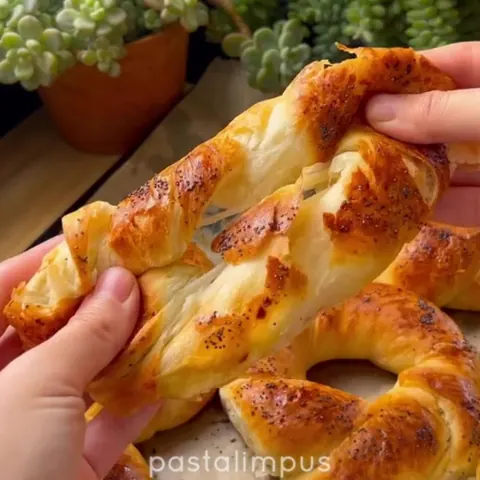
Soft, buttery pull-apart Turkish açma with a golden sesame crust. This easy yeast bread uses a warm milk and water dough for a pillowy, cotton-like crumb.
Published 11 min read
- Total time
- Prep
- Cook
- Rest
- Serves
- 12
- Makes 12 rolls
- Cuisine
- Turkish
- Calories
- 320
- per serving, estimated

On this page16 sections
Imagine pulling apart a warm, pillowy bread that reveals soft, buttery layers with a gentle tug. That’s Turkish açma—a yeast bread that’s slightly sweet, enriched with butter and oil, and topped with a golden sesame crust. This recipe simplifies the traditional method into a straightforward process that fits into a home baker’s routine. The dough comes together quickly, rises until billowy, and bakes into a deeply browned, glossy pull-apart bread that’s perfect for breakfast or brunch.
Turkish açma is a beloved breakfast bread, often found in bakeries across Turkey. Its signature texture—soft, airy, and almost cotton-like—comes from a rich dough that includes milk, oil, and a touch of sugar. The shaping technique, which involves coiling ropes of dough into spirals, creates those beautiful layers that pull apart so satisfyingly. This recipe stays true to the classic, using simple ingredients and a clear method that rewards patience with a stunning result. Whether you’re new to yeast breads or a seasoned baker, these açma rolls are a delightful project that yields a warm, comforting treat.
The appeal
Why you’ll love it
The combination of warm milk and warm water creates an ideal environment for the yeast to activate, while the milk adds tenderness and a subtle richness. The egg white contributes structure without making the dough heavy, and the vegetable oil ensures a moist, soft crumb that stays fresh longer. Kneading develops the gluten, giving the dough the elasticity needed to shape into ropes and coils. The result is a bread that’s both sturdy enough to hold its shape and delicate enough to pull apart in feathery layers.
The butter placed on each dough ball before shaping is what creates the distinct layers. As the dough is folded and coiled, the butter gets trapped between the layers, and during baking it melts, steaming the dough from within. This technique, similar to laminating, produces the characteristic flaky yet tender interior. The egg yolk and molasses glaze adds a beautiful sheen and a hint of caramelized flavor, while the sesame seeds provide a nutty crunch that contrasts with the soft crumb.
What you need
Ingredients
Makes 12 rolls.
Topping
Contains:
- Gluten
- Eggs
- Milk
- Sesame
Tools
Equipment
- Large mixing bowl
- Wooden spoon or spatula
- Plastic wrap or kitchen towel
- Baking sheet
- Parchment paper
- Pastry brush
- Bench scraper or knife
Swaps
Substitutions
Instead ofGrape molasses
UseUse 1 tsp honey or maple syrup mixed with the egg yolk for a similar golden glaze.
Instead ofVegetable oil
UseUse any neutral oil such as canola or sunflower oil.
Instead ofAll-purpose flour
UseBread flour works well and gives a slightly chewier texture.
Instead ofInstant yeast
UseUse 2 1/4 tsp active dry yeast dissolved in the warm water with a pinch of sugar, and let it foam before adding.
Good to know
Notes
Use instant yeast for convenience; it can be mixed directly into the dry ingredients. If using active dry yeast, dissolve it in the warm water with a pinch of sugar and let it foam for about 5 minutes before adding. The dough should be soft and slightly tacky; resist adding too much flour, as that will make the bread dense. All-purpose flour works perfectly, but bread flour will give a slightly chewier texture.
Grape molasses, also known as pekmez, is a traditional Turkish syrup made from grapes. It adds a deep, caramel-like flavor to the glaze. If you can’t find it, substitute with honey or maple syrup. The softened butter should be at room temperature so it spreads easily without tearing the dough. For the sesame seeds, use white or a mix of white and black for visual contrast.
Prep
Before you start
Before starting, measure all ingredients and bring the milk and water to a warm, not hot, temperature (about 110°F/43°C). Soften the butter to room temperature. Line a baking sheet with parchment paper. Clear a large work surface for kneading and shaping. Have a clean kitchen towel or plastic wrap ready for covering the dough. If using an instant-read thermometer, keep it nearby for checking the internal temperature of the baked bread.
Step by step
Method
Phase 1
Making the Dough
Step 1: Make the Dough
In a large bowl, combine the warm milk, warm water, egg white, sugar, salt, vegetable oil, and instant yeast. Stir to dissolve the yeast. Gradually add the flour, one cup at a time, mixing with a wooden spoon until a shaggy dough forms. Turn the dough out onto a lightly floured surface and knead for about 8 to 10 minutes, until smooth and elastic. The dough should be soft and slightly tacky but not sticky.
You’ll need: warm milk · warm water · egg white · sugar · salt · vegetable oil · instant yeast · all-purpose flour
Look for: The dough is smooth, elastic, and springs back when pressed.
Tip: If the dough is too sticky, add a tablespoon of flour at a time. If too dry, add a teaspoon of warm water.
Step 2: First Rise
Place the dough in a lightly oiled bowl, cover with plastic wrap or a clean kitchen towel, and let it rise in a warm place until doubled in size, about 1 to 1 1/2 hours. The dough should be puffy and soft.
Look for: The dough has doubled in volume and holds an indentation when poked.
Tip: A warm spot near a window or on top of a turned-off oven works well.
Checkpoint
After mixing and kneading, the dough should be smooth, elastic, and slightly tacky. It should feel soft and pillowy, not stiff. When you press a finger into it, the indentation should spring back slowly. The dough should have a faint yeasty, milky aroma. Cover and let rise until doubled; this may take 1 to 1 1/2 hours depending on the warmth of your kitchen. If the dough hasn't doubled, give it more time.
Phase 2
Shaping the Rolls
Step 3: Shape the Rolls
Turn the risen dough out onto an oiled marble or countertop. Divide the dough into 12 equal pieces. Roll each piece into a smooth ball. Place the balls on a lightly oiled surface, cover with a damp cloth, and let rest for 10 minutes.
Look for: The dough balls are smooth and uniform in size.
Tip: Use a bench scraper to divide the dough evenly.
Step 4: Add Butter and Shape Rings
Take one dough ball and flatten it slightly with your palm. Place 1 teaspoon of softened butter on top and spread it gently with your fingertips. Fold the dough over the butter and pinch to seal, then roll into a rope about 8 inches long. Coil the rope into a spiral, tucking the end underneath. Repeat with the remaining dough balls.
You’ll need: softened butter
Look for: Each rope coils into a neat spiral with the seam tucked under.
Tip: Keep the dough covered while shaping to prevent drying.
Step 5: Second Rise
Place the shaped açma rings on a parchment-lined baking sheet, leaving about 2 inches between them. Cover loosely with plastic wrap or a kitchen towel and let rise in a warm place for about 30 minutes, until puffy and slightly enlarged.
Internal temperature 160°F (71°C)
Look for: The rings have puffed up and look airy.
Tip: Don't let them over-rise; they should be light but hold their shape.
Checkpoint
The dough balls should be smooth and uniform. After resting, they should be easy to flatten and spread with butter without tearing. When you coil the ropes, the spirals should hold their shape and not unravel. The shaped rings should look neat and even. After the second rise, they should be puffy and light, but still hold their coiled definition. The surface should be slightly shiny from the butter.
Phase 3
Baking to Golden Brown
Step 6: Glaze and Top
Preheat the oven to 350°F (180°C). In a small bowl, whisk together the egg yolk, grape molasses, and milk. Brush the mixture over the risen açma rings, covering the tops and sides. Sprinkle generously with sesame seeds.
You’ll need: egg yolk · grape molasses · milk · sesame seeds
Look for: The glaze gives a shiny, golden coating; sesame seeds stick evenly.
Tip: Use a soft pastry brush to avoid deflating the dough.
Step 7: Bake
Bake the açma in the preheated oven for 20 to 25 minutes, until deeply browned and cooked through. The internal temperature of the bread should reach 190°F (88°C) for a fully baked crumb. If using an instant-read thermometer, insert it into the center of a roll.
Look for: The tops are deep golden brown and the bread sounds hollow when tapped.
Tip: Rotate the baking sheet halfway through for even browning.
Step 8: Cool and Serve
Remove the baking sheet from the oven and let the açma cool on the pan for 5 minutes. Transfer to a wire rack to cool slightly. Serve warm, pulling the rolls apart to reveal the soft, buttery layers.
Look for: The bread is warm, fragrant, and pulls apart easily.
Tip: For the best texture, serve within a few hours of baking.
Checkpoint
The oven should be fully preheated. The glaze should give the rolls a shiny, golden appearance before baking. As they bake, the kitchen will fill with a buttery, toasty aroma. The tops will turn a deep golden brown, and the sesame seeds will toast. The rolls should be evenly colored, with no pale spots. When tapped, they should sound hollow. The internal temperature should read 190°F (88°C) for a fully baked crumb.
Doneness
How to tell it’s done
The açma are done when they are deeply browned on top, and the internal temperature registers 190°F (88°C) in the center of a roll. The crust should feel firm but give slightly when pressed, and the bread should sound hollow when tapped on the bottom. If you pull apart a roll, the crumb should be fluffy and fully set, with no raw dough in the center. The glaze should be glossy and the sesame seeds lightly toasted.
Avoid these
Common mistakes
One common mistake is adding too much flour during kneading, which yields a dry, tough bread. Another is over-proofing the dough, causing the rings to spread and lose their shape. Make sure the water and milk are not too hot, as that can kill the yeast. When shaping, if the dough resists, let it rest for a few minutes. Also, do not skip the second rise; it's essential for a light texture. Finally, brush the glaze gently to avoid deflating the risen dough.
Cook safely
Food safety
Safe internal temperatures
Cook to at least these temperatures, measured with an instant-read thermometer in the thickest part.
| Food | Minimum internal temperature |
|---|---|
| Egg dishes | 160°F (71°C) |
Better results
Tips
Tip 1
For the fluffiest texture, make sure your dough is well-kneaded and properly proofed. A warm, draft-free spot is key for rising. If your kitchen is cool, place the dough in an oven with the light on (but turned off) to create a gentle warmth. Don't rush the rises; the dough should be billowy and soft before shaping. When shaping, keep the dough covered with a damp cloth to prevent a skin from forming.
Tip 2
To achieve a beautiful golden crust, brush the glaze generously and evenly. The grape molasses adds a subtle caramel note that pairs wonderfully with the sesame seeds. If you prefer a softer crust, you can brush the baked açma with a little melted butter as soon as they come out of the oven. For an extra touch, sprinkle a pinch of flaky sea salt on top before baking.
Make it yours
Variations
Savory Açma
Add 1/2 cup of crumbled feta cheese and 1/4 cup of chopped fresh parsley to the dough after the first rise. Shape as directed, and sprinkle with nigella seeds instead of sesame for a savory twist.
Sweet Cinnamon Açma
Mix 1 teaspoon of ground cinnamon with the sugar before adding to the dough. After brushing with the glaze, sprinkle with a cinnamon-sugar mixture before baking.
Whole Wheat Açma
Replace 1 cup of all-purpose flour with whole wheat flour. Increase the water by 2 tablespoons and let the dough rest for 10 minutes after kneading to relax the gluten.
Sesame and Poppy Seed
Use a mix of sesame seeds and poppy seeds for the topping. The poppy seeds add a delicate crunch and nutty flavor that complements the soft bread.
On the table
Serving suggestions
Serve the açma warm, pulled apart in the center of the table. They pair beautifully with a spread of butter, honey, or fruit preserves. For a savory twist, serve alongside scrambled eggs and feta cheese. The soft, buttery layers are also delicious with a cup of Turkish tea or coffee.
Açma are best enjoyed fresh, but they also make a great addition to a brunch spread. Tear them into pieces and serve with a bowl of olive oil and za'atar for dipping. For a sweet treat, drizzle with honey and sprinkle with crushed pistachios. These rolls are versatile enough to accompany both sweet and savory accompaniments.
Leftovers
Storage & make-ahead
- Fridge
- Store in an airtight container at room temperature for up to 2 days. To refresh, warm in a 300°F (150°C) oven for 5-7 minutes.
- Freezer
- Freeze baked açma in a zip-top bag for up to 1 month. Thaw at room temperature and reheat in a 350°F (175°C) oven for 5-8 minutes until warm.
- Reheat
- Reheat in a 300°F (150°C) oven for 5-7 minutes, or in a toaster oven. Microwaving can make them chewy, so oven reheating is recommended.
Store the açma in an airtight container at room temperature for up to 2 days. They are best enjoyed within the first 24 hours. To refresh, warm them in a 300°F (150°C) oven for 5-7 minutes. Avoid refrigerating, as that can dry them out.
Make ahead
You can prepare the dough through the shaping step, then cover the shaped rings and refrigerate overnight. The next morning, let them come to room temperature and rise for about 30 minutes before baking. You can also freeze the unbaked, shaped rolls after the second rise; thaw in the refrigerator overnight, then bring to room temperature and bake as directed.
Questions
Frequently asked questions
Can this bread be made without grape molasses?
Yes, you can substitute grape molasses with an equal amount of honey or maple syrup. The glaze will still provide a golden sheen and a subtle sweetness. If you prefer a less sweet glaze, you can omit the molasses and use just the egg yolk and milk.
Why did your açma not rise properly?
Check the temperature of your liquid; it should be warm but not hot, around 110°F (43°C). Too hot will kill the yeast, too cold will slow it down. Also, ensure your yeast is fresh and active. The dough needs a warm, draft-free place to rise. If your kitchen is cool, use an oven with the light on.
Can the dough be prepared in a bread machine?
Yes, you can use a bread machine to knead and proof the dough. Place the ingredients in the bread machine pan in the order recommended by the manufacturer, and use the dough cycle. After the cycle, shape and proceed with the recipe.
How can you make the açma extra soft?
Ensure the dough is well-kneaded and properly proofed. Use a wetter dough (add a tablespoon more water if needed) and avoid over-flouring. Brushing the baked rolls with melted butter immediately after baking also helps keep them soft.
Can you use active dry yeast instead of instant?
Yes, use 2 1/4 teaspoons of active dry yeast. Dissolve it in the warm water with a pinch of sugar and let it sit for 5-10 minutes until foamy before adding to the other ingredients. Reduce the water by 2 tablespoons to account for the liquid used to dissolve the yeast.
Everything in one place: the recipe card below gathers the ingredients, steps and estimated nutrition, ready to print.
Recipe card
Fluffy Turkish Açma Pull-Apart Bread
Soft, buttery pull-apart Turkish açma with a golden sesame crust. This easy yeast bread uses a warm milk and water dough for a pillowy, cotton-like crumb.
- Prep
- Cook
- Rest
- Total
- Servings
- 12 rolls
Ingredients
- 1 cup warm milk
- 1 cup warm water
- 1 egg white
- 4 tbsp sugar
- 1 tsp salt
- 1/2 cup vegetable oil
- 1 packet instant yeast (about 2 1/4 tsp)
- 5 cups all-purpose flour
- 12 tsp softened butter (about 1 1/2 sticks)
Topping
- 1 egg yolk
- 1 tsp grape molasses
- 1 tsp milk
- 2 tbsp sesame seeds
Instructions
Make the Dough. In a large bowl, combine the warm milk, warm water, egg white, sugar, salt, vegetable oil, and instant yeast. Stir to dissolve the yeast. Gradually add the flour, one cup at a time, mixing with a wooden spoon until a shaggy dough forms. Turn the dough out onto a lightly floured surface and knead for about 8 to 10 minutes, until smooth and elastic. The dough should be soft and slightly tacky but not sticky.
First Rise. Place the dough in a lightly oiled bowl, cover with plastic wrap or a clean kitchen towel, and let it rise in a warm place until doubled in size, about 1 to 1 1/2 hours. The dough should be puffy and soft.
Shape the Rolls. Turn the risen dough out onto an oiled marble or countertop. Divide the dough into 12 equal pieces. Roll each piece into a smooth ball. Place the balls on a lightly oiled surface, cover with a damp cloth, and let rest for 10 minutes.
Add Butter and Shape Rings. Take one dough ball and flatten it slightly with your palm. Place 1 teaspoon of softened butter on top and spread it gently with your fingertips. Fold the dough over the butter and pinch to seal, then roll into a rope about 8 inches long. Coil the rope into a spiral, tucking the end underneath. Repeat with the remaining dough balls.
Second Rise. Place the shaped açma rings on a parchment-lined baking sheet, leaving about 2 inches between them. Cover loosely with plastic wrap or a kitchen towel and let rise in a warm place for about 30 minutes, until puffy and slightly enlarged.
Glaze and Top. Preheat the oven to 350°F (180°C). In a small bowl, whisk together the egg yolk, grape molasses, and milk. Brush the mixture over the risen açma rings, covering the tops and sides. Sprinkle generously with sesame seeds.
Bake. Bake the açma in the preheated oven for 20 to 25 minutes, until deeply browned and cooked through. The internal temperature of the bread should reach 190°F (88°C) for a fully baked crumb. If using an instant-read thermometer, insert it into the center of a roll.
Cool and Serve. Remove the baking sheet from the oven and let the açma cool on the pan for 5 minutes. Transfer to a wire rack to cool slightly. Serve warm, pulling the rolls apart to reveal the soft, buttery layers.
Allergens: Gluten, Eggs, Milk, Sesame
Nutrition (estimated, per serving)
- Calories
- 320 kcal
- Protein
- 7 g
- Carbs
- 45 g
- Fat
- 12 g
- Fiber
- 2 g
- Sugar
- 6 g
Estimates only: values vary with brands, substitutions and portion sizes.
Recipe by WixForum Kitchen · wixforum.com
Share this recipe
Send it to someone who’d love it, or save it for later.
Spotted a mistake in this recipe? Let us know.
Keep cooking


