Forum StoriesFamily SecretsFiction11 min read
The Blind Cellist Everyone Believed Was Dead Walked Back Into His Life
They told Julian his wife died in a stage collapse. They told Clara her baby didn't survive. Six months later, one cry in a dark corridor shattered every lie.
By WixForum KitchenPublished
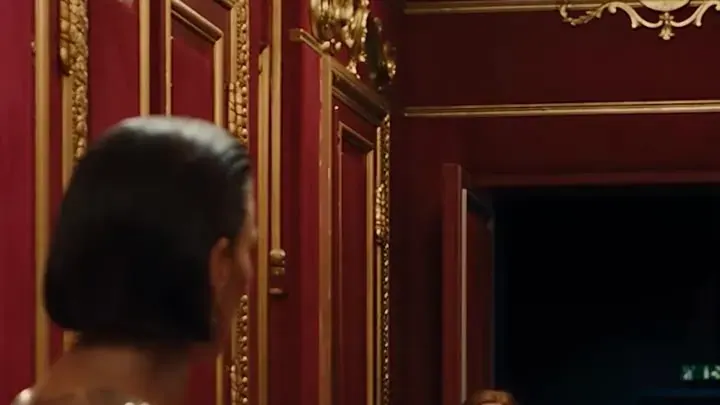
The Night the Chandelier Fell, Music Was the Last Thing I Saw
My name is Clara Whitmore, and for the first twenty-seven years of my life, sound was simply my profession.
Then, in a single evening, it became my entire world.
I was second chair cello at the Ashford Grand Opera House — my first season, my name printed in the program for the very first time.
The night the Sterling Family Foundation sponsored our gala, a man in a black tuxedo stood in the wings and listened to me rehearse for forty minutes without moving.
When the hall finally went silent, he said, “Play that passage again. I want to hear the part where it aches.”
“Most people listen to music,” I told him later. “You listen for the wounds inside it.”
His name was Julian Sterling, and the papers called him the coldest billionaire in the city.
They were wrong about a great many things that year.
We were married within twelve months, and on our anniversary I told him the secret I had never told anyone: the lullaby I composed on my cello for the daughter we were expecting.
I named her Aria, because a life should begin with a song.
I made two silver treble-clef pendants before she was born — one large for me, one small for her blanket — and pinned them together in a velvet box.
Six months into the pregnancy, our orchestra was invited to tour Vienna. Julian was meant to fly out for the final performance.
He never got the chance.
During rehearsal, the chandelier rigging above the stage groaned once — a sound only the musicians heard — and then the world came down in glass and gold.
I remember the crack, the scream of sixty instruments dying mid-note, and then nothing at all.
They Put a Pen in the Hand of a Woman Who Could Not Read What She Was Signing
When I woke, there were bandages over my eyes and a nurse's hand cool against my wrist.
“I'm so sorry, dear,” she whispered. “Your little girl didn't survive the night.”
Something in my chest broke so quietly that no monitor in that clinic registered it.
My husband never came. Not the first day, not the fifth, not ever.
Instead, his sister-in-law Serena swept in on the ninth day — perfume before footsteps, always her signature — wearing a gold dress that whispered when she moved.
She told me Julian had asked for an annulment.
“A blind, broken cellist is an embarrassment to the Sterling name, Clara,” she said, almost gently. “He's already grieving. Let him grieve cleanly.”
Then she laid the papers on my blanket and pressed a pen into my fingers.
“Just here. And here. That's a good girl.”
I signed away my marriage, my home, and my daughter's memory, because a woman who cannot see the page will sign anything when she has been told there is nothing left to live for.
They moved me to a quiet facility upstate, and the world let Clara Whitmore dissolve.
But six months later, the Ashford offered me a rehabilitation chair — a charity gesture, the personnel office said, meant for artists “in recovery.”
I took it, because my hands still knew the fingerboard even if my eyes would never find it again.
On my first afternoon back, I walked the velvet corridor behind the Royal Box, counting doorways by their echoes the way I had learned to count everything now.
And then I heard something no one else could hear over the orchestra tuning below.
A baby crying.
Thin, muffled, furious little cries — coming from behind the locked door of the old utility closet.
Then Serena's voice, low and venomous, inches from the wood.
“Stay in this dark broom closet until the gala is over, you noisy little nuisance — Julian thinks the nanny took you home!”
My bow was in my hand before I made any decision at all.
I stepped forward on pure acoustics — the click of the brass latch, the rattle of the bassinet wheels, the hitch in an infant's breath — and wedged the Pernambuco frog of my cello bow into the doorframe gap a split-second before the lock could close.
“Take your hands off that door,” I said. “I may not see the light, madam, but I can hear a terrified baby crying in the dark!”
Serena gasped like a woman caught at a crime she couldn't imagine being witnessed — by someone who couldn't even see her.
I pulled the bassinet into the warm hallway and lifted the baby against my concert dress.
Six months old. A girl. A small, furious, living weight.
I hummed the lullaby I had never played for another soul.
She stopped crying instantly — and her tiny fist closed around the silver treble-clef at my throat.
The matching miniature charm was pinned to her blanket.
My daughter. My Aria. Alive.
And then footsteps stopped in front of us, and Julian's voice — the voice they told me had buried me — said my name like a prayer breaking in half.
He Said I Died in Vienna — and Someone Showed Him a Coffin With My Name on It
Julian stood ten feet away, and I could hear his breathing go wrong — the shallow, staggered rhythm of a man watching the impossible walk toward him.
“Clara?” he said. “Serena's father told me you died in the Vienna concert hall collapse six months ago — when our baby was delivered. You lost your sight in that accident, didn't you?!”
My fingers found his lapel and held on.
“Julian… they told me our baby didn't survive the night.”
For one moment, the corridor behind the Royal Box held the three of us — a father, a mother, and a daughter both of us had been told to mourn.
Then Julian pulled us into an embrace so fierce that Aria stirred and settled, as if she recognized the arms she'd never been held in.
When he released us, his voice dropped into something I had only ever heard him use on men who hurt people.
“House security — hand Serena over to the police for child endangerment and fraud. Clara, our daughter knew her mother's song before I even saw your face.”
Serena's composure cracked like cheap porcelain.
“It wasn't my idea!” she screamed as security closed in. “I was paid, Julian — someone paid me to do all of it! You can't — you don't understand what you're—”
Paid.
The word landed in my chest like a dropped bow.
I gripped Julian's arm. “Then we need to hear every name she's about to say.”
Because fraud meant paperwork, and paperwork meant planning, and planning meant that everything — the annulment, the clinic, the nurse with the rehearsed whisper — had an architect.
Julian made one call from the corridor, and by the time the rehearsal below reached its second movement, every exit of the Ashford Opera House was quietly, politely sealed.
In his private box, behind velvet drapes, Serena was given her choice: the police, or the truth.
She chose to talk.
The Nurse Who Whispered That My Daughter Had Died Was Sitting in Row F, Wearing Our Family's Invitations
“There was no collapse, not the way you think,” Serena said, staring at the floor. “The rigging failed, yes — but the clinic was staged. Your room, the bandages, the staff. It was a private facility paid for by — ”
She stopped. Julian's silence was heavier than any threat.
“By my father,” she finally said. “And by Aunt Margaret. Julian's aunt.”
Aunt Margaret — the woman who had held Julian's power of attorney during our tour, who had sent flowers to our wedding, who had insisted on managing “the baby arrangements” so we wouldn't be bothered.
“Why?” I asked, and my voice didn't sound like mine. “Why would anyone do this?”
Serena laughed — a broken, ugly sound.
“Because a trust was triggered the moment Aria was born. Aria as Julian's sole heir. But if the heir died in infancy — and the wife died with her — everything reverted to the senior line. To Margaret. My father helped her set it up. Your death certificate was signed before you even woke up.”
Six months of grief reassembled itself in my mind into a single, precise machine.
The nurse who said my daughter died — hired. The papers at my bedside — prepared. The “upstate facility” — arranged to keep me invisible. And Julian, told his wife and child were gone, given a sealed casket and a lie to bury.
“The crash rigging,” Julian said quietly. “Was that also an arrangement?”
Serena went very still.
“That part I was never told,” she whispered. “But my father flew to Vienna the week before. He said he was 'handling the venue.'”
Julian stood up. I heard him take out his phone, and I heard him say four sentences that would end three reputations before midnight.
Then he did something I didn't expect.
He sat back down beside me and took my hand.
“For six months I lit a candle in an empty church for you,” he said. “Tonight the candle walks in and hums our daughter to sleep. I don't care what it costs — everyone who built this lie answers for it. Starting with the aunt who is downstairs right now, waiting to toast the season.”
Downstairs, the gala was beginning.
Champagne trays slid through the crowd. The string section tuned beneath the repaired chandelier.
And in the center of the reception hall, in midnight silk and pearls, Aunt Margaret stood greeting guests beside a framed memorial portrait —
My portrait.
With black ribbon across the corner, and a small card beneath it in her handwriting: In loving memory of Clara and baby Aria Sterling, taken from us too soon.
Julian squeezed my hand.
“Ready to attend your own memorial?” he asked.
I tucked Aria against my shoulder, picked up my cello bow, and said the truest thing I'd said in six months.
“Play me in.”
What happened on that ballroom floor, in front of four hundred guests, would make the front page by morning.
Four Hundred Guests Watched a Dead Woman Walk Into Her Own Memorial
Julian did not announce me.
He simply walked to the orchestra platform, lifted his hand, and gave the downbeat for the lullaby.
My lullaby.
The one no one alive was supposed to know.
I walked onto the platform with Aria against my shoulder, found my chair by its familiar echo, and played the melody on my cello while I sang it — rough, unpolished, six months of grief poured through four strings.
The hall went silent in a spreading ring, like ice cracking off a pond.
Guests turned. Phones lowered. Somewhere near the front, a champagne flute hit the marble and shattered.
And at the center of it all, beside the memorial portrait with the black ribbon, Aunt Margaret stood frozen with her pearls in her fist.
“Clara,” she said, loud enough for the front rows. “Clara, darling — this is a memorial. Have some dignity.”
“For whom?” I asked, and the room heard every word. “For me? Or for the trust you collected while I was locked in a clinic you paid for?”
The silence that followed had a temperature.
Julian stepped down from the platform and raised his voice exactly once.
“Ladies and gentlemen — the police have already been called. Everything you witnessed tonight is documented. If anyone has questions, the district attorney's office will be happy to answer them.”
Margaret's son — Serena's father — tried to leave through the east doors and found them politely, immovably sealed.
By the time the officers arrived, Margaret had gone from denial to bargaining to a silence that said everything her lawyer begged her not to.
Serena had already given her statement. The nurse had already given hers. The Vienna venue manager, woken by an international call, had already surrendered his invoices.
The machine that had dismantled my life came apart in a single night, screw by screw.
But the part that undid me wasn't the arrests.
It happened two hours later, in the emptying hall, when Aria began to fuss and I couldn't find her pacifier in the diaper bag.
Julian knelt in front of us, pulled a small velvet box from his jacket, and opened it into my hands.
The treble-clef pair I thought I'd lost in Vienna — my pendants, recovered from the wreckage, kept in his coat pocket every day since the “funeral.”
“I carried them because I had nowhere to put the grief,” he said. “Turns out I was carrying you the whole time.”
I fastened the small clef to her blanket with shaking fingers, and for the first time since the chandelier fell, my daughter and I wore our song where it belonged.
They Steal Your Sight, Your Signature, and Your Child — but They Cannot Steal a Lullaby
The trial took nine months.
Margaret received the longest sentence; Serena's father followed; Serena herself, for her testimony, served a shorter term and lost custody proceedings of her own making long before the gavel fell.
The nurse who lied to me in that clinic testified through tears that she was told the baby “wouldn't remember being told.”
She was wrong about that, too. Babies remember songs.
The Sterling trust was dissolved and rebuilt with safeguards even Julian couldn't touch alone — and the first thing we funded with it was a rehabilitation program for injured musicians at the Ashford.
Not a charity gesture.
A real chair, for anyone the world decided had played their last note.
My sight never returned. The specialists say it never will.
I won't pretend I made peace with that in some tidy, movie-montage way. There are still mornings when I reach for light that isn't there.
But I conduct my mornings by sound now — Aria's breath through the monitor, the kettle's pitch rising to its note, Julian's footsteps learning the exact distance from the door to where I stand.
Last spring, I returned to the stage. First chair, cello, Ashford Grand Opera House.
The program printed my name in bold, and beneath it a line Julian insisted on: Performer's note — Clara Whitmore plays entirely by ear. She says that's how the best music was always meant to be heard.
Aria sits in the front box every performance, wearing her little silver clef, mouthing the lullaby she learned before she could speak.
People ask me how I survived it — the lie, the clinic, the six months of mourning a child who was breathing two hundred miles away.
I tell them the truth.
They took my sight, my signature, and my daughter's first six months. But they built their entire scheme on the assumption that a blind woman would believe whatever she was told.
They forgot that a blind woman listens better than anyone they will ever meet.
And on the night it mattered most, in a velvet corridor behind the Royal Box, it wasn't my eyes that found my daughter.
It was a single, furious little cry — and a song only her mother knew.
Share this story
Send it to someone who would enjoy it.
From the WixForum kitchen
Cook something tonight
A good story deserves a good meal. Three recipes to try this week:
 Desserts
Crispy Oat Apple Crumble with Pouring Cream
Total time: 1 hr 20 mins
 Desserts
Classic Southern Peach Cobbler with Fluffy Drop Biscuits
Total time: 1 hr 25 mins
 Dinner
Honey Garlic Shrimp Stir-Fry with Crisp Vegetables
Total time: 25 mins
Keep reading
More stories
Family Secrets
She Attacked My Grandmother for a Safe Key — What the Black Ledger Revealed Destroyed Us Both
Arthur walked in on his fiancée assaulting his grandmother. What Evelyn confessed about the black ledger, and what Diana did next, changed everything forever.
10 min readFiction

Family Secrets
My Stepmother Set a Trap for My Baby Brother—But Our Hallway Camera Caught Everything
Twelve-year-old Maya saves her toddler brother from a deadly stair fall—then exposes the stepmother who staged it.
9 min readFiction

Family Secrets
The Stable Groom Saved My Son—Then Everyone Learned Her Secret
A five-year-old boy falls from a pony, and the quiet stable groom catches him. What slips from her neck changes the Sterling family forever.
10 min readFiction