Forum StoriesBetrayalFiction13 min readPart 3 of 3
The Cart Came Rolling Down the Ramp — Months Later, His Brother Knocked on His Door — Part 3 of 3
By WixForum KitchenPublished
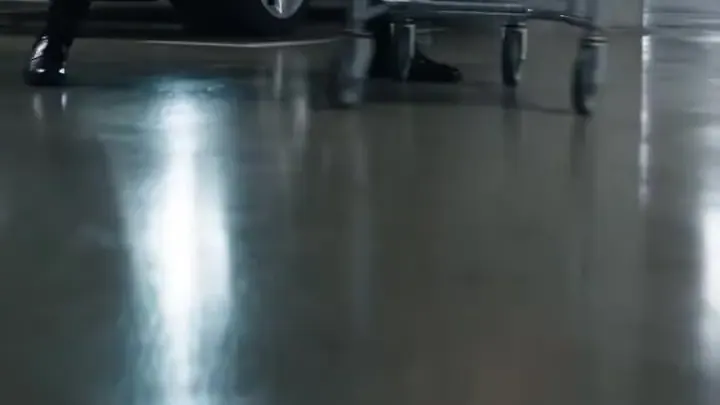
"Go Check on Mia Right Now" — The Phone Call That Changed Everything
Alexander didn't ask a single question. I heard his footsteps break into a run before I could finish the sentence.
For eleven seconds, the line was nothing but his breathing and the creak of a staircase taken two steps at a time.
Then silence. Then a door. Then his voice, muffled, saying Mia's name softly, the way you talk to a child you're trying not to wake.
Then, into the phone, barely steady: "She's asleep. She's fine. Thomas, what is going on?"
I told him everything. The folder. The records. The custody angle. The person inside the house.
When I finished, there was a long silence, and then Alexander said something I will carry to my grave.
"Come tonight. Not tomorrow. Tonight. Bring Derek."
Derek and I drove through the rain in my ten-year-old sedan, a chauffeur and the man who'd tried to destroy him, heading to the same address for opposite reasons the month before.
Alexander met us in the kitchen with the folder spread across the marble island and his laptop open beside it.
He'd been going through his own records since my call. He'd found the same signature I had.
"It's Vanessa," he said quietly.
Vanessa. His late wife's younger sister. The aunt who came three evenings a week, who carried Mia to bed, who'd sat on the custody-adjacent edge of the family for years, quietly, helpfully, present.
The signature matched a power-of-attorney document Alexander's grieving in-laws had pushed through after his wife's death — paperwork he'd signed in the fog of mourning and never revisited.
Through that document, Vanessa had legal standing to petition for guardianship. She'd been funding Derek's stunt as Exhibit A, and the whispering campaign as Exhibit B.
"Why?" was all Alexander could ask. "She has everything she needs."
"Because grief makes people keep score," Derek said, and for the first time in his life, I believed him. "She thinks Mia should have been raised by her mother's family. She's been building this case for a year. I was just the hammer she picked up."
Alexander sat down slowly, a billionaire brought low not by money but by proximity — by the realization that danger doesn't kick down doors. It gets a house key.
"We don't confront her tonight," I said. "We document. We call your attorney at dawn. And until then, nobody leaves this house, and nobody approaches that little girl's room but family."
Alexander looked at me, then at Derek, then at me again, and nodded.
That night, for the first time since the garage, I slept under the Colemans' roof, in the guest room across the hall from Mia's nursery, with my shoes by the door and my phone charged to one hundred percent.
The Aunt in the Doorway — and the Truth Nobody Saw Coming
Vanessa arrived at nine the next morning, cheerful, bearing pastries, exactly on schedule.
She found the kitchen occupied: Alexander at the island, his attorney beside him, me by the window, Derek — to her visible horror — sitting calmly in the corner chair.
Her face performed surprise beautifully. For about four seconds.
Then she saw the folder on the island, and the performance ended.
"You should sit down," Alexander said, and his voice held no thunder this time, only a terrible, quiet finality. "My attorney has questions. And Vanessa — Mia is upstairs, safe, with three people in this house who would die before letting anything happen to her. Which is more than I can say for the person who scheduled a shopping cart."
She didn't confess. People like Vanessa never do, not out loud.
But her attorney, when confronted with the transfer records, quietly negotiated a withdrawal of the guardianship filing and a permanent, documented severance from the family's affairs.
By noon it was over. No headlines. No trial. Just signatures, and a door closing that would never open again.
As security walked her to a car, she paused beside me in the driveway.
"You were just the hired help," she said softly. "How did you end up holding all the cards?"
"I wasn't holding cards, ma'am," I told her. "I was holding a little girl. That tends to reorder things."
Three weeks later, Alexander did something that made the business papers.
He created the Whitfield Child Safety Foundation, funding car-seat safety programs and caregiver background systems in three states, and named me to the board.
"You caught her at the bottom of a ramp," he said at the launch. "Now we catch children before they ever reach one."
But the real ending wasn't in the papers. It was in my kitchen, a month later, when Derek — sober, employed, unrecognizable in the best way — set a cup of coffee in front of me and said, "Thomas, I owe you a life. Mine. What do I do with it?"
"Start," I said, "by never being the person a stranger in the rain is afraid to open the door for."
He laughed. Then he didn't. Then he nodded like a man accepting a sentence and a gift at the same time.
Mia is four now. She still calls me To-Tom. She still carries the bunny, though she's added a second one, "for the car."
Some nights Alexander asks me, over coffee, if I ever regret missing twenty-two years of my own family to serve his.
I tell him the truth: loyalty isn't a detour from your life. Sometimes it is your life — you just don't find out until a cart starts rolling.
And if you take one thing from my story, let it be this: the people who guard your children with their whole hearts will never need a bonus to do it — and the people who stage loyalty were never loyal at all. Trust the ones who show up when no camera is watching. It's the only kind of love that doesn't need footage to prove it.
Share this story
Send it to someone who would enjoy it.
Keep reading
More stories
Betrayal
The Night Nurse Didn't Know the Nanny Camera Was Watching Her Every Move
When my baby's service dog knocked over a medicine bottle, my son screamed 'She switched it!' — and the nanny cam proved we were one dose away from tragedy.
8 min readFiction
Betrayal
The Teapot, the Dog, and the Stepsister Who Tried to Burn My Baby
When Amber pointed at Athena, I knew she was lying. But the vest camera showed the truth—and my rage turned ice cold.
10 min readFiction
Betrayal
The Night Nanny Unplugged the Baby's Monitor — But the Dog's Bodycam Caught Everything
When Rachel's premature baby's breathing alarm went dark, the nanny blamed the dog. But Apollo's K9 bodycam told a different story — and the truth shattered their family forever.
9 min readFiction
Betrayal
The Nanny Thought She Won, but the Dog's Camera Told a Different Story
When a trusted nanny locks a toddler out in the rain, a loyal Bernese Mountain Dog becomes the only witness. Now, a father must choose whom to believe before it's too late.
6 min readFiction
Betrayal
The Nanny Told Police the Dog Attacked Her — Then His Collar Camera Rewound Everything
When the nanny screamed that the family dog attacked her, no one doubted her—until the live collar cam revealed the terrifying truth she tried to bury. Some protectors wear fur.
8 min readFiction

Betrayal
The Nanny Cam Caught My Stepmother Shoving Zoe — Then Bella Did Something No One Expected
When the nursery monitor exposed Katrina's cruel lie, Arthur thought justice was served. But Bella's collar cam revealed a secret that would shatter their family forever.
10 min readFiction