Forum StoriesFamily SecretsFiction13 min read
She Faked Her Death to Give Me Her Kidney — I Called Her a Coward for 20 Years
Brock thought her mother abandoned her when she needed a kidney. Twenty years later, a surgeon reveals the scar that changes everything — and the secret that shattered her world.
By WixForum KitchenPublished
The Rain on Maple Street
The rain was a constant, miserable presence that afternoon — a cold, drizzling curtain that soaked the city in despair. I stood outside St. Jude's Elite Academy, my camel cashmere coat immaculate despite the weather, my gloved hands clenched at my sides. I had not set foot on these grounds in twenty years, and I had only come because a cryptic letter had arrived at my office that morning, unsigned, with a single line: She will be there at 4 PM. The truth will finally be told.
I should have thrown it away. I should have ignored it like I had ignored every memory of my mother. But curiosity is a cruel mistress, and I was tired of the anger that had eaten me alive for two decades.
And then I saw her — Ruth Henderson, my mother, standing by the wrought-iron gates like a ghost from a past I had buried. She was so old now, her face a map of sorrow, her silver hair escaping a frayed scarf, her hands shaking around a battered black umbrella. She looked fragile, broken, nothing like the vibrant woman I remembered from childhood.
The moment our eyes met, something snapped inside me. All the years of abandonment, all the nights I had cried myself to sleep wondering why she left, all the rage I had stored in my bones — it exploded.
I marched toward her, my heels clicking on the wet slate, and I did not stop until I was inches from her face.
“You abandoned me twenty years ago to save yourself, Ruth,” I hissed, my voice venomous, my finger pointing into her eyes. I saw her flinch, saw the tears welling in her lids, but she said nothing. She never said anything, did she? She just stood there, trembling, clutching that umbrella like it was the only thing holding her up.
I knocked the umbrella out of her hand with a violent backhand, watching it clatter to the ground, the rain soaking her thin coat. She staggered back half a step, her breath catching, but still, she did not speak.
“The moment the doctors said my kidneys were failing, you vanished into thin air like a coward!” I screamed, my voice cracking with years of pain. “You left me to face dialysis alone, to wonder if I would die without a donor, to hate you for every single day!”
She closed her eyes, and a single tear escaped, rolling down her cheek and disappearing into the folds of her scarf. I wanted to feel triumphant.
I felt nothing but emptiness.
That was when a man stepped through the academy gates — a tall, distinguished figure in a navy overcoat, surgical scrubs visible underneath, a leather dossier tucked under his arm. He moved with purpose, his polished shoes splashing through puddles, and before I could react, he had my wrist in a grip of iron.
“Lower your voice, Brock!” he boomed, his hazel eyes blazing with righteous fury. “Your mother never abandoned you for a single second!”
I froze.
“Who the hell are you?” I demanded, but my voice had lost its edge.
“Dr. Julian Alvarez,” he said, his tone softening just slightly. “Your mother’s surgeon. And the man who performed your kidney transplant twenty years ago.”
I stared at him, my mind reeling. “That was an anonymous donor. I never knew—”
“You never knew because she made me swear to keep it a secret,” he cut me off. He released my wrist and turned to my mother, gently brushing aside the hem of her tweed coat, lifting the side of her faded sweater. And there, on her pale flank, was a scar — eight inches long, jagged, raised, glistening with the rain. A nephrectomy scar.
“Twenty years ago,” Dr. Alvarez said, his voice thick with emotion, “she signed the anonymous donor waiver and secretly gave you her left kidney.”
I felt the world tilt. My breath hitched. My knees buckled.
The kidney that saved my life — it was hers. All those years of hate, all those years of calling her a coward — and she had given me a piece of herself while I cursed her name.
I looked at her, really looked at her, and for the first time I saw not a coward, but a mother who had sacrificed everything for a daughter who had repaid her with venom.
“Mom…” I whispered, my voice breaking, “the kidney that saved my life was yours?”
She lifted her eyes to mine, tears streaming down her cheeks, and she gave me the faintest trembling smile — a smile that said she had always loved me, even when I hated her.
And then, before I could say another word, Dr. Alvarez added in a low, grim voice: “There’s more, Brock. Something you need to know about the night she left.”
I didn’t want to hear it. But I knew I had to.
The Truth Behind the Silence
Dr. Alvarez led me to a small café around the corner from the academy, a dimly lit place with cracked leather booths and the smell of old coffee. He ordered two black coffees, but neither of us touched them. He sat across from me, his hands wrapped around his cup, his face etched with the weight of secrets he had carried for two decades.
“Your mother didn’t just give you a kidney,” he began, his voice low. “She made a deal with your father. A deal that cost her everything.”
I shook my head, my mind refusing to accept it. “My father told me she ran away. He said she couldn’t handle my illness, that she was selfish and weak.”
“Your father was a liar,” Dr. Alvarez said flatly. “He was a powerful man, Brock. He had money, connections, and a reputation to protect. When you were diagnosed with kidney failure, your mother was the only match. She was tested, and she was perfect.”
He paused, taking a sip of his coffee, his eyes meeting mine.
“But your father didn’t want her to donate. He wanted to use your illness to control her, to make her dependent on him. When she refused to play his game, he threatened her. He told her that if she didn’t disappear — if she didn’t fake her own death and never contact you again — he would sue for full custody and make sure you never saw her again. He had the lawyers, the money, and the power to do it.”
I felt my hands trembling. “She could have told me. She could have fought him.”
“She couldn’t,” he said, his voice hardening. “She was a poor woman, Brock. She had no family, no money, no legal standing. Your father held all the cards. And he made her sign a contract — if she ever contacted you, he would expose her medical records, prove she was the donor, and you would know the truth. But he also threatened to cut off your medical insurance, to leave you to die without a transplant. She had no choice.”
The floor fell out from under me. My father — the man who raised me, who told me she was a coward — was the real monster. He had manipulated her, trapped her, and made her vanish so he could control me.
“There’s one more thing,” Dr. Alvarez said, leaning forward. “Your mother has been living in a tiny apartment on the edge of town for twenty years, alone, with that scar. She never took a penny from your father. She never asked for anything. She worked odd jobs — cleaning, sewing, whatever she could find — to pay for her own dialysis because her remaining kidney is failing now.”
I broke down. I sobbed into my hands, right there in the café, thinking of her — frail, tired, alone, and still loving me enough to give up everything.
“I have to see her,” I choked out. “I have to apologize. I have to make it right.”
Dr. Alvarez nodded. “She’s still at the academy. She wouldn’t leave until she saw you.”
I ran out of the café, my heels slipping on the wet pavement, and I raced back toward the gates. But when I arrived, my mother was gone. The rain had stopped, and the steps were empty. The only thing left was that battered black umbrella, lying on the ground where I had knocked it.
I picked it up, and I ran. I called her name. I searched every street, every corner of that neighborhood. Nothing.
Then my phone buzzed. It was a text from an unknown number: “Brock, it’s Ruth. I’m at St. Mary’s Hospital. Room 214. Please come.”
My heart nearly stopped. St. Mary’s was the hospital where they had done my transplant. The hospital where my mother had secretly given me her kidney.
I hailed a cab, tears blurring my vision, and I didn’t stop shaking until I burst through the doors of Room 214.
She was lying in a narrow bed, wires and tubes attached to her arms, her face pale and thin against the white pillow. Dr. Alvarez stood beside her, his hand on her shoulder.
“She collapsed an hour ago,” he said quietly. “Her remaining kidney is failing. She needs a transplant — but she’s been off the donor list for years. She never registered after she gave you hers.”
I looked at her, so weak and fragile, and I knew what I had to do.
“I’m a match,” I said, my voice steady. “She gave me her kidney. I’m giving her mine.”
Ruth’s eyes fluttered open, and she shook her head weakly. “No, baby. You have your whole life ahead of you. I’m old. I’ve lived my life.”
I grabbed her hand, the one with the trembling fingers, and I pressed it to my cheek. “You gave me twenty years, Mom. Now let me give you twenty more.”
She tried to argue, but I wouldn’t let her. I turned to Dr. Alvarez. “Do it. Test me. Do whatever you need to do.”
He looked at me for a long moment, then nodded. “I’ll arrange the tests.”
The next few hours were a blur of blood draws and scans. I sat in the waiting room, my mind racing, thinking about the mother I had hated for so long, and the truth I had only just learned. And then Dr. Alvarez came out, his face unreadable, and my heart dropped.
“What is it?” I asked, my voice barely a whisper.
He sat down beside me, his expression grave. “You’re a match, Brock. But there’s a complication.”
My stomach clenched. “What?”
He hesitated, then said, “Your mother’s remaining kidney is in worse shape than we thought. She’s been hiding how sick she is for years. The transplant alone won’t save her. She needs a full renal unit — a donor who can also provide a partial liver lobe, because the toxins have damaged her liver as well.”
I stared at him, my mind reeling. “I’ll give her both. Whatever she needs.”
“It’s not that simple,” he said. “The surgery is high-risk, and your mother has already refused to let anyone else donate. She said she’s lived her life, and she doesn’t want to be a burden.”
I felt a surge of anger and desperation. “She doesn’t get to decide that. She’s my mother, and I’m not letting her die.”
Dr. Alvarez looked at me, and for the first time, I saw a glimmer of hope in his eyes. “There’s one more thing you need to know,” he said. “Your father is alive. He’s in this hospital, in the ICU, with a failing liver. And he’s been asking to see you.”
The Man Who Took Everything
I walked into the ICU with my heart pounding in my throat. The room was sterile and cold, filled with the beeping of machines and the smell of antiseptic. And there, in the bed, was my father — a ghost of the man I remembered. He was thin, jaundiced, his skin yellowed, his eyes sunken. He looked like a dying man, and he was.
“Brock,” he rasped, reaching out a shaky hand. “You came.”
I didn’t take his hand. I stood at the foot of the bed, my arms crossed, my jaw tight. “I came because Dr. Alvarez told me you were here. Not because I wanted to see you.”
He winced, but he didn’t look surprised. “I know you’re angry. You have every right to be.”
“Angry?” I laughed, a bitter, hollow sound. “You took my mother from me. You made me believe she abandoned me. You lied to me for twenty years, and you let me hate her for something she never did.”
He was silent for a long moment, his eyes closing. When he opened them, there were tears in them. “I was a selfish man, Brock. I was so afraid of losing you, of being alone, that I did something unforgivable.”
“You were afraid of losing me?” I demanded. “You had me. You had everything. And you threw it all away because you couldn’t stand the thought of sharing me with her.”
He nodded, a single tear rolling down his cheek. “Your mother was the best thing that ever happened to us. And I destroyed her. I destroyed us.”
He reached into the drawer beside his bed and pulled out a worn envelope, yellowed with age. “She gave me this the night she left. She made me promise to give it to you when you were old enough to understand. I never did. I was too ashamed.”
I took the envelope, my hands shaking. Inside was a letter, written in my mother’s neat, careful handwriting.
My dearest Brock,
If you’re reading this, I’m gone. But I want you to know that I never stopped loving you, not for a single second. I left because your father made me a deal I couldn’t refuse — a deal that would keep you alive. I gave you my kidney, and I gave you my silence, because I couldn’t bear the thought of you growing up hating me for choosing myself over you. I hope one day you can forgive me.
I love you more than you will ever know.
Mom
Tears streamed down my face as I read the words. All those years, she had been writing to me, and I had been too busy hating her to see it.
I looked at my father, and for the first time, I saw him not as a monster, but as a broken, pathetic man. “She gave up everything for me,” I said, my voice cracking. “And you let me believe she was a coward.”
“I know,” he whispered. “I know. I’ve spent every day since regretting it.”
He paused, and then he said, “I’m dying, Brock. My liver is failing. I need a transplant, and I don’t have a donor. But I do have one thing left — the truth. I want to tell the world what I did. I want to clear your mother’s name.”
I stared at him, my mind spinning. “Why now? Why after all these years?”
“Because I’m dying,” he said, his voice breaking. “And I don’t want to die with this guilt on my soul. I want to do one good thing before I go.”
I didn’t know what to say. I stood there, holding my mother’s letter, feeling the weight of everything that had happened.
And then, a nurse rushed in. “Dr. Alvarez needs you in the OR immediately. Your mother’s crashing.”
I ran.
I burst into the operating room to find Dr. Alvarez and his team working frantically over my mother’s still body. Her heart had stopped. They were doing chest compressions, shouting orders, the monitors screaming.
“She’s in v-fib!” Dr. Alvarez shouted. “Charging defibrillator. Clear!”
The paddles pressed against her chest, and her body convulsed. Nothing.
“Again!”
Another shock. Still nothing.
I grabbed her hand, cold and small in mine. “Mom, you can’t leave me. Not now. Not when I just found you.”
I squeezed her fingers, and I felt a faint pulse. The monitor beeped. Then it beeped again.
“She’s back,” Dr. Alvarez said, his voice tight with relief. “She’s back.”
I collapsed into a chair, sobbing, as the team stabilized her. When she opened her eyes, she looked at me, and she smiled.
“I’m not going anywhere, baby,” she whispered. “I’ve got a granddaughter to meet.”
I blinked. “What?”
She reached up and touched my cheek. “I know you’re pregnant, sweetheart. I saw it in your eyes when you looked at me. You’re going to be a mother, and I’m going to be here to hold that baby.”
I hadn’t told anyone. I had just found out myself, two days ago. But somehow, she knew.
I hugged her, crying into her shoulder. “I love you, Mom. I love you so much.”
“I know, baby. I know.”
In the end, my father died three weeks later, his liver failure claiming him before a transplant could be arranged. But before he went, he signed a full confession, clearing my mother’s name. The story went viral — the daughter who hated her mother, the mother who gave her kidney, the father who tore them apart.
And now, as I hold my newborn daughter in my arms, with my mother sitting beside me, her hand in mine, I know that the greatest gift she ever gave me wasn’t a kidney. It was the lesson that love doesn’t always look like staying. Sometimes, love looks like leaving — so the other person can live.
I will never call her a coward again. I will never let her go again.
And the scar on her side? It’s not a mark of weakness. It’s a mark of the bravest woman I’ve ever known.
Share this story
Send it to someone who would enjoy it.
From the WixForum kitchen
Cook something tonight
A good story deserves a good meal. Three recipes to try this week:
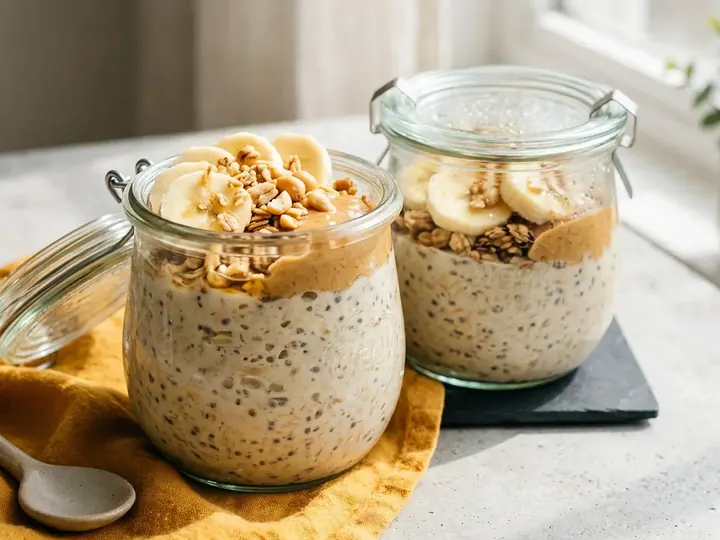 Breakfast
Peanut Butter Banana Overnight Oats for Make-Ahead Mornings
Total time: 8 hrs 15 mins
 Appetizers
Crispy Loaded Potato Skins with Cheddar and Bacon
Total time: 1 hr 45 mins
 Appetizers
Bacon Cream Cheese Stuffed Mushrooms with Garlic Herb Filling
Total time: 55 mins
Keep reading
More stories
Family Secrets
She Attacked My Grandmother for a Safe Key — What the Black Ledger Revealed Destroyed Us Both
Arthur walked in on his fiancée assaulting his grandmother. What Evelyn confessed about the black ledger, and what Diana did next, changed everything forever.
10 min readFiction

Family Secrets
My Stepmother Set a Trap for My Baby Brother—But Our Hallway Camera Caught Everything
Twelve-year-old Maya saves her toddler brother from a deadly stair fall—then exposes the stepmother who staged it.
9 min readFiction

Family Secrets
The Stable Groom Saved My Son—Then Everyone Learned Her Secret
A five-year-old boy falls from a pony, and the quiet stable groom catches him. What slips from her neck changes the Sterling family forever.
10 min readFiction