Buttery Potato Bazlama Flatbreads with Spiced Filling
Soft yeasted flatbreads rolled thin around a spiced mashed potato filling, then griddled until golden and brushed with melted butter. A warm, savory Turkish-style bread for any meal.
Published 9 min read
- Total time
- Prep
- Cook
- Rest
- Serves
- 6
- Makes 6 flatbreads
- Cuisine
- Turkish
- Calories
- 380
- per serving, estimated

On this page15 sections
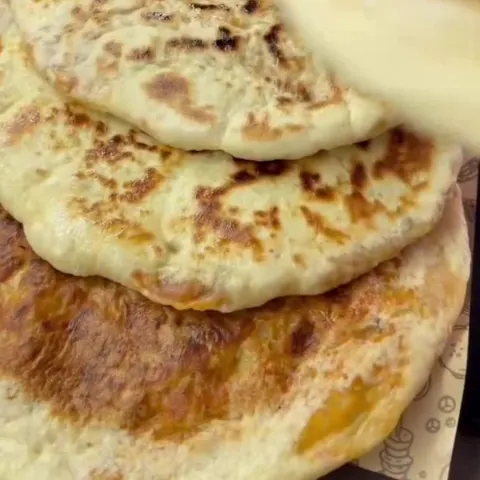
Soft, yeasted flatbreads rolled thin around a silky spiced potato filling, then griddled until golden and brushed with melted butter. Every bite offers a crackly, buttery crust that gives way to a tender, fragrant center. These potato bazlama flatbreads are a comforting, hands-on bread project that fills the kitchen with a warm, toasty aroma. They are perfect for tearing and sharing, whether served alongside a hearty stew or enjoyed on their own with a dollop of yogurt.
Potato bazlama is a traditional Turkish flatbread that is soft, chewy, and irresistibly buttery. The dough is enriched with olive oil and yeast, giving it a light, airy texture that puffs up beautifully on the griddle. The filling, made with mashed potatoes, onion, dill, and paprika, adds a savory, herbaceous contrast to the rich bread. These flatbreads are best served warm, straight from the skillet, when the crust is crackly and the center is molten and fragrant. They make a wonderful accompaniment to soups, salads, or grilled meats, and are equally delicious on their own.
The appeal
Why you’ll love it
The dough is made with a simple yeast dough that is rolled thin, allowing it to cook quickly on a hot griddle while remaining soft and pliable. The high heat creates a blistered, golden crust that contrasts with the tender interior. The filling is mashed until smooth, so it spreads evenly and stays moist during cooking, preventing dry pockets.
Brushing the hot flatbreads with melted butter right after cooking adds richness and a glossy sheen, while also keeping the crust supple. The butter seeps into the surface, enhancing the flavor and giving the bread a luxurious mouthfeel. This technique ensures every bite is buttery and satisfying.
What you need
Ingredients
Makes 6 flatbreads.
Dough
Filling
For brushing
Contains:
- Gluten
- Milk
Tools
Equipment
- Large mixing bowl
- Rolling pin
- Skillet or griddle
- Pastry brush
- Clean kitchen towel
- Measuring cups and spoons
Swaps
Substitutions
Instead ofActive dry yeast
UseInstant yeast can be used; mix directly with the flour and reduce the rise time by about 15 minutes.
Instead ofFresh dill
UseDried dill can be used, but reduce to 1 tablespoon and add it to the potato mixture while it is still warm.
Instead ofPaprika
UseSmoked paprika adds a deeper flavor; use the same amount.
Instead ofAll-purpose flour
UseBread flour will give a slightly chewier texture; use the same amount.
Good to know
Notes
Use starchy potatoes like Russets or Yukon Golds for the filling, as they mash to a smooth, creamy consistency. The onion adds a subtle bite; for a milder flavor, sauté it briefly in a little oil before mixing. Fresh dill brightens the filling, but if unavailable, dried dill can be substituted with a reduced amount.
The dough should be soft and slightly tacky but not sticky. If it is too dry, add a tablespoon of warm water; if too wet, sprinkle in a little more flour. A cast-iron skillet or griddle works best for even browning. Keep the cooked flatbreads covered with a towel to stay soft while you cook the rest.
Prep
Before you start
Before starting, make sure the potatoes are boiled and ready to mash. Measure all ingredients and have a clean, floured work surface ready. The dough needs about 1 hour to rise, so plan accordingly. Have a large skillet or griddle heating when you begin cooking. Keep a pastry brush and melted butter nearby for brushing the hot flatbreads.
Step by step
Method
Phase 1
Dough and Filling
Step 1: Make the Dough
In a large bowl, combine the flour, yeast, sugar, and salt. Add the warm water and olive oil, then stir with a wooden spoon until a shaggy dough forms. Turn the dough out onto a lightly floured surface and knead for 6 to 8 minutes, until smooth and elastic. Place the dough in a lightly oiled bowl, cover with a damp towel, and let rise in a warm spot for about 1 hour, until doubled in size.
You’ll need: all-purpose flour · active dry yeast · sugar · salt · warm water · olive oil
Look for: The dough should be soft, smooth, and spring back when poked.
Tip: If the dough feels sticky, add a little more flour, a tablespoon at a time.
Step 2: Make the Filling
While the dough rises, prepare the filling. In a large bowl, mash the boiled potatoes until smooth. Stir in the chopped onion, fresh dill, paprika, and salt. Mix until well combined. Set aside at room temperature.
You’ll need: potatoes, peeled and boiled · onion, finely chopped · fresh dill, chopped · paprika · salt
Look for: The filling should be thick and hold together when pressed.
Tip: For a smoother texture, pass the potatoes through a ricer before mixing.
Checkpoint
The dough should have doubled in size and feel soft and airy when pressed. The filling should be smooth, well-seasoned, and hold together without being dry. The aroma of dill and paprika should be fragrant. Before proceeding, ensure the dough is elastic and the filling is at room temperature.
Phase 2
Shaping and Filling
Step 3: Divide and Fill the Dough
Punch down the risen dough and turn it out onto a floured surface. Divide the dough into 6 equal portions. Roll each portion into a ball. Flatten one ball with a rolling pin into a 6-inch circle. Place a heaping spoonful of the potato filling in the center. Gather the edges of the dough up over the filling and pinch to seal securely. Gently roll the filled dough into a smooth, flat round about 8 inches in diameter, being careful not to tear the dough.
You’ll need: all-purpose flour · potatoes, peeled and boiled
Look for: The filled round should be even and about 1/4 inch thick.
Tip: Keep the remaining dough balls covered with a towel while working.
Step 4: Roll All the Flatbreads
Repeat the filling and rolling process with the remaining dough balls and potato filling. As each flatbread is rolled, place it on a floured baking sheet and cover with a clean kitchen towel to prevent drying. Ensure the edges are well sealed so the filling does not leak during cooking.
You’ll need: all-purpose flour · potatoes, peeled and boiled
Look for: All flatbreads should be uniform in size and thickness.
Tip: If the dough resists rolling, let it rest for a few minutes before continuing.
Checkpoint
The rolled flatbreads should be uniform in thickness and about 8 inches in diameter. The edges should be sealed without any visible filling. The surface should be smooth and free of tears. If any flatbreads tear, gently patch with a piece of dough. Keep them covered to prevent drying.
Phase 3
Cooking and Buttering
Step 5: Cook the Flatbreads
Heat a large skillet or griddle over medium-high heat. Place one flatbread in the dry skillet and cook for 2 to 3 minutes, until bubbles form and the bottom is golden brown. Flip the flatbread and cook the other side for 2 to 3 minutes, until it balloons slightly and is speckled golden on both sides. Transfer to a plate and immediately brush generously with melted butter. Repeat with the remaining flatbreads, brushing each with butter as soon as it comes off the heat.
You’ll need: melted butter
Look for: The flatbread should puff up and have deep golden spots on both sides.
Tip: Do not overcrowd the skillet; cook one at a time for even browning.
Step 6: Keep Warm and Serve
Stack the cooked flatbreads on a warm plate and cover loosely with a clean towel to keep them soft and warm while cooking the rest. Serve the flatbreads warm, tearing them open to reveal the silky spiced potato center. Enjoy them as a side to soups, stews, or grilled meats, or on their own as a satisfying snack.
Look for: The flatbreads should be soft, buttery, and warm when served.
Tip: For extra butteriness, brush with more melted butter just before serving.
Checkpoint
The flatbreads should puff up and develop golden brown spots on both sides. The butter should sizzle and soak into the hot crust, giving a glossy finish. The kitchen should smell of toasted bread and butter. Serve immediately while warm and soft.
Doneness
How to tell it’s done
The flatbreads are done when they are speckled golden brown on both sides and have puffed up during cooking. The internal temperature of the bread should be above 200°F (93°C) to ensure the dough is fully cooked. The crust should be crisp in spots but still pliable, and the filling should be hot and steamy when torn open.
Avoid these
Common mistakes
A common mistake is rolling the dough too thick, which results in a doughy center that does not cook through. Another is overfilling the flatbreads, causing the filling to leak out during cooking. Be sure to pinch the edges securely to seal. Also, avoid cooking over too high heat, which can burn the outside before the inside is done. Use medium-high heat and adjust as needed.
Better results
Tips
Tip 1
For the best texture, roll the dough as thin as possible without tearing, about 1/8 to 1/4 inch thick. This allows the flatbread to cook quickly and puff up nicely. If the dough springs back while rolling, let it rest for a few minutes to relax the gluten.
Tip 2
Serve the flatbreads warm, as they are softest right off the griddle. If making ahead, reheat them in a dry skillet over medium heat for about 1 minute per side to revive the crispness. Store leftovers in an airtight container at room temperature for up to 2 days.
Make it yours
Variations
Cheese-Stuffed
Add 1/2 cup crumbled feta or shredded mozzarella to the potato filling for a melty, savory center. Reduce the salt slightly to account for the cheese's saltiness.
Herb-Infused Dough
Mix 1 tablespoon of dried oregano or thyme into the flour for an aromatic twist. The herbs will infuse the bread as it cooks, adding an extra layer of flavor.
Spicy Kick
Add 1/2 teaspoon of red pepper flakes or a minced fresh chili to the potato filling. This adds a gentle heat that complements the dill and paprika.
Whole Wheat Version
Replace half of the all-purpose flour with whole wheat flour. The dough will be slightly denser, but the nutty flavor pairs well with the potato filling.
On the table
Serving suggestions
These flatbreads are best served warm, torn open to reveal the fragrant potato filling. They pair beautifully with a bowl of lentil soup, a fresh salad, or grilled meats. For a simple meal, serve them alongside yogurt and a sprinkle of sumac.
To serve, arrange the flatbreads on a large platter and brush with additional melted butter if desired. Garnish with extra fresh dill or a pinch of paprika for color. Let everyone tear off a piece and enjoy the contrast of the crisp crust and creamy center.
Leftovers
Storage & make-ahead
- Fridge
- Store in an airtight container in the refrigerator for up to 3 days. Reheat in a skillet or oven before serving.
- Freezer
- Freeze cooked flatbreads in a single layer on a baking sheet, then transfer to a freezer bag for up to 2 months.
- Reheat
- Reheat in a dry skillet over medium heat for 1-2 minutes per side, or in a 350°F (175°C) oven for 5-7 minutes.
Store leftover flatbreads in an airtight container or zip-top bag at room temperature for up to 2 days. To keep them soft, place a sheet of paper towel in the container to absorb excess moisture. Reheat in a dry skillet or toaster oven before serving.
Make ahead
The dough and filling can be prepared a day ahead. After making the dough, let it rise, then punch it down, cover tightly, and refrigerate overnight. The filling can also be made ahead and stored in the refrigerator. When ready to cook, bring both to room temperature before shaping and cooking.
Questions
Frequently asked questions
Can the dough be made without yeast?
Yeast is essential for the soft, airy texture of bazlama. Without it, the flatbreads will be dense and cracker-like. If you prefer a quicker version, you can use baking powder as a leavener, but the result will be different from the traditional recipe.
Why does the filling leak during cooking?
Leaking usually happens if the edges are not sealed tightly or if the filling is too wet. Make sure to pinch the dough edges together firmly and roll gently. If the filling is too moist, drain any excess liquid from the potatoes or add a little breadcrumbs to absorb it.
Can these flatbreads be frozen?
Yes, cooked flatbreads freeze well. Let them cool completely, then wrap individually in plastic wrap and place in a freezer bag. Reheat in a dry skillet or oven until hot and crisp. They can be frozen for up to 2 months.
What is the best way to reheat leftover flatbreads?
Reheat in a dry skillet over medium heat for 1-2 minutes per side, or in a toaster oven. Avoid microwaving, as it makes the bread rubbery. For extra softness, wrap in a damp towel and heat in the oven at 350°F (175°C) for 5 minutes.
Can the potato filling be made in advance?
Yes, the filling can be made up to 2 days ahead. Store it in an airtight container in the refrigerator. Bring it to room temperature before using, as cold filling can make the dough difficult to seal and may not cook through evenly.
Everything in one place: the recipe card below gathers the ingredients, steps and estimated nutrition, ready to print.
Recipe card
Buttery Potato Bazlama Flatbreads with Spiced Filling
Soft yeasted flatbreads rolled thin around a spiced mashed potato filling, then griddled until golden and brushed with melted butter. A warm, savory Turkish-style bread for any meal.
- Prep
- Cook
- Rest
- Total
- Servings
- 6 flatbreads
Ingredients
Dough
- 3 1/2 cups all-purpose flour
- 2 1/4 tsp active dry yeast
- 1 tsp sugar
- 1 1/2 tsp salt
- 1 1/2 cups warm water
- 2 tbsp olive oil
Filling
- 1 1/2 lb potatoes, peeled and boiled
- 1 medium onion, finely chopped
- 1/4 cup fresh dill, chopped
- 1 tsp paprika
- 1/2 tsp salt
For brushing
- 1 tbsp melted butter
Instructions
Make the Dough. In a large bowl, combine the flour, yeast, sugar, and salt. Add the warm water and olive oil, then stir with a wooden spoon until a shaggy dough forms. Turn the dough out onto a lightly floured surface and knead for 6 to 8 minutes, until smooth and elastic. Place the dough in a lightly oiled bowl, cover with a damp towel, and let rise in a warm spot for about 1 hour, until doubled in size.
Make the Filling. While the dough rises, prepare the filling. In a large bowl, mash the boiled potatoes until smooth. Stir in the chopped onion, fresh dill, paprika, and salt. Mix until well combined. Set aside at room temperature.
Divide and Fill the Dough. Punch down the risen dough and turn it out onto a floured surface. Divide the dough into 6 equal portions. Roll each portion into a ball. Flatten one ball with a rolling pin into a 6-inch circle. Place a heaping spoonful of the potato filling in the center. Gather the edges of the dough up over the filling and pinch to seal securely. Gently roll the filled dough into a smooth, flat round about 8 inches in diameter, being careful not to tear the dough.
Roll All the Flatbreads. Repeat the filling and rolling process with the remaining dough balls and potato filling. As each flatbread is rolled, place it on a floured baking sheet and cover with a clean kitchen towel to prevent drying. Ensure the edges are well sealed so the filling does not leak during cooking.
Cook the Flatbreads. Heat a large skillet or griddle over medium-high heat. Place one flatbread in the dry skillet and cook for 2 to 3 minutes, until bubbles form and the bottom is golden brown. Flip the flatbread and cook the other side for 2 to 3 minutes, until it balloons slightly and is speckled golden on both sides. Transfer to a plate and immediately brush generously with melted butter. Repeat with the remaining flatbreads, brushing each with butter as soon as it comes off the heat.
Keep Warm and Serve. Stack the cooked flatbreads on a warm plate and cover loosely with a clean towel to keep them soft and warm while cooking the rest. Serve the flatbreads warm, tearing them open to reveal the silky spiced potato center. Enjoy them as a side to soups, stews, or grilled meats, or on their own as a satisfying snack.
Allergens: Gluten, Milk
Nutrition (estimated, per serving)
- Calories
- 380 kcal
- Protein
- 9 g
- Carbs
- 62 g
- Fat
- 11 g
Estimates only: values vary with brands, substitutions and portion sizes.
Recipe by WixForum Kitchen · wixforum.com
Share this recipe
Send it to someone who’d love it, or save it for later.
Spotted a mistake in this recipe? Let us know.
Keep cooking


