One-Pan Beef Bolognese Tagliatelle with Melted Mozzarella
Tender tagliatelle tossed in a rich, tomatoey beef ragù with blistered tomatoes and melted mozzarella, all made in one skillet for a quick, satisfying weeknight dinner.
Published 10 min read
- Total time
- Prep
- Cook
- Serves
- 4
- Cuisine
- Italian-American
- Calories
- 590
- per serving, estimated

On this page16 sections
This one-pan beef Bolognese tagliatelle is the kind of dinner that feels both indulgent and effortless. Tender ribbons of pasta are tossed with a rich, tomatoey ragù, blistered fresh tomatoes, and a generous handful of melted mozzarella that pulls into silky strands with every twirl. The entire dish comes together in a single skillet, so cleanup is minimal and the flavor is maximum. Whether it's a busy weeknight or a cozy weekend meal, this recipe delivers comfort and satisfaction in every bite.
There's something deeply satisfying about a skillet pasta that goes from stovetop to table with minimal fuss. This recipe starts with ground beef seared until deeply browned, then simmered with fresh tomatoes and aromatic spices. The tagliatelle is added directly to the sauce, allowing it to absorb all the savory goodness. A final blanket of mozzarella melts into creamy pockets, while fresh parsley adds a bright finish. It's a complete meal that feels special but comes together in about half an hour.
The appeal
Why you’ll love it
The method here is all about building layers of flavor in one pan. Searing the ground beef creates a rich fond on the skillet, which gets deglazed with water and the juices from the tomatoes. This means every strand of pasta carries the deep, caramelized taste of the beef. Cooking the tomatoes whole allows them to blister and soften, releasing their natural sweetness without turning the sauce watery. The result is a robust, chunky ragù that clings beautifully to the noodles.
Adding the pasta directly to the sauce is a classic Italian technique that lets the noodles absorb the sauce as they finish cooking. This not only infuses the pasta with flavor but also helps the sauce thicken to the perfect consistency. The mozzarella is added at the very end, off the heat, so it melts into a creamy, stretchy texture without becoming greasy. This approach ensures every element is perfectly cooked and harmonized.
What you need
Ingredients
Makes 4 servings.
Contains:
- Gluten
- Milk
Tools
Equipment
- Large non-stick skillet with lid
- Wooden spoon or spatula
- Large pot for boiling pasta
- Colander
- Chef's knife
- Cutting board
- Measuring spoons
- Tongs or pasta fork
Swaps
Substitutions
Instead ofFresh tagliatelle
UseUse 250 g dried tagliatelle or fettuccine. Cook according to package directions until al dente, then drain and add to the sauce.
Instead ofGround beef
UseGround turkey or chicken works, but be aware the cooking time may be slightly shorter. Ensure it reaches 165°F (74°C).
Instead ofFresh tomatoes
UseSubstitute 2 cups (about 400 g) canned whole peeled tomatoes, drained and roughly chopped. Reduce the water to 2 tablespoons.
Instead ofShredded mozzarella
UseUse low-moisture part-skim mozzarella for a stretchier melt, or a mild provolone for a slightly sharper flavor.
Good to know
Notes
The quality of the ingredients matters here. Use a good extra virgin olive oil, ripe in-season tomatoes, and fresh tagliatelle if you can find it. Fresh pasta cooks quickly and has a delicate texture that pairs beautifully with the ragù. If you only have dried tagliatelle, that works too—just adjust the cooking time and add a bit of the pasta water to help the sauce coat the noodles.
A wide non-stick skillet is essential for this recipe. It gives you plenty of surface area for browning the beef and later tossing the pasta. If you don't have a lid, you can cover the skillet with a baking sheet or aluminum foil while the sauce simmers. The key is to keep the heat moderate so the sauce doesn't scorch, and to stir occasionally to prevent sticking.
Prep
Before you start
Before starting, make sure all ingredients are prepped and measured. Mince the garlic, chop the parsley, and have the tomatoes whole and ready. Bring a large pot of salted water to a boil for the pasta. Heat the olive oil in the skillet over medium-high heat. Have the lid and a wooden spoon nearby. This recipe moves quickly, so having everything within reach makes the process smooth and enjoyable.
Step by step
Method
Phase 1
Building the Ragù
Step 1: Sear the Beef and Tomatoes
Heat the olive oil in a large non-stick skillet over medium-high heat. Add the ground beef and cook, breaking it up with a wooden spoon, until browned and no longer pink, about 5 minutes. Add the minced garlic and cook for 1 minute until fragrant. Push the beef to one side and add the whole tomatoes to the empty side. Let them blister and soften, turning occasionally, for about 3 minutes.
You’ll need: extra virgin olive oil · ground beef · garlic, minced · ripe red tomatoes, whole
Internal temperature 160°F (71°C)
Look for: The beef is browned and the tomatoes are blistering and releasing their juices.
Tip: Do not overcrowd the pan; work in batches if needed to ensure proper browning.
Step 2: Season and Simmer
Season the beef and tomatoes with salt, sweet paprika, black pepper, and dried oregano. Stir everything together, then pour in the water. Scrape any browned bits from the bottom of the skillet. Bring to a simmer, then cover with the glass lid and reduce the heat to medium-low. Let it cook for 10 minutes, allowing the flavors to meld and the tomatoes to break down into a chunky sauce.
You’ll need: salt · sweet paprika · black pepper · dried oregano · water
Internal temperature 160°F (71°C)
Look for: The sauce is bubbling gently and the tomatoes have softened.
Tip: Use a heavy skillet to maintain even heat and prevent scorching.
Checkpoint
At the end of this phase, the beef should be deeply browned and the tomatoes blistered and softened. The sauce should be bubbling gently and smell richly of garlic and oregano. The liquid will have reduced slightly, and the tomatoes will have started to break down. Seasoning should be balanced—add a pinch more salt if needed before moving on.
Phase 2
Merging Pasta and Sauce
Step 3: Cook the Tagliatelle
Bring a large pot of salted water to a boil. Add the fresh tagliatelle and cook according to package directions until al dente, usually 3 to 4 minutes for fresh pasta. Drain well, reserving about 1/4 cup of the pasta water.
You’ll need: fresh tagliatelle pasta
Look for: The pasta is tender but still has a slight bite.
Tip: Fresh pasta cooks faster than dried; start checking at 2 minutes.
Step 4: Combine Pasta and Sauce
Add the drained tagliatelle directly to the skillet with the sauce. Toss gently with tongs to coat every strand with the ragù. If the sauce seems too thick, add a splash of the reserved pasta water to loosen it.
You’ll need: fresh tagliatelle pasta
Look for: The pasta is evenly coated and glossy.
Tip: Use a gentle tossing motion to avoid breaking the noodles.
Checkpoint
The pasta should be al dente and evenly coated with the ragù. The sauce should cling to the noodles rather than run off. The skillet should look cohesive, with no dry spots. The pasta water you reserved can help adjust the consistency if needed. The aroma should be savory and inviting.
Phase 3
Melting and Serving
Step 5: Melt the Mozzarella
Sprinkle the shredded mozzarella over the pasta. Cover the skillet with the lid and let it sit over low heat for 2 to 3 minutes, until the cheese is melted and creamy. Stir in the chopped parsley just before serving.
You’ll need: shredded mozzarella · fresh parsley, chopped
Look for: The cheese is melted and the parsley adds fresh green flecks.
Tip: Do not over-stir once the cheese is added; it will become stringy.
Step 6: Twirl and Serve
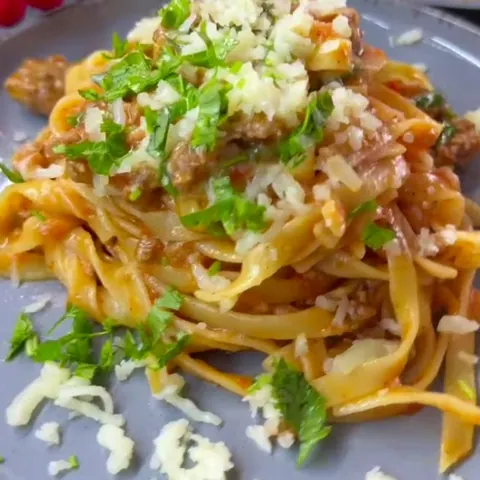
Using tongs or a pasta fork, twirl a portion of the tagliatelle into a neat nest and lift it onto warm serving bowls. Spoon any remaining sauce and cheese from the skillet over the top. Serve immediately while hot and creamy.
You’ll need: fresh tagliatelle pasta · shredded mozzarella
Look for: The pasta twirls easily and holds its shape on the plate.
Tip: Warm the bowls in a low oven or with hot water to keep the pasta hot longer.
Checkpoint
The mozzarella should be fully melted, creating a creamy, glossy finish. The parsley adds a fresh, herbal note. When you twirl a portion, it should hold its shape on the fork. The cheese should pull into long strands. Serve immediately, as the dish is best enjoyed hot and creamy.
Doneness
How to tell it’s done
The dish is done when the pasta is tender and well coated with the sauce, and the mozzarella is fully melted and creamy. The sauce should be thick enough to cling to the noodles without pooling at the bottom of the skillet. If you used ground beef, ensure it has reached an internal temperature of 160°F (71°C) for safety. The final dish should look glossy and inviting, with the cheese pulling into strands when you lift a forkful.
Avoid these
Common mistakes
One common mistake is overcooking the fresh pasta, which turns it mushy. Keep an eye on it and taste a strand a minute or two before the package suggests. Another is adding too much water to the sauce, making it thin and watery. Start with the 50 ml and add more only if needed. Also, avoid stirring the mozzarella too aggressively once it's added; let it melt gently under the lid to achieve that silky, stretchy texture.
Cook safely
Food safety
Safe internal temperatures
Cook to at least these temperatures, measured with an instant-read thermometer in the thickest part.
| Food | Minimum internal temperature |
|---|---|
| Ground meat | 160°F (71°C) |
Better results
Tips
Tip 1
For the best flavor, use fresh, high-quality ingredients. Ripe tomatoes are essential—they should be fragrant and slightly soft to the touch. If tomatoes are out of season, canned whole San Marzano tomatoes are a great substitute. Fresh tagliatelle is ideal, but if using dried, cook it a minute less than the package suggests so it finishes cooking in the sauce.
Tip 2
Don't skip the step of letting the sauce simmer with the lid on. This allows the flavors to meld and the tomatoes to break down into a thick, rich ragù. If you prefer a smoother sauce, you can crush the tomatoes with the back of a spoon before adding the pasta. The final dish should be hearty and satisfying, with a perfect balance of savory beef, sweet tomatoes, and creamy cheese.
Make it yours
Variations
Spicy Arrabbiata Twist
Add 1/2 teaspoon of red pepper flakes along with the paprika for a gentle heat. Or stir in a finely chopped fresh chili with the garlic. This adds a pleasant kick that balances the richness of the beef and cheese.
Mushroom and Herb Version
Sauté 200 g sliced mushrooms with the beef until golden. Add a teaspoon of fresh thyme or rosemary along with the oregano. The earthiness of the mushrooms pairs beautifully with the tomato and beef.
Vegetarian Lentil Ragù
Replace the ground beef with 350 g cooked green or brown lentils. Sauté them with the garlic and tomatoes as directed. The lentils provide a hearty texture and absorb the flavors well. Use vegan mozzarella to keep it dairy-free.
Creamy Vodka Sauce
Stir in 2 tablespoons of tomato paste with the garlic, and add 1/4 cup of vodka along with the water. Simmer for 5 minutes, then stir in 1/4 cup heavy cream before adding the pasta. This creates a luxurious, pink sauce.
On the table
Serving suggestions
Serve the tagliatelle in shallow bowls, twirling each portion into a neat nest. Spoon any extra sauce from the skillet over the top. A sprinkle of extra chopped parsley adds color and freshness. This dish pairs wonderfully with a simple green salad dressed with lemon and olive oil, and a glass of medium-bodied red wine like Chianti or Sangiovese.
For a more indulgent presentation, top each serving with a few extra shavings of fresh mozzarella or a drizzle of good olive oil. Crusty bread is perfect for sopping up any remaining sauce. The dish is hearty enough to stand alone, but it also works well as part of a larger Italian-themed meal. Enjoy it hot, straight from the skillet, for the best experience.
Leftovers
Storage & make-ahead
- Fridge
- Store leftovers in an airtight container in the fridge for up to 3 days. Reheat gently with a splash of water to restore sauciness.
- Freezer
- The sauce (without pasta and mozzarella) can be frozen for up to 3 months. Thaw overnight in the fridge and reheat before combining with fresh pasta.
- Reheat
- Reheat leftovers in a skillet over medium heat with a tablespoon of water or broth, stirring frequently, until heated through.
Leftovers can be stored in an airtight container in the refrigerator for up to 3 days. The pasta will absorb some of the sauce as it sits, so when reheating, add a splash of water or broth to loosen it. Reheat gently in a skillet or microwave until warmed through. The mozzarella may lose its stretchiness upon reheating, but the flavor will remain delicious.
Make ahead
The sauce can be made up to 2 days ahead. Prepare the ragù as directed, but do not add the pasta or mozzarella. Let it cool completely, then refrigerate in an airtight container. When ready to serve, reheat the sauce in a skillet, cook the tagliatelle, and combine as directed. Add the mozzarella and parsley at the end for the freshest result.
Questions
Frequently asked questions
Can this recipe be made gluten-free?
Yes, use gluten-free tagliatelle or fettuccine. Cook according to package directions, then add to the sauce. Ensure all other ingredients, such as the spices and cheese, are certified gluten-free if needed. The sauce itself is naturally gluten-free, so the only change is the pasta.
What type of ground beef is best?
Ground beef with 80/20 lean-to-fat ratio is ideal for this recipe. The fat adds flavor and helps create a rich sauce. If using leaner beef, such as 93/7, add an extra tablespoon of olive oil to prevent the meat from drying out.
Can the sauce be made without fresh tomatoes?
Yes, substitute 2 cups of canned whole peeled tomatoes, drained and roughly chopped. Reduce the water to 2 tablespoons since canned tomatoes have more liquid. Simmer a few minutes longer to thicken the sauce to the desired consistency.
How do you keep the mozzarella from becoming stringy?
Use low-moisture mozzarella and add it off the heat, then cover the skillet for a couple of minutes. This allows it to melt gently without becoming rubbery. Stir only once or twice, just enough to incorporate it. Over-stirring can cause the cheese to clump.
Can this dish be frozen?
The sauce freezes well, but the pasta and mozzarella do not. Make the sauce, cool it completely, and freeze for up to 3 months. Thaw overnight in the refrigerator, reheat, then cook fresh pasta and add the mozzarella at the end for best results.
Everything in one place: the recipe card below gathers the ingredients, steps and estimated nutrition, ready to print.
Recipe card
One-Pan Beef Bolognese Tagliatelle with Melted Mozzarella
Tender tagliatelle tossed in a rich, tomatoey beef ragù with blistered tomatoes and melted mozzarella, all made in one skillet for a quick, satisfying weeknight dinner.
- Prep
- Cook
- Total
- Servings
- 4 servings
Ingredients
- 3 tbsp extra virgin olive oil
- 350 g ground beef
- 3 cloves garlic, minced
- 4 ripe red tomatoes, whole
- 1 tsp salt
- 1 tsp sweet paprika
- 1/2 tsp black pepper
- 1 tsp dried oregano
- 50 ml water
- 250 g fresh tagliatelle pasta
- 100 g shredded mozzarella
- 2 tbsp fresh parsley, chopped
Instructions
Sear the Beef and Tomatoes. Heat the olive oil in a large non-stick skillet over medium-high heat. Add the ground beef and cook, breaking it up with a wooden spoon, until browned and no longer pink, about 5 minutes. Add the minced garlic and cook for 1 minute until fragrant. Push the beef to one side and add the whole tomatoes to the empty side. Let them blister and soften, turning occasionally, for about 3 minutes.
Season and Simmer. Season the beef and tomatoes with salt, sweet paprika, black pepper, and dried oregano. Stir everything together, then pour in the water. Scrape any browned bits from the bottom of the skillet. Bring to a simmer, then cover with the glass lid and reduce the heat to medium-low. Let it cook for 10 minutes, allowing the flavors to meld and the tomatoes to break down into a chunky sauce.
Cook the Tagliatelle. Bring a large pot of salted water to a boil. Add the fresh tagliatelle and cook according to package directions until al dente, usually 3 to 4 minutes for fresh pasta. Drain well, reserving about 1/4 cup of the pasta water.
Combine Pasta and Sauce. Add the drained tagliatelle directly to the skillet with the sauce. Toss gently with tongs to coat every strand with the ragù. If the sauce seems too thick, add a splash of the reserved pasta water to loosen it.
Melt the Mozzarella. Sprinkle the shredded mozzarella over the pasta. Cover the skillet with the lid and let it sit over low heat for 2 to 3 minutes, until the cheese is melted and creamy. Stir in the chopped parsley just before serving.
Twirl and Serve. Using tongs or a pasta fork, twirl a portion of the tagliatelle into a neat nest and lift it onto warm serving bowls. Spoon any remaining sauce and cheese from the skillet over the top. Serve immediately while hot and creamy.
Allergens: Gluten, Milk
Nutrition (estimated, per serving)
- Calories
- 590 kcal
- Protein
- 32 g
- Carbs
- 48 g
- Fat
- 28 g
Estimates only: values vary with brands, substitutions and portion sizes.
Recipe by WixForum Kitchen · wixforum.com
Share this recipe
Send it to someone who’d love it, or save it for later.
Spotted a mistake in this recipe? Let us know.
Keep cooking


