One-Pan Tomato Beef Spaghetti
A deeply flavorful one-pan spaghetti Bolognese with juicy tomatoes and seasoned ground beef, tossed with al dente pasta and finished with Parmesan and basil.
Published 8 min read
- Total time
- Prep
- Cook
- Serves
- 4
- Cuisine
- Italian-American
- Calories
- 560
- per serving, estimated

On this page16 sections
This one-pan tomato beef spaghetti is the weeknight dinner that delivers big flavor with minimal effort. Juicy vine tomatoes and seasoned ground beef simmer together into a rich, rustic sauce, then toss with al dente spaghetti for a glossy, satisfying meal. Finished with freshly grated Parmesan and basil, it’s a dish that feels special but comes together in about 30 minutes. Perfect for busy evenings when you want something hearty and comforting without a pile of dishes.
There’s something magical about a pasta dish that cooks in a single skillet. Here, ripe tomatoes and ground beef are seared together, seasoned simply with salt, pepper, garlic powder, and paprika, then simmered briefly to create a sauce that’s both fresh and deeply savory. The cooked spaghetti is tossed right into the pan, absorbing all those juices. It’s a streamlined take on a classic Bolognese-style sauce—no long simmer, no separate pots, just pure, concentrated flavor. Serve it straight from the skillet for a casual dinner or plate it up for guests; either way, it’s sure to become a favorite.
The appeal
Why you’ll love it
The method of searing whole tomatoes with ground beef in a hot skillet is what makes this dish so effective. The high heat caramelizes the natural sugars in the tomatoes and browns the beef, building a deep, savory foundation in minutes. As the tomatoes soften, they release their juices, which meld with the seasoned beef to create a light but flavorful sauce that clings to every strand of pasta.
Tossing the cooked spaghetti directly into the sauce is another key step. Instead of serving sauce over pasta, this technique allows the noodles to absorb some of the liquid and become fully coated, resulting in a more cohesive dish. The residual heat of the skillet also helps the Parmesan melt slightly, creating a silky finish that makes every bite satisfying.
What you need
Ingredients
Makes 4 servings.
For serving
Contains:
- Gluten
- Milk
Tools
Equipment
- Large skillet with lid
- Tongs
- Wooden spoon
- Measuring spoons
- Cutting board
- Chef's knife
Swaps
Substitutions
Instead ofGround beef
UseGround turkey or ground chicken (adjust cooking time to reach 165°F/74°C)
Instead ofSpaghetti
UseLinguine, fettuccine, or bucatini—any long pasta works
Instead ofFresh tomatoes
Use1 (14.5 oz) can diced tomatoes, drained
Instead ofSweet paprika
UseSmoked paprika for a deeper, smokier flavor
Good to know
Notes
For the best results, use ripe, in-season vine tomatoes—they’re sweeter and more flavorful. If tomatoes aren’t at their peak, you can substitute canned diced tomatoes, though the texture will be slightly different. The seasoning is simple: salt, black pepper, garlic powder, and sweet paprika. These pantry staples enhance the natural taste of the beef and tomatoes without overwhelming them.
The spaghetti should be cooked al dente before adding it to the skillet—slightly firmer than you’d normally eat, because it will continue to cook briefly in the sauce. Any long pasta works here, from linguine to bucatini. The dish is best served immediately, while the pasta is hot and the Parmesan is just starting to melt.
Prep
Before you start
Before you start, make sure you have all your ingredients measured and ready. Cook the spaghetti according to package instructions until al dente, then drain and set aside. Reserve a cup of pasta water in case you need to loosen the sauce later. Have the tomatoes whole, the ground beef at room temperature (but not out of the fridge for more than 30 minutes), and the seasonings measured. Heat a large skillet over medium-high heat so it’s ready when you begin.
Step by step
Method
Phase 1
Searing and Simmering
Step 1: Sear the beef and tomatoes
Heat the olive oil in a wide skillet over medium-high heat until shimmering. Add the whole tomatoes and ground beef. Cook, breaking up the beef with a wooden spoon, until the beef is browned and the tomatoes start to soften and release their juices, about 5 minutes.
You’ll need: extra virgin olive oil · ripe red vine tomatoes, whole · ground beef
Internal temperature 160°F (71°C)
Look for: The beef is no longer pink and the tomatoes begin to blister and burst.
Tip: Use a heavy skillet to get a good sear on the beef without scorching the tomatoes.
Step 2: Season the sauce
Sprinkle the salt, black pepper, garlic powder, and sweet paprika over the beef and tomatoes. Stir to coat everything evenly. Cover the skillet with a lid, reduce the heat to medium-low, and let simmer for 5 minutes, allowing the flavors to meld and the tomatoes to break down further.
You’ll need: salt · black pepper · garlic powder · sweet paprika
Internal temperature 160°F (71°C)
Look for: The sauce is fragrant and the tomatoes have softened into a chunky sauce.
Tip: Taste the sauce before adding pasta and adjust seasoning if needed.
Checkpoint
The skillet should be sizzling as the beef browns and the tomatoes soften. The aroma is deeply savory with a hint of sweetness from the tomatoes. After seasoning and covering, the sauce will bubble gently, and the tomatoes will release their juices. Check that the beef is fully browned and the tomatoes are collapsing before moving on.
Phase 2
Tossing the Pasta
Step 3: Add the spaghetti
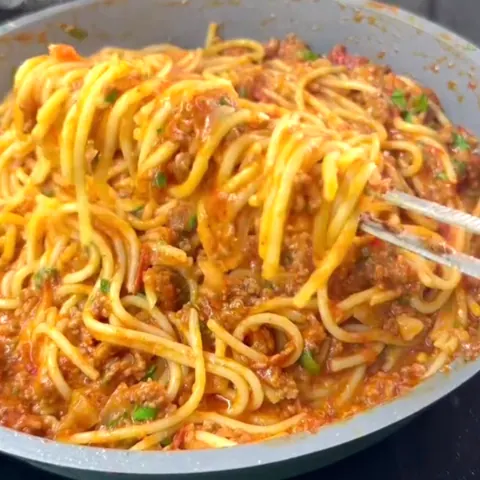
Using tongs, transfer the cooked spaghetti directly into the skillet with the sauce. Toss vigorously until every strand is coated with the crimson sauce and the pasta is glossy.
You’ll need: spaghetti, cooked al dente
Look for: The spaghetti is evenly coated and the sauce clings to every strand.
Tip: If the sauce seems thick, add a splash of pasta water to loosen it.
Checkpoint
When you add the spaghetti, the sauce should be thick enough to coat the pasta but still loose enough to toss easily. The strands will turn a vibrant red as they absorb the sauce. The skillet should look glossy and cohesive, with no dry spots. Taste a strand to ensure it’s seasoned well.
Phase 3
Finishing and Serving
Step 4: Finish and serve
Remove the skillet from the heat. Twirl a towering forkful of spaghetti into a bowl or plate. Garnish with freshly grated Parmesan and fresh basil leaves. Serve immediately.
You’ll need: freshly grated Parmesan · fresh basil leaves
Look for: The Parmesan melts slightly into the hot pasta and the basil adds a fresh aroma.
Tip: Twirl the pasta with tongs for a neat, restaurant-style presentation.
Checkpoint
The final dish should look inviting, with steam rising from the twirled pasta. The Parmesan should start to melt on contact, and the basil leaves add a pop of green. The texture should be tender but not mushy, and the sauce should cling to every forkful. Serve right away for the best experience.
Doneness
How to tell it’s done
The dish is done when the beef is fully cooked through—no pink remains—and the tomatoes have broken down into a chunky sauce. The spaghetti should be glossy and evenly coated, and the sauce should cling to the pasta rather than pooling at the bottom. If you’re using a meat thermometer, the ground beef should reach 160°F (71°C). Garnish with Parmesan and basil and serve hot.
Avoid these
Common mistakes
One common mistake is overcooking the spaghetti before adding it to the sauce, which can make it mushy. Cook it al dente and let the sauce finish the job. Another pitfall is not breaking up the beef enough—you want small, even crumbles. Also, avoid lifting the lid too often during the simmering phase, as that lets steam escape and slows down the sauce. Finally, don’t skip the Parmesan and basil—they brighten the dish and add a fresh, salty contrast.
Cook safely
Food safety
Safe internal temperatures
Cook to at least these temperatures, measured with an instant-read thermometer in the thickest part.
| Food | Minimum internal temperature |
|---|---|
| Ground meat | 160°F (71°C) |
Better results
Tips
Tip 1
For the most flavorful sauce, use tomatoes that are fully ripe and fragrant. If you can’t find good fresh tomatoes, canned San Marzano tomatoes are an excellent substitute—just drain them well before adding. The key is to let the tomatoes sear and blister, which concentrates their sweetness and adds a slight charred note to the sauce.
Tip 2
To make the dish even more luxurious, finish it with a knob of butter or a drizzle of olive oil after tossing the pasta. This adds richness and helps the sauce emulsify. You can also add a pinch of red pepper flakes for a subtle heat. The recipe is forgiving, so feel free to adjust the seasonings to your taste.
Make it yours
Variations
Spicy Arrabbiata Twist
Add 1/2 teaspoon red pepper flakes along with the other seasonings for a gentle kick. Finish with a drizzle of chili oil and extra basil for a spicy, aromatic version.
Mushroom & Herb Version
Sauté 8 oz sliced cremini mushrooms with the beef until browned. Add 1 teaspoon dried oregano and 1/2 teaspoon dried thyme with the seasonings for an earthy, herby depth.
Vegetarian Lentil Spaghetti
Replace the ground beef with 1 1/2 cups cooked brown lentils and use vegetable broth instead of pasta water. The lentils provide a hearty texture and absorb the tomato sauce beautifully.
Creamy Tomato Sauce
Stir in 1/4 cup heavy cream after tossing the spaghetti for a richer, silkier sauce. Reduce the salt slightly to balance the cream's sweetness.
On the table
Serving suggestions
Serve this spaghetti in shallow bowls, twirling a generous portion into a neat nest. Top with freshly grated Parmesan and a few torn basil leaves for a burst of color and flavor. A side of crusty bread is perfect for soaking up any extra sauce, and a simple green salad adds a fresh contrast.
This dish is hearty enough to stand alone, but it also pairs well with a glass of red wine and a light dessert. For a family-style dinner, bring the skillet to the table and let everyone help themselves. The leftovers are just as good the next day, so consider doubling the recipe if you’re feeding a crowd.
Leftovers
Storage & make-ahead
- Fridge
- Store leftovers in an airtight container in the fridge for up to 3 days. Reheat with a splash of water or broth.
- Freezer
- The sauce can be frozen for up to 3 months. Thaw overnight in the fridge and reheat gently.
- Reheat
- Reheat in a skillet over medium heat, adding a splash of liquid to restore the sauce's consistency. Stir until hot.
Leftovers can be stored in an airtight container in the refrigerator for up to 3 days. The pasta will absorb some sauce as it sits, so when reheating, add a splash of water or broth to loosen it. Reheat gently in a skillet over medium heat or in the microwave, stirring occasionally, until piping hot.
Make ahead
You can prepare the sauce up to 2 days ahead, but cook the spaghetti fresh when ready to serve. To make ahead, cook the beef and tomatoes as directed, let cool, and refrigerate. When ready, reheat the sauce, cook the spaghetti, and toss together. This saves time on busy nights.
Questions
Frequently asked questions
Can this dish be made gluten-free?
Yes, simply use gluten-free spaghetti or another long gluten-free pasta. The rest of the ingredients—tomatoes, beef, seasonings, and olive oil—are naturally gluten-free. Be sure to check the labels on any packaged spices to avoid cross-contamination.
What can be used instead of fresh tomatoes?
Canned diced tomatoes are a great substitute, especially when fresh tomatoes are out of season. Drain them well before adding to the skillet. You may need to adjust the cooking time slightly since canned tomatoes are softer and release liquid faster.
How can the sauce be thickened?
If the sauce seems too thin, let it simmer uncovered for a few extra minutes to reduce. Alternatively, mash a few of the tomato chunks with a fork or potato masher to help thicken it. Avoid adding flour or cornstarch, as it can alter the texture.
Is it possible to use ground turkey instead of beef?
Yes, ground turkey works well. It’s leaner, so you may want to add a tablespoon of olive oil to the skillet. Cook it until it reaches 165°F (74°C) to ensure it’s safe. The flavor will be slightly milder, so consider adding a pinch more paprika.
Can this recipe be doubled?
Absolutely. Use a larger skillet or Dutch oven and increase the cooking time slightly to accommodate the extra volume. The seasonings can be scaled proportionally, but taste as you go and adjust. Leftovers freeze well, making it a great make-ahead option.
Everything in one place: the recipe card below gathers the ingredients, steps and estimated nutrition, ready to print.
Recipe card
One-Pan Tomato Beef Spaghetti
A deeply flavorful one-pan spaghetti Bolognese with juicy tomatoes and seasoned ground beef, tossed with al dente pasta and finished with Parmesan and basil.
- Prep
- Cook
- Total
- Servings
- 4 servings
Ingredients
- 3 tbsp extra virgin olive oil
- 300 g ground beef
- 5 ripe red vine tomatoes, whole
- 1 tsp salt
- 1 tsp black pepper
- 1 tsp garlic powder
- 1 tsp sweet paprika
- 250 g spaghetti, cooked al dente
For serving
- freshly grated Parmesan, for serving
- fresh basil leaves, for serving
Instructions
Sear the beef and tomatoes. Heat the olive oil in a wide skillet over medium-high heat until shimmering. Add the whole tomatoes and ground beef. Cook, breaking up the beef with a wooden spoon, until the beef is browned and the tomatoes start to soften and release their juices, about 5 minutes.
Season the sauce. Sprinkle the salt, black pepper, garlic powder, and sweet paprika over the beef and tomatoes. Stir to coat everything evenly. Cover the skillet with a lid, reduce the heat to medium-low, and let simmer for 5 minutes, allowing the flavors to meld and the tomatoes to break down further.
Add the spaghetti. Using tongs, transfer the cooked spaghetti directly into the skillet with the sauce. Toss vigorously until every strand is coated with the crimson sauce and the pasta is glossy.
Finish and serve. Remove the skillet from the heat. Twirl a towering forkful of spaghetti into a bowl or plate. Garnish with freshly grated Parmesan and fresh basil leaves. Serve immediately.
Allergens: Gluten, Milk
Nutrition (estimated, per serving)
- Calories
- 560 kcal
- Protein
- 28 g
- Carbs
- 62 g
- Fat
- 22 g
- Fiber
- 4 g
- Sugar
- 6 g
Estimates only: values vary with brands, substitutions and portion sizes.
Recipe by WixForum Kitchen · wixforum.com
Share this recipe
Send it to someone who’d love it, or save it for later.
Spotted a mistake in this recipe? Let us know.
Keep cooking


