Forum StoriesLove & LossFiction23 min readPart 2 of 3
She Found Him After 10 Years, But His Secret Made Her Drop the Accusation — Part 2 of 3
By WixForum KitchenPublished
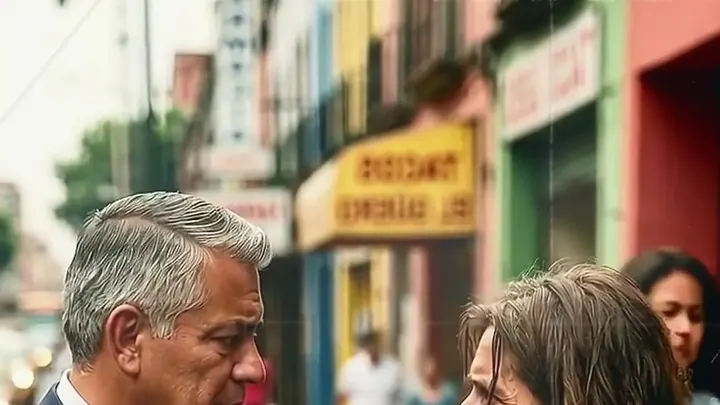
The Truth That Broke Us Open
I stared at him, my mind refusing to process the words. "Dying? What do you mean, dying?"
Ricardo pulled a folded piece of paper from his jacket pocket and slid it across the table. It was a medical report, stamped with a hospital logo, and the words blurred before my eyes. Pancreatic cancer. Stage IV. Three months, maybe less.
"I found out two months ago," he said, his voice hollow. "I didn't come back to ask for forgiveness. I came back to set things right. To tell you the truth, so you could stop hating me with a lie."
"You think this makes it better?" I whispered, my voice cracking. "You think telling me you're dying makes it okay that you left us?"
"No," he said. "I don't think anything makes it okay. But I couldn't die with this secret on my chest. You deserved to know."
The anger that had fueled me for a decade began to crumble, replaced by a cold, hollow ache. I thought about the children—our children, because they were his in every way that mattered. And now he was telling me they weren't his blood. That didn't change anything. Not to me. Not to them.
"Why didn't you tell me before you left?" I asked, my voice trembling. "We could have worked through it. We could have gotten help."
"I was ashamed," he said. "Ashamed of what I saw. Ashamed of what I felt. I thought if you knew, you would hate me for not being able to love them the way they deserved."
"I already hated you," I said, the words bitter on my tongue. "You gave me no choice."
He flinched, but he didn't look away. "I know. And I'm sorry. I'm so sorry."
I sat there, the silence stretching between us. The diner seemed to fade away, leaving just the two of us and the wreckage of our shared past. I wanted to yell at him, to throw my coffee in his face, to make him feel even a fraction of the pain I had carried for ten years. But I couldn't. Because all I could see was the broken man in front of me, a man who had run from his own shame and had been running ever since.
"What about Eduardo?" I asked, my voice barely audible. "Does he know?"
"He died three years ago," Ricardo said. "Car accident. Drunk driver."
I felt a strange pang of loss, even though I had cut all ties with Eduardo after that night. He had never known about the children—I had made sure of that. And now he was gone, and the secret had been buried with him.
"So you came back to tell me this," I said, my voice flat. "To make peace with yourself before you go."
"Partly," he admitted. "But also because I couldn't stop thinking about you. About the children. About the life we could have had."
"There is no life we could have had," I said, my voice hard. "You made sure of that."
"I know," he said, his eyes glistening. "I know."
We sat in silence for a long time, the weight of the truth pressing down on us. I thought about the children—how they had grown up without a father, how they had asked about him, how I had told them he was a monster. And now I had to decide: did I let them meet him before it was too late?
"I need to think," I said, standing up. "I need to process this."
"Sophia," he said, reaching for my hand. "I'm not asking for anything. I just want to see them. One time. Before I go."
"I'll think about it," I said, pulling my hand away. "I'll call you."
I walked out of the diner, the cold air hitting my face like a slap. My heart was a mess of anger, grief, and confusion. For ten years, I had built my life on the foundation of his betrayal. And now he had shattered it with a single truth.
The Meeting That Changed Everything
I didn't call him for a week. I went through the motions of my life—work, cooking, cleaning—but my mind was elsewhere. I kept replaying his words in my head, trying to find a way to make them fit with the man I had hated for so long.
Finally, on a Sunday afternoon, I sat the twins down in the living room. Sofia was at a friend's house, but Maria and Mateo were old enough to understand. I told them the truth—not about the paternity, but about their father. I told them he was sick, and that he wanted to see them.
"Why should we see him?" Mateo asked, his voice hard. "He abandoned us."
"Because he's your father," I said, my voice soft. "And he's dying. And sometimes, we have to forgive people for their mistakes, even when they don't deserve it."
Maria looked at me, her eyes searching. "Do you forgive him?"
"I don't know," I admitted. "But I'm trying."
They agreed to meet him, reluctantly. We arranged to meet at the park where we used to take them when they were little. Ricardo was already there when we arrived, sitting on a bench, looking frail and tired.
It was awkward at first, the silence heavy with years of absence. But then Mateo asked him about his childhood, and Ricardo started talking. He told them about growing up with his twin brother, about the mischief they used to get into, about the dreams he had for them.
"I wanted to be there for your first steps," he said, his voice cracking. "I wanted to teach you how to ride a bike, how to throw a baseball. I wanted to be your dad."
"But you weren't," Maria said, her voice flat.
"I know," Ricardo said. "And I'm sorry. I'm so sorry."
I watched them, my heart breaking in a way I hadn't expected. These were the children he had raised, even from a distance. They had his stubbornness, his sense of humor, his way of holding back tears. And now, they were meeting the man who had given them life—only to take it away.
As the sun began to set, Ricardo stood up, his legs shaky. "I should go," he said. "I don't want to overstay my welcome."
"Wait," Mateo said, surprising us all. "Can we come see you again?"
Ricardo's eyes filled with tears. "I would like that," he said. "I would like that very much."
I walked him to his car, the silence between us heavy with unspoken words. "Thank you," he said, his voice rough. "For giving me this chance."
"Don't thank me yet," I said. "We still have a lot to work through."
"I know," he said. "But this is more than I ever hoped for."
He got in his car and drove away, leaving me standing in the parking lot, my heart a tangle of conflicting emotions. I didn't know if I could ever fully forgive him. But for the first time in ten years, I didn't want to hate him anymore.
The Confession That Came Too Late
The weeks that followed were a blur of hospital visits and quiet conversations. Ricardo's condition worsened, but he held on, determined to make the most of the time he had left. He spent every spare moment with the children, teaching Mateo how to fix a car, helping Maria with her homework, telling Sofia stories about his childhood.
I watched from a distance, my heart slowly thawing. I saw the way he looked at them, the way he touched their faces as if he could memorize every feature. And I saw the regret in his eyes, the weight of a decade of missed moments that he could never get back.
One evening, when the children were asleep, I sat by his hospital bed. He was weaker now, his skin pale, his voice a whisper. "Sophia," he said, reaching for my hand. "I need to tell you something."
"What is it?" I asked, my voice soft.
"I never stopped loving you," he said. "Even when I was running, even when I was angry, I never stopped loving you. You were the best thing that ever happened to me."
"Then why did you leave?" I asked, the question I had been asking for a decade.
"Because I was afraid," he said. "Afraid that if I stayed, you would look at me the way I looked at myself—with disgust. I couldn't bear that."
"I never would have looked at you that way," I said, my voice breaking. "I loved you, Ricardo. I loved you with all my heart."
"I know," he said, tears streaming down his face. "And I threw it all away because I was a coward."
"You're not a coward," I said, squeezing his hand. "You came back. That took courage."
"It took dying to find it," he said, a sad smile on his lips.
I leaned forward and kissed his forehead, the way I used to when we were young. "I forgive you," I whispered. "I forgive you."
He closed his eyes, a look of peace washing over his face. "Thank you," he said. "That's all I ever wanted."
Three days later, Ricardo passed away, surrounded by his children and the woman he had never stopped loving. It was the ending I never could have imagined, the ending that had been waiting for us all along.
The Boy Who Carried My Heart
After the funeral, I stood in the cemetery, watching the casket being lowered into the ground. The children were beside me, their faces streaked with tears. Maria held Sofia's hand, while Mateo stood tall, his jaw set.
"He wasn't our real dad," Mateo said, his voice quiet. "But he was the only dad we ever had."
"He was your real dad," I said, my voice firm. "In every way that mattered."
I thought about the secret I would carry with me for the rest of my life—the secret of their true paternity. I had decided not to tell them. It would only cause pain, and Ricardo was the only father they had ever known.
As we walked away from the grave, I felt a strange sense of peace. The anger that had burned inside me for so long had finally gone out, replaced by a quiet acceptance. Ricardo had made mistakes, but he had also tried to make things right. And in the end, that was all any of us could do.
I looked up at the sky, the sun breaking through the clouds. "Goodbye, Ricardo," I whispered. "I hope you found the peace you were looking for."
The children walked ahead, their laughter echoing in the quiet cemetery. They were strong, resilient, and full of life. They were his legacy. And they were mine.
As we reached the car, Sofia turned to me, her eyes bright. "Mom, do you think Dad is watching us from somewhere?"
"I think he is," I said, smiling through my tears. "And I think he's proud of you. All of you."
And in that moment, I knew that the story wasn't about the years we had lost. It was about the love we had found, even in the darkest of places. It was about forgiveness, and the courage to start again.
I took a deep breath, the cool air filling my lungs. The road ahead was uncertain, but for the first time in a long time, I felt ready to walk it. Not as a woman defined by betrayal, but as a mother who had learned that even the deepest wounds can heal.
And as we drove away, I let go of the past. Not because it didn't hurt, but because I had finally found the strength to move forward. For myself. For my children. For the love that had survived against all odds.
Share this story
Send it to someone who would enjoy it.
Keep reading
More stories
Love & Loss
The Empty Chair at the Tea Stall: A Friendship Broken by a Secret
Two friends shared everything—until one night, a whispered confession shattered their bond. Now, one sits alone, haunted by the words he never meant to say. What happened after the silence?
8 min readFiction
Love & Loss
She Guarded Her Late Husband's Bench — Then a Stranger's Secret Changed Everything
Every day, Marta visited the bench where she scattered her husband's ashes. But when a homeless man claimed it, their bitter standoff unraveled a connection neither expected—and a truth that healed them both.
13 min readFiction
Love & Loss
My Veteran Father Was Denied a Seat — Then a Stranger's Act Changed Everything
My dad served America and lost his leg in Iraq. But when a young couple mocked him on a bus, a stranger's quiet act reminded us all what true respect looks like.
10 min readFiction
Love & Loss
The Grieving Mother Touched the Billionaire's Chest and Whispered 5 Words That Stopped His Heart
A homeless mother confronts the billionaire who received her son's heart, demanding nothing but a single moment. What she does next in the VIP airport lounge leaves everyone—and the tycoon—shattered beyond words.
10 min readFiction
Love & Loss
She Lost Her Son, Then His Heart Beat Inside the Billionaire Who Mocked Her
A grieving mother confronts the arrogant billionaire who received her son's heart. One desperate plea at an airport changes everything—and uncovers a truth no one expected.
10 min readFiction
Love & Loss
Heartbroken Chef Loses Late Husband's Ring In Storm, Stranger Braves Deadly Waves To Return It
A grieving chef's last memento of her husband is swept into the raging sea. Just as despair sets in, a determined stranger arrives, vowing to retrieve the priceless symbol of her love.
11 min readFiction