Forum StoriesLove & LossFiction23 min readPart 3 of 3
She Found Him After 10 Years, But His Secret Made Her Drop the Accusation — Part 3 of 3
By WixForum KitchenPublished
The Box in the Attic
A year passed. The children grew, their laughter filling the house that had once felt so empty. Maria got into college, Mateo started his own business, and Sofia became the star of her high school drama club. They were thriving, and I was learning to live again.
But there were still moments when the grief would hit me like a wave—when I would catch a glimpse of Ricardo's face in the eyes of his children, or when I would hear a song that used to be ours. I had learned to live with the pain, but I hadn't quite learned to let it go.
Then, one rainy afternoon, I decided to clean out the attic. It was a task I had been putting off for years, a dusty graveyard of memories I wasn't ready to face. But the children were gone for the weekend, and I needed something to do with my hands.
I climbed the creaky stairs, the air thick with dust and old dreams. Boxes upon boxes lined the walls, each one a piece of a life I had tried to forget. I started with the ones in the back, the ones I had shoved away when everything fell apart.
And that's when I found it—a small wooden box, tucked behind an old coat. It was Ricardo's. I recognized it immediately, the one he used to keep his treasures in, the one he had left behind when he walked out that night.
My hands trembled as I opened it. Inside, there was a stack of letters, tied with a faded ribbon. I untied the ribbon and pulled out the first letter, my heart pounding in my chest.
"My dearest Sophia," it began. "If you're reading this, then I'm gone. And I need you to know the truth—the whole truth."
I sank to the floor, the letter shaking in my hands. I read it once, twice, three times, the words blurring as tears filled my eyes. The letter was dated the night before he left, and it explained everything—why he ran, what he had seen, and the terrible secret he had carried with him for years.
But it wasn't the secret I had expected.
"I didn't leave because of the children," he wrote. "I left because I couldn't bear to look at you and remember what I had done."
I read the next line, and the world stopped.
"The night Eduardo came over, when you were drunk and vulnerable—I was the one who sent him. I thought if you were with him, you would realize you didn't need me. I was jealous of your friendship, and I acted like a fool. But when I saw you together, I couldn't stand it. I left because I couldn't face the monster I had become."
I felt the room spin. He had orchestrated it. He had pushed me into his brother's arms, then punished me for it. He had destroyed our family because of his own insecurity, and then he had let me believe it was my fault.
"I tried to fix it," the letter continued. "I tried to convince myself that the children were mine, that we could move past it. But every time I looked at them, I saw my own betrayal staring back at me. I couldn't live with the shame, so I ran. I'm so sorry, Sophia. I'm so sorry for everything."
The letter ended with a single line: "I hope you find it in your heart to forgive me. And I hope you never have to carry the weight of this truth alone."
I sat in the attic, surrounded by the dust of a decade, and I wept. Not for the man I had lost, but for the years we had wasted. For the love that had been poisoned by his own self-hatred. For the children who had grown up without a father because of a lie he had told himself.
But as the tears dried, a strange feeling settled over me. It wasn't anger. It wasn't hatred. It was something softer, something I hadn't felt in years.
It was understanding.
I understood that Ricardo had been a broken man, carrying wounds I could never see. He had made terrible choices, but he had also paid for them in ways I could never fully know. He had died with the weight of his mistakes on his chest, and that was punishment enough.
I folded the letter and placed it back in the box, alongside the others. I would tell the children someday, when they were old enough to understand. But for now, I would carry this truth alone, not as a burden, but as a reminder that forgiveness is not about excusing the past. It's about freeing yourself from it.
The Last Letter
Years passed, and the box stayed in my closet, a silent witness to the secrets of our past. The children grew, married, and had children of their own. I became a grandmother, and I found joy in the simple moments—watching them play, hearing them laugh, feeling the warmth of their love.
But there were still nights when I would wake up, thinking of Ricardo. Not with anger, but with a deep, aching sadness. I had forgiven him, but I had never let go of the what-ifs. What if he hadn't left? What if he had trusted me enough to tell me the truth? What if we had fought for our love instead of running from it?
Then, on the tenth anniversary of his death, I received a package in the mail. It was from his lawyer, with a note that said: "This was meant to be delivered to you on this day."
I opened it with trembling hands, and inside, I found a letter and a key. The letter was dated just a week before he died, and it was addressed to me.
"My dearest Sophia," it read. "I know you've probably read my first letter by now, and I know you must hate me even more. But please, let me explain. I was a coward. I was so afraid of losing you that I pushed you away. I thought if I could make you see that you were better off without me, you would be happy. But I was wrong. I was so wrong."
"I've spent my life running from my mistakes," he wrote. "But the one thing I never ran from was my love for you. It was the only thing that kept me going, even when I was at my lowest. I want you to know that I never stopped loving you. Not for a single day."
"The key I'm sending you opens a safety deposit box at the bank on Elm Street. Inside, you'll find something I've been saving for you all these years. I hope it brings you some peace."
"I love you, Sophia. I always have. And I always will."
I held the key in my hand, feeling its weight. I didn't know what was waiting for me at the bank, but I knew I had to find out.
The next day, I went to the bank. My hands were shaking as I inserted the key into the lock and opened the box. Inside, there was a small velvet pouch. I opened it, and my heart stopped.
It was a diamond necklace—the one Ricardo had given me on our wedding day. I had thought it was lost, that it had been stolen during the move. But he had taken it. He had kept it all these years.
There was a note with it, written in his hand: "I kept this because it was the only piece of you I had left. I wore it close to my heart, every day, even when I was too ashamed to reach out. I hope you can wear it again, and remember that I loved you with every ounce of my being."
I clutched the necklace to my chest, and I wept. Not for the man I had lost, but for the love that had never died. It had been buried under years of pain and regret, but it had never truly been gone.
I put on the necklace that day, and I never took it off. It was a reminder that even in the darkest moments, love can survive. It can endure. It can heal.
The Reunion
As I walked out of the bank, the sun was shining, and the world felt new. I touched the necklace, warm against my skin, and I felt Ricardo's presence with me, like a gentle hand on my shoulder.
I went home, and I gathered the children—now grown, with families of their own—and I told them the truth. Not all of it, but enough. I told them about the letters, about the secret, about the love that had never died.
They listened in silence, their faces a mix of shock and sorrow. But when I finished, Mateo spoke. "He made mistakes," he said. "But he was still our father. And I think he loved us, in his own way."
"He did," I said, my voice soft. "He loved you more than you'll ever know."
We sat together, holding hands, and I felt a sense of peace I hadn't known in years. The past was still there, with its jagged edges and its painful memories. But it was no longer a prison. It was a story, a part of who we were, but not all of who we could be.
That night, I stood on the porch, looking up at the stars. I thought of Ricardo, and I smiled. "Thank you," I whispered. "Thank you for never giving up on us."
And as the wind rustled through the trees, I felt his answer in my heart. "I never did."
I went inside, the warmth of the house wrapping around me like a hug. The children were laughing in the kitchen, their voices a melody of life. I joined them, and I let myself be happy.
Because in the end, that's what he would have wanted. And that's what I deserved.
The Legacy of Love
The years rolled on, and the necklace became a family heirloom, passed down to Maria, then to her daughter. It was a symbol of a love that had survived the impossible, a reminder that even the deepest wounds can heal if we let them.
I watched my grandchildren grow, and I told them stories of their grandfather—not the man who had run, but the man who had come back. I told them about his courage, his regret, and his unending love for their grandmother.
"He wasn't perfect," I would say. "But he was mine. And I was his."
And as I grew older, I found that the anger had faded entirely, replaced by a quiet gratitude. Gratitude for the years we had, for the children we had raised, for the love that had never truly died.
One evening, as I sat in my rocking chair, watching the sunset paint the sky in shades of gold and pink, I felt a familiar presence beside me. I didn't look, but I knew he was there.
"I'm ready," I said softly. "I'm ready to go."
The next morning, my family found me peaceful in my sleep, a smile on my face. In my hand, I held a photo of Ricardo, worn and faded, but still beautiful.
They buried me next to him, under the same oak tree where we had carved our initials so many years ago. And as they lowered me into the ground, they knew that we were finally together.
And in the quiet of the cemetery, the wind whispered through the leaves, carrying a message of love that would never fade.
"I never stopped loving you, Sophia."
"And I never stopped loving you, Ricardo."
The end.
Share this story
Send it to someone who would enjoy it.
Keep reading
More stories
Love & Loss
She Guarded Her Late Husband's Bench — Then a Stranger's Secret Changed Everything
Every day, Marta visited the bench where she scattered her husband's ashes. But when a homeless man claimed it, their bitter standoff unraveled a connection neither expected—and a truth that healed them both.
13 min readFiction
Love & Loss
My Veteran Father Was Denied a Seat — Then a Stranger's Act Changed Everything
My dad served America and lost his leg in Iraq. But when a young couple mocked him on a bus, a stranger's quiet act reminded us all what true respect looks like.
10 min readFiction
Love & Loss
The Grieving Mother Touched the Billionaire's Chest and Whispered 5 Words That Stopped His Heart
A homeless mother confronts the billionaire who received her son's heart, demanding nothing but a single moment. What she does next in the VIP airport lounge leaves everyone—and the tycoon—shattered beyond words.
10 min readFiction
Love & Loss
She Lost Her Son, Then His Heart Beat Inside the Billionaire Who Mocked Her
A grieving mother confronts the arrogant billionaire who received her son's heart. One desperate plea at an airport changes everything—and uncovers a truth no one expected.
10 min readFiction
Love & Loss
Heartbroken Chef Loses Late Husband's Ring In Storm, Stranger Braves Deadly Waves To Return It
A grieving chef's last memento of her husband is swept into the raging sea. Just as despair sets in, a determined stranger arrives, vowing to retrieve the priceless symbol of her love.
11 min readFiction
Love & Loss
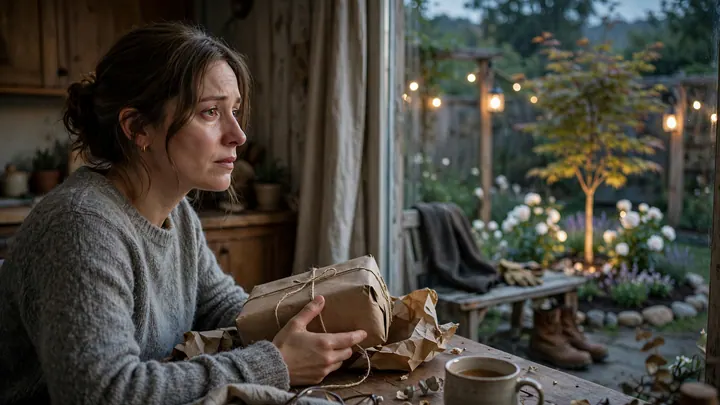
On My First Birthday Alone, My Late Husband Left One Final Promise
Six months after losing her husband, Clara received a package in his handwriting with a simple instruction to look outside, revealing a garden secret that unraveled a heartbreaking family truth.
9 min readFiction