Baked Ziti with Italian Sausage and Three Cheeses
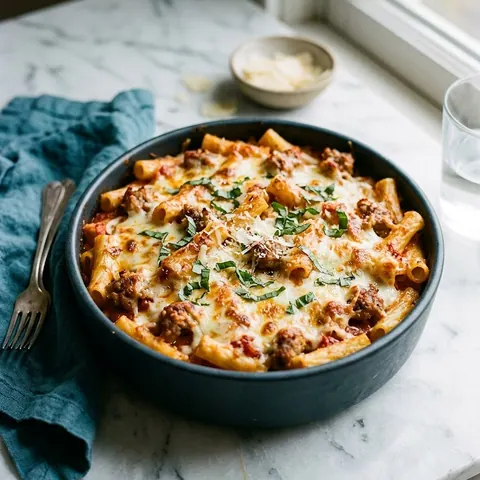
Tender ziti pasta tossed in hearty Italian sausage marinara and creamy ricotta, topped with golden melted mozzarella and parmesan cheese.
Published 12 min read
- Total time
- Prep
- Cook
- Rest
- Serves
- 8
- Makes one 9x13-inch baking dish
- Cuisine
- Italian-American
- Calories
- 540
- per serving, estimated

On this page16 sections
Few meals offer the timeless comfort of a bubbling pan of baked ziti pulling away in molten strings of cheese. With browned Italian sausage, a deeply flavored marinara base, and pockets of cool ricotta tucked beneath a blanket of golden mozzarella and nutty parmesan, this hearty dinner satisfies every craving. It delivers dependable warmth for family dinners, informal celebrations, and weekend gatherings where hearty Italian-American favorites take center stage.
Baked pasta ranks among the most celebrated traditions of American home cooking, bringing together accessible pantry staples with savory butcher-counter cuts for an elevated yet effortless feast. This classic recipe begins by par-cooking ziti until it retains a sturdy bite, ensuring that subsequent baking does not reduce the noodles to mush. Savory Italian sausage combines with sweet diced yellow onion, fragrant minced garlic, and oregano-scented tomato marinara to build an aromatic foundation. Rather than blending the cheeses into total uniformity, dollops of whole-milk ricotta remain suspended in velvety pockets throughout the pasta bake, providing luscious contrast against the savory tomato base. Finished beneath a golden, toasted mantle of shredded whole-milk mozzarella and sharp grated parmesan, every forkful balances crisp crust and melting softness.
The appeal
Why you’ll love it
The choice to par-cook the dry pasta pasta to a strict al dente stage is the primary technical key to pasta bake success. Because the noodles continue to absorb moisture and expand inside the hot oven as they bake within the simmering tomato sauce, overcooking during the initial boil yields soggy, collapsed pasta. Removing the ziti from boiling water when a firm pale ring remains in the center preserves structural integrity, allowing the tubes to trap sauce and hold pockets of filling effectively.
Strategic cheese layering provides both textural variation and structural moisture retention across the casserole. Folding whole-milk ricotta loosely into the pasta rather than whipping it completely into the marinara preserves distinct creamy deposits that contrast with the acidic tomato base. Meanwhile, blanketing the top with high-moisture mozzarella and dry-aged parmesan seals in internal steam during baking, keeping the underlying noodles moist while delivering a richly browned, aromatic crust that pulls cleanly with every scoop.
What you need
Ingredients
Makes one 9x13-inch baking dish.
Pasta and Sauce
Cheese Layer and Topping
Contains:
- Gluten
- Milk
Tools
Equipment
- Large stockpot
- Colander
- Large deep skillet
- Wooden spoon
- Large mixing bowl
- 9x13-inch baking dish
- Instant-read meat thermometer
Swaps
Substitutions
Instead ofZiti pasta
UsePenne rigate or rigatoni pasta cooked using the same boiling directions
Instead ofItalian sausage
UseMild sweet pork sausage or seasoned bulk Italian turkey sausage
Instead ofWhole-milk ricotta
UsePart-skim ricotta cheese or whole-milk small-curd cottage cheese thoroughly drained
Good to know
Notes
Selecting the right ingredients ensures balance across moisture, fat, and seasoning. High-quality bulk sweet or mild Italian sausage brings balanced fennel and black pepper notes; hot Italian sausage can be used if you prefer prominent heat. Choose whole-milk ricotta rather than skim varieties, as skim ricotta releases excess moisture under heat, which can dilute the casserole sauce. Shred blocks of whole-milk mozzarella by hand if possible, since pre-bagged varieties contain anti-caking starches that hinder smooth melting.
A standard 9x13-inch ceramic or tempered glass baking dish provides the optimal surface area for balanced cooking, allowing the top cheese layer to brown completely while the interior stays moist. A heavy-bottomed stainless steel or enameled cast-iron skillet helps brown the pork evenly without scorching the onion or garlic fond. Keep a sturdy wooden spoon ready to break down meat into consistent crumbles so the sausage disperses uniformly through every portion.
Prep
Before you start
Set up your workspace before turning on any heat source to keep the cooking process smooth and organized. Measure out the dry ziti pasta, marinara sauce, dried oregano, and grated parmesan cheese. Dice the yellow onion into fine, even pieces and mince the fresh garlic cloves finely. Remove the raw Italian sausage from its packaging or casing and keep it chilled in the refrigerator until the exact moment of cooking to ensure food safety. Shred the block of mozzarella cheese and set aside the container of whole-milk ricotta. Lightly coat a 9x13-inch baking dish with nonstick spray or oil, and ensure your oven rack rests in the center position.
Step by step
Method
Phase 1
Phase 1: Boiling and Browning
Step 1: Boil the Pasta
Bring a large pot of salted water to a rapid rolling boil over high heat. Add the dry ziti pasta and cook, stirring occasionally, until it reaches a firm al dente stage, about one to two minutes less than the standard package directions specify. Drain the pasta immediately in a colander without rinsing, then set it aside to drain completely.
You’ll need: ziti pasta
Look for: The pasta tubes should bend flexibly but still display a firm core when cut across.
Tip: Do not rinse the drained pasta with water, as natural starches help sauces cling evenly.
Step 2: Brown the Sausage and Onion
Place a large deep skillet over medium-high heat. Add the crumbled Italian sausage and the diced onion together into the pan. Break apart the meat using a stiff wooden spoon, stirring continuously until the meat renders fat, browns lightly, and the diced onions turn translucent and tender, which takes approximately six to eight minutes.
You’ll need: Italian sausage · diced onion
Look for: The pork pieces should lose their pink hue while onion pieces soften into a glossy appearance.
Tip: Press down firmly with the spoon edges to break up large meat clumps into uniform bite-sized pieces.
Step 3: Add Garlic and Finish Browning
Add the minced garlic into the skillet with the browned meat and onions. Cook over medium heat, stirring steadily for about sixty seconds until fragrant. Check the internal temperature of the sausage with an instant-read thermometer to ensure it reaches at least 160°F (71°C) to guarantee thorough and safe cooking before continuing.
You’ll need: minced garlic
Internal temperature 160°F (71°C)
Look for: The garlic should release a clean aroma without turning dark brown around the skillet edges.
Tip: Keep the garlic moving constantly in the rendered rendered fats so it never scorches.
Checkpoint
At the conclusion of this initial phase, the ziti should be drained, steaming, and resiliently firm to the bite when sampled. The Italian sausage will have transformed from pale pink crumbles to nicely browned, glistening morsels intermingled with translucent, softened onions. The minced garlic should smell rich and aromatic without any bitter dark brown edges. The sausage must reach at least 160°F (71°C) on an instant-read thermometer before proceeding to the sauce stage.
Phase 2
Phase 2: Simmering and Folding
Step 4: Simmer the Marinara Sauce
Pour the marinara sauce into the skillet with the cooked sausage mixture and add the pinch of dried oregano. Stir thoroughly to combine all skillet drippings into the sauce. Lower the heat to medium-low and let the mixture simmer gently for five to seven minutes, allowing flavors to meld into a thick, savory meat sauce.
You’ll need: marinara sauce · dried oregano
Look for: Slow, steady bubbles will break across the surface as the red sauce darkens slightly in color.
Tip: Scrape the bottom of the pan to incorporate flavorful caramelized meat fond into the sauce.
Step 5: Fold Pasta and Ricotta
Preheat the oven to 375°F (190°C). Transfer the drained ziti into a large mixing bowl or the skillet if space permits. Pour the warm meat sauce over the pasta and add large spoonfuls of ricotta cheese. Gently fold everything together so the sauce coats the noodles while maintaining distinct, creamy pockets of white ricotta cheese throughout.
You’ll need: ricotta
Look for: The pasta should look thoroughly coated in crimson sauce with marble-like ribbons of white ricotta visible.
Tip: Use a wide silicone spatula and fold gently so the pasta tubes do not tear or crush.
Checkpoint
By the end of the second phase, the marinara will have deepened into a rich, savory meat sauce that clings tightly to a wooden spoon. The warm drained pasta will be completely coated in vibrant red tomato sauce, with distinct, pillowy mounds of snowy ricotta distributed throughout the bowl. The mixture should feel moist, well-lubricated, and visibly marbled rather than blended into a solid pink hue, with the oven preheated to 375°F (190°C).
Phase 3
Phase 3: Assembly, Baking, and Garnishing
Step 6: Assemble in the Baking Dish
Lightly grease a 9x13-inch baking dish. Transfer the sauced pasta and ricotta mixture into the dish, spreading it into an even layer with your spatula. Make sure the pasta tubes lie flat to prevent dry edges from protruding upward during baking, ensuring uniform heat distribution throughout the entire casserole.
Look for: The surface should look level and evenly distributed from edge to edge of the baking dish.
Tip: Distribute any pooling sauce across the corners so no exposed dry pasta noodles scorch.
Step 7: Top with Cheeses and Bake
Scatter the shredded mozzarella cheese evenly over the entire surface of the pasta, then sprinkle the grated parmesan cheese uniformly across the top. Transfer the dish to the middle rack of the preheated oven and bake uncovered at 375°F (190°C) for twenty-five to thirty minutes until the cheese melts completely and edges bubble.
You’ll need: shredded mozzarella · grated parmesan
Look for: The mozzarella should melt into an unbroken golden blanket with visible bubbling around the dish perimeter.
Tip: For extra browning, run the oven broiler on high for the final two minutes of baking time.
Step 8: Garnish and Serve
Remove the baking dish from the oven and allow it to rest undisturbed for ten minutes on a wire rack or heatproof trivet. Scatter fresh basil leaves evenly across the melted cheese top. Scoop generous portions onto warm plates, admiring the dramatic melted mozzarella cheese pulls as you lift each hearty serving.
You’ll need: fresh basil
Look for: The resting casserole will settle slightly and cheese pulls will stretch smoothly without runny liquid pooling.
Tip: Tear or cut the fresh basil leaves just before garnishing to preserve their bright green color.
Checkpoint
The assembled bake should exit the oven with a completely melted, burnished mosaic of golden mozzarella and parmesan cheese that bubbles briskly around the borders. The surface should feel slightly crisp under a serving spoon while remaining tender beneath. After a required ten-minute rest, the scattered fresh green basil leaves will release their perfume over the hot cheese, allowing clean, structured scoops that yield dramatic, stretchy cheese strings without leaking watery liquid.
Doneness
How to tell it’s done
The baked ziti is fully cooked when the cheese topping transforms into an even blanket of golden-brown color with active bubbles visible along the edges of the baking dish. If testing for temperature, an instant-read thermometer inserted into the very center of the casserole should register above 165°F (74°C), ensuring the interior has heated thoroughly from edge to core. Most importantly, ensure the ground Italian sausage reaches a safe minimum internal temperature of 160°F (71°C) during its initial stovetop browning phase before it is ever combined with the sauce and baked.
Avoid these
Common mistakes
The most frequent error in preparing baked ziti is overboiling the pasta during the initial water cooking step. Boiling pasta to full doneness before baking leads to soft, mushy noodles that disintegrate when tossed with sauce and cheese. Another common misstep is vigorously stirring the ricotta into the marinara until completely dissolved, which turns the sauce pink and loses the pleasing textural contrast of rich white cheese dollops. Finally, avoid cutting into the dish immediately upon removing it from the oven; an un-rested bake will collapse and pool with liquid rather than holding a clean scoop.
Cook safely
Food safety
Safe internal temperatures
Cook to at least these temperatures, measured with an instant-read thermometer in the thickest part.
| Food | Minimum internal temperature |
|---|---|
| Ground meat | 160°F (71°C) |
Better results
Tips
Tip 1
To achieve bakery-level results, salt the pasta cooking water generously until it resembles mild sea water. Pasta absorbs seasoning from the inside out only while boiling; seasoning added later to the sauce cannot compensate for unseasoned pasta dough. In addition, always drain the boiled pasta thoroughly by shaking the colander vigorously, as trapped water inside the hollow ziti tubes will dilute your tomato sauce and thin out the rich ricotta pockets.
Tip 2
Consider grating your own low-moisture, whole-milk mozzarella cheese from a solid block rather than relying on pre-shredded packaged cheese. Store-bought bags of shredded cheese are treated with potato starch and cellulose powder to prevent clumping on store shelves, which inadvertently prevents the cheese from melting into cohesive, stretchy cheese pulls. Freshly grated cheese melts faster, turns significantly more golden under oven heat, and provides superior elasticity when scooped hot.
Make it yours
Variations
Spicy Arrabbiata Ziti
Swap mild Italian sausage for hot Italian sausage and add one half teaspoon of crushed red pepper flakes to the garlic sauté to introduce bold, lingering heat throughout the entire baked pasta dish.
Spinach Ricotta Ziti
Fold ten ounces of thawed, thoroughly squeezed frozen chopped spinach directly into the ricotta cheese layer before tossing with the ziti, adding earthy flavor, vibrant color, and vegetable substance to the filling.
Four-Cheese Fontina Bake
Replace half of the shredded mozzarella with shredded Italian fontina cheese, adding mild nuttiness, exceptional melting capability, and a deeper layer of rich dairy complexity across the golden top crust.
Mushroom and Sausage Ziti
Sauté eight ounces of sliced cremini mushrooms alongside the diced onions and crumbled sausage until well-browned and dry, infusing the rich marinara sauce with earthy umami flavor and meaty texture.
On the table
Serving suggestions
Present the baked ziti hot from the oven directly in its baking dish, garnished generously with torn fresh basil leaves to create an inviting family-style centerpiece. Accompany the hearty casserole with a crisp, bitter green salad, such as romaine, arugula, or radicchio tossed in a bright red wine vinaigrette. The sharp acidity and peppery crunch of fresh salad greens cut through the rich layers of pork sausage, warm tomato sauce, and heavy melted cheeses cleanly.
Pair each serving with warm, crusty garlic bread or toasted ciabatta slices brushed with olive oil and rubbed with fresh garlic. Crusty bread offers a wonderful textural contrast to the tender noodles while providing the ideal tool for catching extra meat sauce left behind on the dinner plate. For beverage pairings, serve with an earthy Italian Chianti, medium-bodied Sangiovese, or sparkling mineral water infused with fresh lemon wedges.
Leftovers
Storage & make-ahead
- Fridge
- Store leftovers in an airtight container in the refrigerator for up to 4 days; cool within 2 hours.
- Freezer
- Freeze tightly wrapped portions in freezer-safe containers for up to 3 months; thaw overnight in fridge.
- Reheat
- Bake covered with foil at 350°F (175°C) for 20 minutes until hot, or microwave individual slices for 2 minutes.
Allow any leftover baked ziti to cool at room temperature for no longer than two hours after cooking to comply with standard food safety practices. Transfer leftover portions into clean, airtight glass or plastic containers, or cover the ceramic baking dish securely with two layers of heavy aluminum foil. Store the cooled leftovers in the refrigerator for up to four days. During storage, the pasta continues to absorb moisture from the surrounding sauce, concentrating the rich flavors of the sausage and cheese.
Make ahead
Baked ziti is an outstanding candidate for make-ahead dinner prep. Assemble the entire casserole through the cheese topping stage up to twenty-four hours in advance, covering the unbaked dish tightly with plastic wrap and chilling it in the refrigerator. When ready to cook, let the dish sit at room temperature for thirty minutes while the oven preheats, discard the plastic wrap, and add approximately ten additional minutes to the total baking time to ensure the chilled interior warms through completely.
Questions
Frequently asked questions
Can ziti pasta be substituted with another pasta shape?
Yes, tubular pasta shapes like penne rigate or rigatoni work exceptionally well in place of ziti. Their ridged exteriors and hollow centers capture the thick sausage marinara and pockets of ricotta cheese effectively. Simply cook the alternative pasta shape until firm al dente, approximately one to two minutes shy of package directions, before folding with sauce.
Why is the pasta cooked al dente before baking?
Pasta continues to cook and absorb moisture while submerged in sauce in the hot oven. If boiled until completely soft beforehand, the noodles will break down during baking and turn mushy. Cooking the pasta al dente leaves a slightly firm core that absorbs tomato sauce without losing its distinctive texture and structural shape.
Can baked ziti be frozen before baking?
Yes, assemble the entire casserole in a freezer-safe dish through the cheese topping step, omitting the fresh basil garnish. Wrap the unbaked casserole securely in plastic wrap and aluminum foil, then freeze for up to three months. Thaw completely in the refrigerator overnight before baking according to standard recipe directions.
Why does the ricotta remain in pockets rather than fully mixed?
Leaving spoonfuls of ricotta partially unincorporated creates delightful contrast between the savory, acidic tomato sauce and the sweet, creamy dairy. Stirring ricotta completely into the sauce transforms the texture into a uniform pink sauce, which diminishes the classic multi-layered experience that defines traditional homestyle baked ziti casseroles.
How can dry pasta edges be prevented during oven baking?
Ensure every piece of pasta is fully coated in sauce and tucked beneath the top layer of mozzarella cheese before baking. Exposed dry pasta tips will harden and turn unpleasantly crunchy under direct oven heat. If your sauce seems exceptionally thick, add two tablespoons of water or extra sauce over top.
Everything in one place: the recipe card below gathers the ingredients, steps and estimated nutrition, ready to print.
Recipe card
Baked Ziti with Italian Sausage and Three Cheeses
Tender ziti pasta tossed in hearty Italian sausage marinara and creamy ricotta, topped with golden melted mozzarella and parmesan cheese.
- Prep
- Cook
- Rest
- Total
- Servings
- one 9x13-inch baking dish
Ingredients
Pasta and Sauce
- 1 lb ziti pasta
- 1 lb Italian sausage, casings removed and crumbled
- 1 medium diced onion
- 3 cloves minced garlic
- 3 cups marinara sauce
- 1/2 tsp dried oregano
Cheese Layer and Topping
- 15 oz whole-milk ricotta
- 2 cups shredded mozzarella cheese
- 1/2 cup grated parmesan cheese
- fresh basil leaves, for serving
Instructions
Boil the Pasta. Bring a large pot of salted water to a rapid rolling boil over high heat. Add the dry ziti pasta and cook, stirring occasionally, until it reaches a firm al dente stage, about one to two minutes less than the standard package directions specify. Drain the pasta immediately in a colander without rinsing, then set it aside to drain completely.
Brown the Sausage and Onion. Place a large deep skillet over medium-high heat. Add the crumbled Italian sausage and the diced onion together into the pan. Break apart the meat using a stiff wooden spoon, stirring continuously until the meat renders fat, browns lightly, and the diced onions turn translucent and tender, which takes approximately six to eight minutes.
Add Garlic and Finish Browning. Add the minced garlic into the skillet with the browned meat and onions. Cook over medium heat, stirring steadily for about sixty seconds until fragrant. Check the internal temperature of the sausage with an instant-read thermometer to ensure it reaches at least 160°F (71°C) to guarantee thorough and safe cooking before continuing.
Simmer the Marinara Sauce. Pour the marinara sauce into the skillet with the cooked sausage mixture and add the pinch of dried oregano. Stir thoroughly to combine all skillet drippings into the sauce. Lower the heat to medium-low and let the mixture simmer gently for five to seven minutes, allowing flavors to meld into a thick, savory meat sauce.
Fold Pasta and Ricotta. Preheat the oven to 375°F (190°C). Transfer the drained ziti into a large mixing bowl or the skillet if space permits. Pour the warm meat sauce over the pasta and add large spoonfuls of ricotta cheese. Gently fold everything together so the sauce coats the noodles while maintaining distinct, creamy pockets of white ricotta cheese throughout.
Assemble in the Baking Dish. Lightly grease a 9x13-inch baking dish. Transfer the sauced pasta and ricotta mixture into the dish, spreading it into an even layer with your spatula. Make sure the pasta tubes lie flat to prevent dry edges from protruding upward during baking, ensuring uniform heat distribution throughout the entire casserole.
Top with Cheeses and Bake. Scatter the shredded mozzarella cheese evenly over the entire surface of the pasta, then sprinkle the grated parmesan cheese uniformly across the top. Transfer the dish to the middle rack of the preheated oven and bake uncovered at 375°F (190°C) for twenty-five to thirty minutes until the cheese melts completely and edges bubble.
Garnish and Serve. Remove the baking dish from the oven and allow it to rest undisturbed for ten minutes on a wire rack or heatproof trivet. Scatter fresh basil leaves evenly across the melted cheese top. Scoop generous portions onto warm plates, admiring the dramatic melted mozzarella cheese pulls as you lift each hearty serving.
Allergens: Gluten, Milk
Nutrition (estimated, per serving)
- Calories
- 540 kcal
- Protein
- 31 g
- Carbs
- 48 g
- Fat
- 24 g
- Fiber
- 4 g
- Sugar
- 7 g
- Sodium
- 920 mg
Estimates only: values vary with brands, substitutions and portion sizes.
Recipe by WixForum Kitchen · wixforum.com
Share this recipe
Send it to someone who’d love it, or save it for later.
Spotted a mistake in this recipe? Let us know.
Keep cooking


