Classic Southern Peach Cobbler with Fluffy Drop Biscuits
Tender spiced peaches bubble beneath golden, sugar-crusted buttermilk drop biscuits in this traditional Southern comfort dessert.
Published 11 min read
- Total time
- Prep
- Cook
- Rest
- Serves
- 8
- Makes one 9x13-inch baking dish
- Cuisine
- Southern
- Calories
- 395
- per serving, estimated

On this page15 sections
Few desserts offer the deep comfort of a Southern peach cobbler fresh from the oven. Ripe, juicy peaches tossed in fragrant cinnamon and brown sugar release their natural juices into a luscious spiced syrup, while fluffy, rich drop biscuits crown the bubbling pan. Every bite combines buttery pastry, warm caramelized fruit, and the irresistible crunch of coarse sugar crystals, making this traditional recipe a seasonal highlight that brings people straight to the dining table.
Cobbler represents the pinnacle of home-style baking because it achieves bakery-level richness with effortless rustic assembly. Rather than rolling out fussy pastry dough or chilling delicate pie crusts, this method relies on dropping tender biscuit batter straight over a seasoned peach filling. As the dish bakes, the bottom edges of the dough absorb sweet, thickened fruit juices, while the exposed tops puff into golden, tender biscuits dusted with sparkling sugar. A single generous scoop served warm into a bowl creates an exquisite contrast against melting vanilla ice cream. This reliable approach delivers authentic Southern bakery textures and aromas every single time, whether using orchard-fresh summer fruit or thawed sliced peaches from the freezer shelf during cooler months of the year.
The appeal
Why you’ll love it
The combination of granulated sugar and packed brown sugar creates a layered sweetness that highlights the natural acidity of fresh peaches without overpowering it. Cornstarch plays a vital role by binding the fruit moisture as it heats, turning excess juice into a glossy, velvety syrup rather than a thin, watery broth. Fresh lemon juice provides an essential hit of acid that balances the rich sweetness and brightens the warm cinnamon and nutmeg undertones. Together with the buttered dish that caramelizes sugar edges during baking, these elements transform raw fruit into a balanced, aromatic base that supports the heavier biscuit topping cleanly without feeling overly heavy on the palate.
The drop biscuit method thrives on cold butter and gentle mixing to produce an impossibly light crumb. By rubbing chilled butter cubes into the flour until pea-sized morsels remain, tiny pockets of fat melt during baking, creating steam that lifts the biscuit structure into airy layers. Baking powder provides additional leavening power, while whole milk binds the dry ingredients without turning the mixture elastic or rubbery. Dropping the dough in irregular mounds leaves open valleys for steam to escape, ensuring the fruit juices concentrate and bubble vigorously while the biscuit crowns turn deeply browned and crisp.
What you need
Ingredients
Makes one 9x13-inch baking dish.
Fruit Base
Biscuit Dough
Topping & Serving
Contains:
- Gluten
- Milk
Tools
Equipment
- 9x13-inch baking dish
- Large mixing bowl
- Medium mixing bowl
- Pastry cutter or fork
- Measuring cups and spoons
- Silicone spatula
Swaps
Substitutions
Instead ofWhole milk
UseHalf-and-half or heavy cream in equal measurement
Instead ofCornstarch
Use2 tablespoons all-purpose flour or instant tapioca starch
Instead ofCoarse sugar
UseTurbinado sugar or granulated sugar sprinkled evenly
Good to know
Notes
Selecting the right fruit determines the ultimate flavor and texture profile of this traditional dessert. Firm yet fragrant peaches yield the best slices, holding their structural integrity through forty-five minutes of steady oven heat without dissolving into applesauce consistency. You can leave the skins on for rustic texture and vibrant color, or peel them using a standard vegetable peeler or quick blanch in boiling water if a silky mouthfeel is preferred. Canned peaches packed in juice or frozen unsweetened slices also work when defrosted and drained thoroughly, though fresh seasonal orchard fruit always offers the most pronounced, sun-ripened aroma.
Cold temperature management is the secret to tender, sky-high biscuit crowns in this recipe. Ensure the butter remains refrigerator-cold right up until you cut it into the dry flour blend; softening fat blends too smoothly into the starch, which robs the baked biscuits of their flakiness and yields a dense, heavy crumb. Handle the dough with a light touch once milk enters the bowl, stopping as soon as the flour incorporates. A coarse sparkling sugar, such as turbinado or demerara, provides a crisp textural finish that contrasts beautifully against the soft fruit below across the surface of a standard nine-by-thirteen-inch baking dish.
Prep
Before you start
Before beginning assembly, measure all dry ingredients into bowls and thoroughly chill the cubed butter in the refrigerator so it remains firm. Wash, pit, and slice the peaches into uniform half-inch wedges so they cook evenly throughout the baking time. Generously grease the entire interior of the baking dish with softened butter. Position an oven rack in the center position and preheat the oven to 375°F (190°C), ensuring the baking chamber reaches stable heat before the dish enters. Set out a rimmed baking sheet on a lower rack to catch any potential fruit bubble-overs.
Step by step
Method
Phase 1
Phase 1: Fruit Base Assembly
Step 1: Butter the Baking Dish
Preheat the oven to 375°F (190°C). Use the softened butter to thoroughly coat the bottom and inner sides of a nine-by-thirteen-inch ceramic or glass baking dish, ensuring an even layer across the entire interior.
You’ll need: unsalted butter
Look for: The interior of the dish shows a visible, continuous sheen of butter.
Tip: Spread the butter using a wrapper or paper towel for clean hands.
Step 2: Season and Toss Peaches
Place the sliced peaches in a large mixing bowl. Add the granulated sugar, light brown sugar, ground cinnamon, ground nutmeg, fresh lemon juice, and cornstarch, then toss gently with a wide spatula until thoroughly coated.
You’ll need: sliced peaches · granulated sugar · packed light brown sugar · ground cinnamon · ground nutmeg · fresh lemon juice · cornstarch
Look for: No dry pockets of starch remain and a glossy spiced syrup coats every slice.
Tip: Mix gently from the bottom upward to avoid bruising ripe fruit slices.
Step 3: Transfer Fruit to Dish
Pour the seasoned peach mixture directly into the prepared baking dish. Spread the fruit into an even, compact layer across the bottom, scraping all residual spiced juices from the bowl over the fruit.
Look for: The fruit sits in a flat, level bed across the dish base.
Tip: Keep the layer uniform so the biscuits bake at an even rate.
Checkpoint
The seasoned peaches should rest in an even, level layer across the buttered baking dish, covered in a glossy, translucent amber glaze from the combined sugars and spices. The bottom corners of the dish should show a small pool of seasoned juice without any dry starch clumps clinging to the fruit wedges. The fragrance of warm cinnamon, sharp lemon, and fresh stone fruit should fill the room immediately upon spreading.
Phase 2
Phase 2: Biscuit Dough Preparation
Step 4: Whisk Dry Dough Ingredients
In a medium mixing bowl, whisk together the all-purpose flour, granulated sugar, baking powder, and fine salt until completely combined and aerated throughout.
You’ll need: all-purpose flour · granulated sugar · baking powder · fine salt
Look for: The dry mix looks completely uniform with no visible baking powder clumps.
Tip: Fluff the dry ingredients thoroughly to guarantee a dependable rise across the biscuits.
Step 5: Cut In Cold Butter
Add the chilled, cubed butter to the dry mixture. Cut the butter into the flour using a pastry blender, two forks, or fingertips until coarse crumbs form with pea-sized pockets remaining.
You’ll need: cold unsalted butter
Look for: The mixture resembles coarse meal with visible small flecks of solid butter.
Tip: Work swiftly to ensure the butter stays firm and cold throughout.
Step 6: Incorporate Milk
Pour the cold whole milk into the bowl. Stir lightly with a fork or spatula just until a cohesive, shaggy biscuit dough forms, taking care not to overwork the gluten.
You’ll need: whole milk
Look for: A thick, moist dough gathers together with no pockets of dry flour.
Tip: Stop stirring the moment the flour hydrates to keep the crumb tender.
Checkpoint
The biscuit dough should appear cohesive yet shaggy and rugged, holding together in a soft mass without excessive stickiness. Visible pea-sized flecks of cold butter should remain distributed throughout the flour mixture. There should be no unmixed powdery flour pockets at the bottom of the bowl, and the dough should look textured rather than smooth or elastic like kneaded bread dough.
Phase 3
Phase 3: Assembling and Baking
Step 7: Drop Dough Over Fruit
Drop rough spoonfuls of the biscuit dough across the top of the sliced peaches, spacing the portions evenly while allowing gaps of fruit to remain visible between mounds.
Look for: Mounded dough portions cover the surface with visible fruit peeking through.
Tip: Do not smooth the dough flat; rugged peaks bake up delightfully crisp.
Step 8: Top with Coarse Sugar
Sprinkle the coarse sugar evenly over the raw biscuit mounds to create a sparkling, textured crust during baking.
You’ll need: coarse sugar
Look for: Sugar crystals glitter visibly on top of every raw dough mound.
Tip: Distribute the sugar broadly so every portion gets a crunchy top.
Step 9: Bake Cobbler until Golden
Transfer the dish to the middle rack of the preheated oven. Bake at 375°F (190°C) for 40 to 45 minutes until the biscuit crust turns deep golden brown and fruit juices bubble vigorously around the edges.
Look for: Thick spiced fruit syrup bubbles enthusiastically around browned, fully puffed biscuits.
Tip: Place a baking sheet on the lower rack to catch bubbling fruit drips.
Step 10: Rest and Serve Warm
Remove the baking dish from the oven and let it rest on a wire rack for 15 minutes to allow the bubbling syrup to thicken slightly. Spoon generous warm portions into bowls and top each serving with a scoop of vanilla ice cream.
You’ll need: vanilla ice cream
Look for: The bubbling settles into rich syrup and ice cream begins melting over hot biscuits.
Tip: Serving immediately while warm creates the perfect contrast with cold cream.
Checkpoint
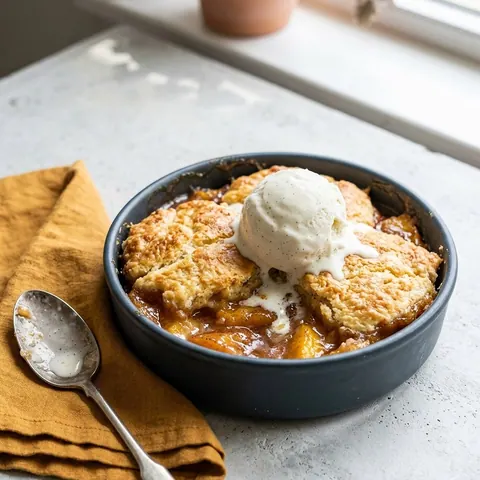
The finished cobbler displays proud, deeply golden biscuit mounds adorned with sparkling coarse sugar crystals. Rich, thick peach syrup bubbles enthusiastically around the edges and through the gaps between biscuits, releasing fragrant steam carrying vanilla, cinnamon, and toasted pastry aromas. The biscuit tops feel crusty to the touch while the base remains tender, ready for resting before table service.
Doneness
How to tell it’s done
Determine doneness by inspecting both the biscuit crowns and the fruit perimeter. The drop biscuits should display deep golden-brown summits and firm edges that spring back when pressed gently, showing no pale, doughy patches in the crevices. The fruit syrup around the perimeter and between biscuit mounds must bubble vigorously with large, slow, glossy bubbles, indicating that the cornstarch has reached full gelatinization heat. Inserting a toothpick into the center of a biscuit mound should yield clean, moist crumbs without wet batter adhering to the wood. If browning occurs too rapidly before juices bubble, tent loosely with foil.
Avoid these
Common mistakes
The most common pitfall in cobbler preparation is overworking the biscuit dough, which develops excessive gluten and turns the topping tough instead of fluffy. Another frequent error is using warm or soft butter, which melts prematurely and creates flat, greasy biscuits rather than airy peaks. Cooks also frequently rush the baking time, pulling the dish out when biscuits are lightly browned but before the fruit juices boil vigorously; cornstarch requires full boiling temperatures to activate its thickening starch molecules, meaning early removal results in soupy fruit liquid. Lastly, avoid overcrowding biscuit dough into an unbroken solid lid, as steam cannot escape.
Better results
Tips
Tip 1
To ensure your biscuit topping reaches peak tenderness, keep your ingredients as cold as possible prior to mixing. Cube your butter and return it to the freezer for ten minutes before cutting it into the flour, and use milk poured straight from the refrigerator. Cold fat expands when hitting the hot oven air, releasing steam that forces tiny pockets into the dough, resulting in an airy crumb that absorbs just enough warm peach juice without turning soggy.
Tip 2
Always bake the cobbler until the fruit syrup bubbles energetically in the center of the pan, not just around the glass perimeter. Cornstarch only achieves its complete thickening power when heated to approximately 203°F (95°C). Pulling the cobbler while juices are merely warm leaves you with runny, ungelled fruit liquid that puddles in serving bowls instead of spooning up as a rich, clingy glaze around the warm peaches.
Make it yours
Variations
Peach Blackberry Cobbler
Fold one and a half cups of fresh, plump blackberries into the spiced peach mixture before pouring it into the baking dish for tart berry balance.
Bourbon Pecan Peach Cobbler
Stir one tablespoon of bourbon into the sliced peaches and mix a half cup of finely chopped toasted pecans directly into the biscuit dough dry ingredients.
Spiced Ginger Peach Cobbler
Add one tablespoon of finely grated fresh ginger or a half teaspoon of ground ginger alongside the cinnamon to provide vibrant zesty warmth to the fruit base.
Almond Drop Peach Cobbler
Add a quarter teaspoon of pure almond extract to the biscuit milk and scatter two tablespoons of sliced almonds over the coarse sugar before baking.
On the table
Serving suggestions
Serve peach cobbler warm approximately fifteen minutes after removing it from the oven. This resting window allows the bubbling fruit glaze to settle and thicken into spoonable consistency while maintaining hot, comforting temperatures throughout. Dish generous portions into wide, shallow bowls using a large serving spoon, ensuring each portion receives both tender cinnamon-spiced peaches and a hearty crown of crusty biscuit topping.
The classic accompaniment is a large scoop of premium vanilla bean ice cream placed directly atop the hot biscuit crown. As the cold cream warms against the fresh pastry, it melts down into the cinnamon-peach syrup, creating an exquisite swirl of hot and cold flavors. For an alternate finish, spoon lightly sweetened whipped cream scented with a hint of almond extract or pour cold heavy cream directly over the fruit.
Leftovers
Storage & make-ahead
- Fridge
- Store tightly covered in the refrigerator for up to 4 days; cool within 2 hours.
- Freezer
- Freeze fully baked portions in airtight containers for up to 3 months; thaw overnight in fridge.
- Reheat
- Reheat single servings in microwave for 45 seconds or warm covered at 350°F (175°C) for 15 minutes.
Allow the baked cobbler to cool completely at room temperature for no longer than two hours before packing it away for storage. Cover the baking dish tightly with heavy aluminum foil or transfer leftover portions into airtight glass containers. Store in the refrigerator for up to four days. As the cobbler chills, the biscuit crust will soften due to the humidity of the underlying fruit, but its rich buttery flavor will remain delicious.
Make ahead
You can prepare components of this dessert ahead of time to streamline serving day. Toss the sliced peaches with the sugar, spices, lemon juice, and cornstarch up to four hours in advance, keeping the mixture covered in the refrigerator. Whisk the dry biscuit ingredients together and cut in the butter, storing the dry crumb mixture chilled in a sealed container. When ready to bake, fold the cold milk into the dry mix, drop over the fruit, and bake immediately.
Questions
Frequently asked questions
Can frozen peaches be used instead of fresh fruit?
Yes, frozen peach slices work wonderfully in this recipe. Thaw them completely in a colander to drain off excess icy liquid, then pat dry lightly before tossing with the sugars, spices, and cornstarch. Because frozen fruit releases additional moisture, do not reduce the cornstarch measurement.
Why is the cobbler filling watery after baking?
A watery filling usually happens when the cobbler is pulled from the oven before the internal juices reach a vigorous boil. Cornstarch needs full heat to activate its binding starches. Additionally, resting the cobbler for fifteen minutes post-bake allows the bubbling syrup to set into a spoonable glaze.
Should peaches be peeled before baking?
Peeling peaches is a matter of personal preference. Peach skins soften significantly during baking and contribute pleasant rustic texture and a rosy hue to the finished syrup. However, if a smoother, silkier fruit texture is desired, skins can be slipped off easily after a brief blanch.
Why did the biscuits turn out dense instead of fluffy?
Dense biscuits typically result from overworking the dough after adding milk or using butter that was too soft. Working the dough excessively forms gluten bonds that toughen the crumb. Always use chilled butter and stir the dough strictly until hydrated to ensure an airy, tender texture.
Can the cobbler be assembled completely and baked later?
It is best to assemble the cobbler right before baking. Placing raw drop biscuit dough onto wet fruit hours in advance causes the bottoms of the biscuits to absorb liquid, resulting in a gummy, undercooked layer. Prepare components separately and combine them immediately prior to baking.
Everything in one place: the recipe card below gathers the ingredients, steps and estimated nutrition, ready to print.
Recipe card
Classic Southern Peach Cobbler with Fluffy Drop Biscuits
Tender spiced peaches bubble beneath golden, sugar-crusted buttermilk drop biscuits in this traditional Southern comfort dessert.
- Prep
- Cook
- Rest
- Total
- Servings
- one 9x13-inch baking dish
Ingredients
Fruit Base
- 1 tbsp unsalted butter, softened for greasing dish
- 6 cups sliced peaches, peeled or unpeeled
- 1/3 cup granulated sugar
- 1/3 cup packed light brown sugar
- 3/4 tsp ground cinnamon
- 1/4 tsp ground nutmeg
- 1 tbsp fresh lemon juice
- 1 tbsp cornstarch
Biscuit Dough
- 2 cups all-purpose flour
- 1/4 cup granulated sugar
- 2 tsp baking powder
- 1/2 tsp fine salt
- 1/2 cup cold unsalted butter, cubed
- 3/4 cup whole milk
Topping & Serving
- 1 tbsp coarse sugar
- vanilla ice cream, for serving
Instructions
Butter the Baking Dish. Preheat the oven to 375°F (190°C). Use the softened butter to thoroughly coat the bottom and inner sides of a nine-by-thirteen-inch ceramic or glass baking dish, ensuring an even layer across the entire interior.
Season and Toss Peaches. Place the sliced peaches in a large mixing bowl. Add the granulated sugar, light brown sugar, ground cinnamon, ground nutmeg, fresh lemon juice, and cornstarch, then toss gently with a wide spatula until thoroughly coated.
Transfer Fruit to Dish. Pour the seasoned peach mixture directly into the prepared baking dish. Spread the fruit into an even, compact layer across the bottom, scraping all residual spiced juices from the bowl over the fruit.
Whisk Dry Dough Ingredients. In a medium mixing bowl, whisk together the all-purpose flour, granulated sugar, baking powder, and fine salt until completely combined and aerated throughout.
Cut In Cold Butter. Add the chilled, cubed butter to the dry mixture. Cut the butter into the flour using a pastry blender, two forks, or fingertips until coarse crumbs form with pea-sized pockets remaining.
Incorporate Milk. Pour the cold whole milk into the bowl. Stir lightly with a fork or spatula just until a cohesive, shaggy biscuit dough forms, taking care not to overwork the gluten.
Drop Dough Over Fruit. Drop rough spoonfuls of the biscuit dough across the top of the sliced peaches, spacing the portions evenly while allowing gaps of fruit to remain visible between mounds.
Top with Coarse Sugar. Sprinkle the coarse sugar evenly over the raw biscuit mounds to create a sparkling, textured crust during baking.
Bake Cobbler until Golden. Transfer the dish to the middle rack of the preheated oven. Bake at 375°F (190°C) for 40 to 45 minutes until the biscuit crust turns deep golden brown and fruit juices bubble vigorously around the edges.
Rest and Serve Warm. Remove the baking dish from the oven and let it rest on a wire rack for 15 minutes to allow the bubbling syrup to thicken slightly. Spoon generous warm portions into bowls and top each serving with a scoop of vanilla ice cream.
Allergens: Gluten, Milk
Nutrition (estimated, per serving)
- Calories
- 395 kcal
- Protein
- 5 g
- Carbs
- 66 g
- Fat
- 13.5 g
- Fiber
- 3.5 g
- Sugar
- 38 g
- Sodium
- 255 mg
Estimates only: values vary with brands, substitutions and portion sizes.
Recipe by WixForum Kitchen · wixforum.com
Share this recipe
Send it to someone who’d love it, or save it for later.
Spotted a mistake in this recipe? Let us know.
Keep cooking


