Creamy Tuscan Garlic Chicken Thighs in Cast Iron
Juicy seared boneless chicken thighs simmer in a rich garlic, sun-dried tomato, and parmesan cream sauce with tender baby spinach. An easy one-pan dinner.
Published 13 min read
- Total time
- Prep
- Cook
- Serves
- 4
- Cuisine
- Italian-American
- Calories
- 585
- per serving, estimated

On this page16 sections
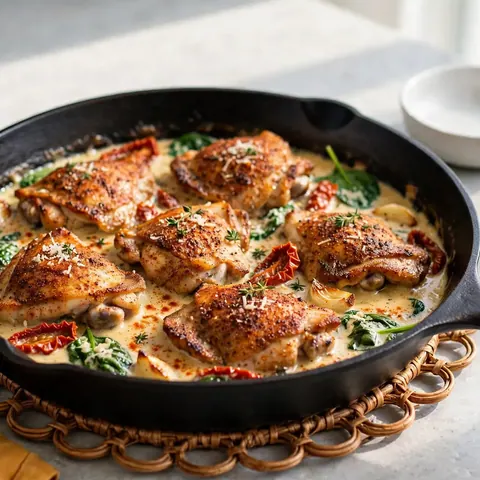
A sizzling cast-iron skillet turns standard weeknight ingredients into a luxurious restaurant-caliber dinner with effortless precision. Rich chicken thighs develop an irresistible caramelized crust before nestling into a velvety bath of heavy cream, garlic, sun-dried tomatoes, and parmesan. Vibrant fresh spinach and sweet torn basil bring earthy balance to every bite, making this entire meal come together rapidly in thirty minutes. Grab a loaf of rustic crusty bread, because none of this sauce should go to waste.
Classic comfort food reaches its peak when simple pantry staples interact within a single heavy cooking vessel. Boneless chicken thighs provide rich, forgiving moisture that stays remarkably tender while developing deep golden crusts against cast iron. Building a pan sauce immediately afterward captures every fragment of caramelized drippings, weaving them into melted butter, aromatic garlic, and the tart sweetness of sun-dried tomatoes. Heavy cream and nutty parmesan cheese transform the pan liquid into an unctuous emulsion that blankets the chicken without feeling heavy. Tender spinach wilts into the cream in minutes, balancing rich textures with fresh color. Served hot with crusty bread for dipping, this dish represents weeknight cooking at its absolute finest.
The appeal
Why you’ll love it
Cast iron provides extraordinary heat retention that delivers deep, even searing without dropping temperature when raw poultry enters the pan. As seasoned thighs make contact with shimmering oil, the surface moisture evaporates rapidly, enabling the Maillard reaction to create complex savory flavor compounds. These compounds leave microscopic caramelized remnants, known as fond, securely anchored to the bottom of the pan. Deglazing these flavorful bits with chicken broth and heavy cream dissolves them directly into the developing liquid, infusing the entire cream base with roasted chicken essence that water or plain dairy alone cannot replicate.
Balancing high fat content with vibrant acidity prevents the cream sauce from overwhelming the palate. Sun-dried tomatoes contribute concentrated glutamates and sharp, concentrated malic and citric acids that cut straight through the heavy cream and grated parmesan. Meanwhile, gently wilting fresh spinach into the warm emulsion allows moisture from the leaves to integrate without diluting the texture. Simmering the chicken gently at the end ensures the meat absorbs the savory garlic and herb notes while keeping the dairy emulsion stable beneath a gentle, controlled simmer.
What you need
Ingredients
Makes 4 servings.
Chicken
Sear
Sauce
Garnish
Serving
Contains:
- Milk
- Gluten
Tools
Equipment
- 12-inch cast-iron skillet
- Tongs
- Wooden spoon
- Meat thermometer
- Chef's knife
- Cutting board
Swaps
Substitutions
Instead ofBoneless skinless chicken thighs
UseBoneless skinless chicken breasts cut into cutlets, adjusting searing time to prevent dryness
Instead ofHeavy cream
UseEqual parts full-fat canned coconut milk, which will subtly alter the traditional flavor profile
Instead ofBaby spinach
UseChopped baby kale leaves, simmered two minutes longer until fully tender and softened
Good to know
Notes
Boneless, skinless chicken thighs are the optimal cut for this recipe due to their higher intramuscular fat content, which prevents them from drying out during high-heat searing and subsequent simmering. If chicken breasts are substituted, slice them horizontally into thinner cutlets and reduce the searing time to avoid a tough, stringy texture. Select sun-dried tomatoes packed in olive oil rather than dry-packed varieties; the oil keeps them supple, pleasantly chewy, and ready to incorporate without requiring prior rehydration in hot water.
Heavy cream is essential for structural stability in hot, acidic pan sauces; lower-fat milk or half-and-half lacks sufficient butterfat and will curdle when combined with hot sun-dried tomatoes and simmering broth. Grating fresh parmesan cheese from a solid block yields a silky, cohesive sauce, whereas pre-grated packaged cheeses contain anti-caking starches like cellulose that impede smooth melting. Use a seasoned twelve-inch cast-iron skillet or an enameled cast-iron pan to ensure adequate space for searing all four thighs without crowding.
Prep
Before you start
Organization ensures success when cooking rapid pan sauces. Begin by trimming excess visible fat from the chicken thighs and patting each piece thoroughly dry with paper towels to eliminate surface moisture. Measure the salt, pepper, paprika, and garlic powder into a small bowl for quick, uniform seasoning. Mince the garlic cloves finely, drain and chop the sun-dried tomatoes, and grate the parmesan cheese before turning on any heat. Wash and thoroughly dry the baby spinach leaves so unwanted water does not dilute the pan sauce. Measure out the chicken broth and heavy cream into liquid measuring cups, and slice the crusty bread so everything stands ready beside the stove.
Step by step
Method
Phase 1
Phase 1: Searing the Chicken
Step 1: Season the Chicken Thighs
Pat the boneless skinless chicken thighs dry thoroughly on both sides using paper towels. Sprinkle the kosher salt, black pepper, paprika, and garlic powder evenly across both surfaces, pressing the spices gently so they adhere firmly to the meat.
You’ll need: boneless skinless chicken thighs · kosher salt · black pepper · paprika · garlic powder
Look for: The chicken pieces are evenly coated in a bright reddish-brown spice layer without wet patches.
Tip: Drying the meat surface is essential for developing a rich crust rather than steaming the thighs.
Step 2: Sear the Seasoned Chicken
Heat the olive oil in a twelve-inch cast-iron skillet over medium-high heat until shimmering. Place the seasoned thighs into the skillet without crowding and sear undisturbed for five to six minutes per side until deeply browned, then transfer to a plate.
You’ll need: olive oil
Look for: Thighs release easily from the pan bottom and display a deep golden-brown exterior on both sides.
Tip: Avoid moving the chicken during the initial minutes of contact to allow the crust to form cleanly.
Checkpoint
At the conclusion of this initial phase, the chicken thighs should display an appetizing, deep mahogany-gold crust across both surfaces, smelling intensely of toasted paprika and garlic. The skillet will have accumulated golden-brown caramelized drippings on the bottom without any blackened, scorched patches. The chicken will feel firm to the touch but remains slightly underdone at the core, waiting for its final simmer. When transferring the seared thighs to a resting plate, they should release easily from the iron surface without tearing, leaving glistening cooking oil behind.
Phase 2
Phase 2: Building the Cream Sauce
Step 3: Aromatize Butter and Garlic
Lower the skillet heat to medium and add the unsalted butter, swirling until melted. Stir in the minced garlic and cook for thirty seconds until fragrant and sizzling gently, taking care not to allow the bits to brown or scorch.
You’ll need: unsalted butter · garlic
Look for: The butter foams lightly and releasing a rich, savory aroma without any dark brown flecks.
Tip: Regulate heat promptly because burned garlic creates an irreversible bitter profile in delicate cream sauces.
Step 4: Sauté Sun-Dried Tomatoes
Add the drained, chopped sun-dried tomatoes to the bubbling garlic butter. Cook, stirring steadily with a wooden spoon for about one minute to soften the tomatoes and extract their concentrated savory oil into the skillet base.
You’ll need: sun-dried tomatoes
Look for: Tomatoes soften noticeably and the cooking butter takes on a rich orange-red tinted sheen.
Tip: Oil-packed sun-dried tomatoes offer the most tender texture; drain the excess processing oil before chopping.
Step 5: Pour Broth and Cream
Pour in the chicken broth and heavy cream, scraping up the browned fond from the bottom of the pan with the spoon. Bring the mixture to a gentle, steady simmer over medium heat, stirring to blend the liquids completely.
You’ll need: chicken broth · heavy cream
Look for: The pan bottom is clear of dark residue and small bubbles form across the milky surface.
Tip: The deglazing liquid captures intense caramelized flavor left behind from the seared chicken thighs.
Step 6: Melt Parmesan and Season
Sprinkle the grated parmesan cheese, Italian seasoning, and red pepper flakes into the simmering sauce. Stir continuously for one to two minutes until the parmesan melts smoothly into the liquid, thickening it slightly into a cohesive cream base.
You’ll need: parmesan cheese · Italian seasoning · red pepper flakes
Look for: The sauce turns silky and coats the back of a spoon without any gritty cheese clumps.
Tip: Finely grated parmesan from a wedge melts far more reliably than pre-shredded packaged cheese with anti-caking agents.
Step 7: Wilt the Fresh Spinach
Add the fresh baby spinach to the pan in handfuls, folding it into the warm sauce. Continue stirring gently for one to two minutes until the leaves collapse, reduce in volume, and distribute evenly throughout the simmering cream mixture.
You’ll need: baby spinach
Look for: Spinach leaves become dark green, tender, and submerged smoothly beneath the glossy cream surface.
Tip: Add spinach gradually if the skillet seems crowded; the leaves reduce down within sixty seconds.
Checkpoint
The sauce should transform into a silky, pale orange-tinted cream that bubbles gently and evenly across the skillet. The aroma should be intensely savory with fragrant toasted garlic, earthy Italian seasoning, and rich dairy notes. Minced garlic bits should appear translucent and tender rather than browned, while the chopped sun-dried tomatoes soften into the base. The grated parmesan should be completely dissolved, leaving no gritty film on the wooden spoon, and the vibrant spinach leaves should be fully wilted, dark green, and evenly distributed throughout the emulsion.
Phase 3
Phase 3: Simmering and Finishing
Step 8: Simmer Chicken to Doneness
Return the seared chicken thighs and any resting juices back to the skillet, spooning sauce over each piece. Simmer gently over medium-low heat for five minutes until the internal temperature reaches at least 165°F (74°C) measured in the thickest part.
Internal temperature 165°F (74°C)
Look for: A digital meat thermometer registers a minimum of 165°F (74°C) and the sauce bubbles steadily around edges.
Tip: Poultry requires reaching 165°F (74°C) for food safety; chicken thighs remain extraordinarily tender and juicy even beyond.
Step 9: Garnish and Serve with Bread
Remove the skillet from heat and scatter the torn fresh basil across the top. Serve immediately directly from the warm cast iron alongside thick slices of crusty bread to dip into the rich pan sauce.
You’ll need: fresh basil · crusty bread
Look for: Fresh basil releases its floral aroma upon hitting the warm sauce and the skillet stops boiling.
Tip: Tearing basil leaves by hand prevents the edges from bruising or turning dark before serving.
Checkpoint
The chicken thighs are fully nestled back into the gently simmering cream, having absorbed the rich flavors of the pan. The sauce thickens slightly to a glossy, velvety consistency that clings lightly to the back of a spoon. An instant-read thermometer confirms an internal temperature of at least 165°F (74°C) in the thickest portion of each thigh. Scattered pieces of torn fresh basil wilt slightly against the warm sauce, giving off a clean, sweet anise aroma that cuts cleanly through the decadent skillet.
Doneness
How to tell it’s done
Poultry safety requires precision, and a reliable instant-read digital meat thermometer is the only definitive tool to judge doneness. Insert the probe into the thickest center of the largest thigh without touching the bottom of the pan. The reading must reach at least 165°F (74°C) to ensure the chicken is completely cooked through and safe to eat. Thighs naturally tolerate heat exceptionally well and remain juicy even if they register slightly higher, up to 175°F (79°C), due to their rich collagen content. Visually, the meat will feel firm when pressed, running clear juices without any trace of pinkness near the center.
Avoid these
Common mistakes
The most frequent error is rushing the searing process by moving the chicken thighs before they naturally release from the hot skillet surface. Forcing the meat up tears off the precious browned crust and leaves it stuck to the pan bottom. Another critical mistake is overheating the garlic once the butter melts; garlic burns rapidly over high heat, imparting an acrid bitterness that ruins the entire cream sauce. Maintain a gentle medium heat and keep the garlic stirring constantly. Finally, never allow the cream sauce to boil violently, as excessive heat can separate the fat emulsion and cause the cheese to turn grainy.
Cook safely
Food safety
Safe internal temperatures
Cook to at least these temperatures, measured with an instant-read thermometer in the thickest part.
| Food | Minimum internal temperature |
|---|---|
| Poultry | 165°F (74°C) |
Better results
Tips
Tip 1
To achieve the crispiest, deepest sear on the chicken thighs, allow them to rest uncovered on a plate in the refrigerator for twenty minutes before seasoning. This technique naturally evaporates surface moisture through cold airflow, facilitating an immediate Maillard reaction once the meat meets the hot oil. Always ensure your cast-iron skillet is fully preheated over medium heat for several minutes before adding the oil. A properly heated skillet prevents temperature drops that cause poultry to stew in its own juices rather than fry into a golden crust.
Tip 2
Regulating liquid temperatures during sauce construction is critical for emulsion stability. When pouring in the chicken broth and heavy cream, introduce them at room temperature rather than straight from a cold refrigerator. Chilled liquids drastically cool the hot cast iron and can cause the butter fat to seize or curdle temporarily. Stir continuously in broad circular motions when adding the grated parmesan cheese, sprinkling it gradually across the pan so individual shreds melt smoothly into the warm cream rather than coalescing into a single gummy mass.
Make it yours
Variations
Tuscan Chicken Breast Cutlets
Substitute boneless skinless chicken breasts sliced horizontally into thin cutlets. Sear them for only three to four minutes per side until lightly browned to keep the leaner meat juicy and tender throughout cooking.
Spicy Calabrian Skillet
Increase the heat profile by stirring one tablespoon of crushed Calabrian chili paste into the butter along with the garlic, providing a vibrant smoky warmth that balances the sweet sun-dried tomatoes and rich heavy cream.
Rustic Mushroom Addition
Sauté eight ounces of sliced cremini or baby bella mushrooms in the pan drippings before adding the garlic. Their earthy depth pairs wonderfully with the velvety parmesan sauce and tender spinach leaves.
Fresh Cherry Tomato Version
Replace the oil-packed sun-dried tomatoes with one cup of sweet fresh cherry tomatoes blistered in butter until they burst. This variation yields a lighter, fresher fruit acid profile throughout the pan sauce.
On the table
Serving suggestions
Serve this dish directly from the warm cast-iron skillet placed on a heatproof trivet at the center of the table for an impressive, rustic family-style presentation. Spoon generous pools of the garlic, sun-dried tomato, and spinach cream sauce over each piece of chicken. Thick slices of warm, crusty artisan bread, such as ciabatta or sourdough, are practically mandatory alongside for wiping the skillet clean of every drop of savory cream. The crunchy crumb and open structure of rustic bread provide the perfect vehicle for capturing sauce.
For a more substantial dinner plate, arrange the seared chicken thighs over a bed of freshly boiled pasta, such as fettuccine, pappardelle, or penne, allowing the rich sauce to coat the noodles thoroughly. Steamed or roasted green vegetables, such as tender broccolini, charred asparagus, or a crisp mixed green salad tossed with lemon vinaigrette, provide bright acidic contrast that refreshes the palate between rich bites. A chilled glass of crisp dry white wine or sparkling water with lemon complements the savory cream profile elegantly.
Leftovers
Storage & make-ahead
- Fridge
- Store in an airtight container in the refrigerator for up to 3 to 4 days; cool for no more than 2 hours before chilling.
- Freezer
- Freezing is not recommended because the high-dairy cream sauce tends to separate and become grainy upon thawing.
- Reheat
- Reheat gently in a skillet over low heat with a splash of broth or cream, stirring until warmed through to 165°F (74°C). Avoid microwaving on high power.
Cool any leftovers for no more than two hours at room temperature before transferring them into an airtight glass or plastic container. Store the container promptly in the refrigerator to ensure food safety and maintain freshness. Because this recipe contains both cooked poultry and dairy-based sauce, keeping temperatures below 40°F (4°C) is essential. Consume refrigerated leftovers within three to four days. During storage, the heavy cream sauce will naturally thicken and solidify due to butterfat and cheese; this is entirely normal and remedies quickly upon gentle reheating.
Make ahead
While this dish comes together quickly enough for weeknight preparation, certain components can be prepped in advance to streamline dinner. The spice mixture can be blended and stored in an airtight jar days ahead. Chicken thighs can be trimmed, patted dry, and seasoned up to twelve hours prior, kept covered in the refrigerator until cooking. You may also chop the garlic, sun-dried tomatoes, and basil hours earlier. However, cooking the actual cream sauce is best done fresh, as dairy emulsions deliver their most luxurious, silky texture immediately after assembly.
Questions
Frequently asked questions
Can chicken breasts be used instead of chicken thighs?
Yes, boneless skinless chicken breasts can be used successfully. Because breast meat is leaner and prone to drying out, slice them horizontally into thinner cutlets of even thickness. Sear them briefly over medium-high heat for about three minutes per side, then simmer just until they reach an internal temperature of 165°F (74°C).
Why does the cream sauce separate or look greasy?
Cream sauces separate when exposed to excessive heat or when thinner dairy with less milkfat is substituted. High boiling temperatures break down the dairy emulsion, releasing butterfat into greasy pools. Stick with heavy whipping cream and keep the heat at a gentle simmer. Additionally, melt the parmesan cheese gradually over medium-low heat to ensure it incorporates cleanly.
Can half-and-half or whole milk replace the heavy cream?
Half-and-half or milk should generally be avoided because their lower fat content makes them vulnerable to curdling when mixed with acidic sun-dried tomatoes and simmered. If lower fat is mandatory, whisk one teaspoon of cornstarch into room temperature half-and-half before adding, keeping the simmer exceptionally low and steady.
How can leftover Tuscan chicken be reheated without breaking the sauce?
Reheat leftovers gently in a skillet over low heat. Add one to two tablespoons of chicken broth or heavy cream to loosen the solidified sauce. Stir occasionally until the chicken is hot and the sauce returns to a smooth, velvety consistency. Avoid aggressive microwave reheating, which rapidly splits dairy fats.
What type of sun-dried tomatoes work best in this skillet?
Oil-packed sun-dried tomatoes are strongly recommended. They are soft, intensely flavorful, and ready to chop immediately without soaking. If using dry-packed tomatoes, rehydrate them in boiling water for ten minutes, drain thoroughly, and pat dry before chopping so they soften properly in the skillet.
Everything in one place: the recipe card below gathers the ingredients, steps and estimated nutrition, ready to print.
Recipe card
Creamy Tuscan Garlic Chicken Thighs in Cast Iron
Juicy seared boneless chicken thighs simmer in a rich garlic, sun-dried tomato, and parmesan cream sauce with tender baby spinach. An easy one-pan dinner.
- Prep
- Cook
- Total
- Servings
- 4 servings
Ingredients
Chicken
- 1 1/2 lb boneless skinless chicken thighs, trimmed
- 1 tsp kosher salt
- 1/2 tsp black pepper, freshly cracked
- 1 tsp paprika
- 1 tsp garlic powder
Sear
- 2 tbsp olive oil
Sauce
- 2 tbsp unsalted butter
- 4 cloves garlic, minced
- 1/2 cup sun-dried tomatoes, drained and chopped
- 1/2 cup chicken broth
- 1 cup heavy cream
- 1/2 cup grated parmesan cheese
- 1/2 tsp Italian seasoning
- 1/4 tsp red pepper flakes
- 3 cups fresh baby spinach, packed
Garnish
- 2 tbsp fresh basil, torn
Serving
- crusty bread, sliced, for serving
Instructions
Season the Chicken Thighs. Pat the boneless skinless chicken thighs dry thoroughly on both sides using paper towels. Sprinkle the kosher salt, black pepper, paprika, and garlic powder evenly across both surfaces, pressing the spices gently so they adhere firmly to the meat.
Sear the Seasoned Chicken. Heat the olive oil in a twelve-inch cast-iron skillet over medium-high heat until shimmering. Place the seasoned thighs into the skillet without crowding and sear undisturbed for five to six minutes per side until deeply browned, then transfer to a plate.
Aromatize Butter and Garlic. Lower the skillet heat to medium and add the unsalted butter, swirling until melted. Stir in the minced garlic and cook for thirty seconds until fragrant and sizzling gently, taking care not to allow the bits to brown or scorch.
Sauté Sun-Dried Tomatoes. Add the drained, chopped sun-dried tomatoes to the bubbling garlic butter. Cook, stirring steadily with a wooden spoon for about one minute to soften the tomatoes and extract their concentrated savory oil into the skillet base.
Pour Broth and Cream. Pour in the chicken broth and heavy cream, scraping up the browned fond from the bottom of the pan with the spoon. Bring the mixture to a gentle, steady simmer over medium heat, stirring to blend the liquids completely.
Melt Parmesan and Season. Sprinkle the grated parmesan cheese, Italian seasoning, and red pepper flakes into the simmering sauce. Stir continuously for one to two minutes until the parmesan melts smoothly into the liquid, thickening it slightly into a cohesive cream base.
Wilt the Fresh Spinach. Add the fresh baby spinach to the pan in handfuls, folding it into the warm sauce. Continue stirring gently for one to two minutes until the leaves collapse, reduce in volume, and distribute evenly throughout the simmering cream mixture.
Simmer Chicken to Doneness. Return the seared chicken thighs and any resting juices back to the skillet, spooning sauce over each piece. Simmer gently over medium-low heat for five minutes until the internal temperature reaches at least 165°F (74°C) measured in the thickest part.
Garnish and Serve with Bread. Remove the skillet from heat and scatter the torn fresh basil across the top. Serve immediately directly from the warm cast iron alongside thick slices of crusty bread to dip into the rich pan sauce.
Allergens: Milk, Gluten
Nutrition (estimated, per serving)
- Calories
- 585 kcal
- Protein
- 38 g
- Carbs
- 9 g
- Fat
- 44 g
- Fiber
- 2 g
- Sugar
- 5 g
- Sodium
- 890 mg
Estimates only: values vary with brands, substitutions and portion sizes.
Recipe by WixForum Kitchen · wixforum.com
Share this recipe
Send it to someone who’d love it, or save it for later.
Spotted a mistake in this recipe? Let us know.
Keep cooking


