Sheet Pan Lemon Herb Salmon with Potatoes and Asparagus
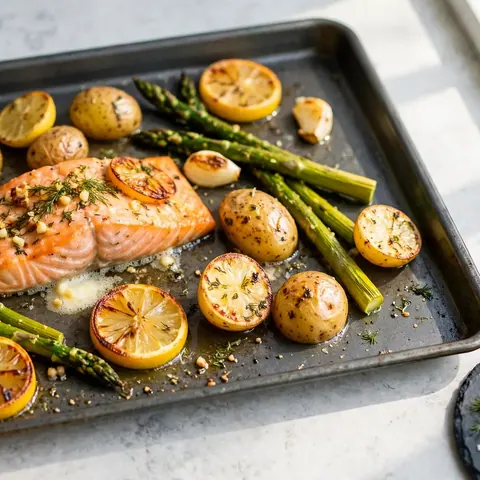
A complete dinner on one sheet pan featuring roasted baby potatoes, tender asparagus spears, and flaky salmon fillets brushed with fragrant lemon herb butter.
Published 12 min read
- Total time
- Prep
- Cook
- Rest
- Serves
- 4
- Cuisine
- American
- Calories
- 520
- per serving, estimated

On this page16 sections
Sheet pan suppers simplify dinner routines, but uneven cooking often ruins the promise. Dense root vegetables demand prolonged oven time, while delicate fish fillets dry out if left in dry heat for more than a few minutes. Staggering the cooking time by roasting baby potatoes first provides the exact balance required. Once the potatoes soften, salmon fillets and fresh asparagus join the pan to finish alongside a fragrant burst of lemon herb butter.
Sheet pan cooking remains one of the most reliable approaches for turning fresh pantry staples into an impressive, restaurant-worthy weeknight dinner. In this recipe, rich salmon fillets pair with crisp-tender asparagus spears and creamy baby potatoes. Everything roasts on a single rimmed baking sheet, minimizing post-dinner cleanup while coaxing deep caramelized flavor out of everyday ingredients. The secret to uniting these elements lies in a zesty compound butter loaded with minced garlic, fresh lemon zest, lemon juice, and finely chopped dill. As the pan roasts, that seasoned butter melts into the salmon and mingles with the roasting vegetables, creating an effortless self-basting sauce that coats every component in rich citrus and savory herb notes.
The appeal
Why you’ll love it
Staggering the cooking process prevents the classic pitfall of one-pan cooking, where proteins overcook while root vegetables remain unpleasantly firm. Dense baby potatoes require nearly thirty minutes of dry heat to break down their internal starch structure and develop a golden, crisp exterior. Conversely, rich salmon fillets and tender asparagus spears need only ten to twelve minutes to reach ideal doneness. Giving the potatoes an eighteen-minute head start allows them to soften and begin caramelizing before the delicate seafood enters the high-heat environment. This ensures that every component reaches its peak texture at the exact same moment on a shared baking surface.
The compound butter acts as both a protective barrier and an aromatic flavor vehicle during roasting. Pure butterfat contains milk solids that gently brown under dry oven heat, lending a nutty undertone to the bright acidity of the freshly squeezed citrus. Smearing this emulsion over the salmon flesh insulates the surface against dry air, locking natural moisture inside the protein fibers while preventing surface albumen from leaking excessively. Simultaneously, placing delicate wheels of fresh lemon over the buttered fillets provides localized steam, gently infusing bright citrus essential oils directly into the flaking fish without scorching the garlic.
What you need
Ingredients
Makes 4 servings.
Potatoes
Lemon Herb Butter
Salmon and Vegetables
Garnish
Contains:
- Fish
- Milk
Tools
Equipment
- Rimmed baking sheet (18x13-inch half sheet pan)
- Parchment paper or aluminum foil
- Small mixing bowl
- Pastry brush
- Instant-read digital thermometer
- Chef knife and cutting board
Swaps
Substitutions
Instead ofBaby potatoes
UseFingerling potatoes or standard red potatoes diced into uniform 3/4-inch pieces.
Instead ofAsparagus spears
UseSlender green beans or broccolini florets tossed in the same amount of oil.
Instead ofFresh dill
UseFinely minced fresh flat-leaf parsley, tarragon, or chives.
Good to know
Notes
Selecting uniform ingredients guarantees that every piece roasts at an identical rate across the sheet pan. Choose baby potatoes of similar size, halving them down the center so flat surfaces make full contact with the metal pan. When sourcing salmon, look for center-cut fillets of equal thickness, measuring roughly one to one-and-a-half inches thick. Thin tail pieces cook significantly faster than center portions and risk drying out during the twelve-minute roast. If working with variable cuts, tuck the thin end underneath the fillet to create an even, level profile before applying the garlic butter coating.
A heavy, light-colored aluminum half sheet pan provides the best thermal conductivity and structural rigidity for roasting. Dark nonstick baking sheets absorb excessive radiant heat, which can scorch the bottom of the potatoes before their interiors turn creamy and tender. Avoid crowding the sheet pan by giving the asparagus and salmon breathing room between clusters of potatoes. If ingredients are piled atop one another, moisture releases as steam rather than evaporating, preventing crisp roasted edges. Line your sheet pan with parchment paper or heavy foil for effortless cleanup without compromising the caramelization process.
Prep
Before you start
Organizing your workspace beforehand ensures smooth execution once the hot sheet pan leaves the oven. Begin by thoroughly washing and drying the baby potatoes, then slice each potato cleanly in half. Snap the tough, woody fibrous ends off the asparagus stalks by bending them near the base where they naturally yield. Mince the fresh garlic finely and chop the dill leaves, discarding stiff woody stems. Zest and juice the lemon into a small bowl before melting the butter. Pat the salmon fillets dry with clean paper towels on all sides; removing surface moisture helps the herb butter adhere evenly rather than sliding off the protein during baking.
Step by step
Method
Phase 1
Phase 1: Potato Par-Roasting
Step 1: Season the Halved Potatoes
Heat the oven to 400°F (204°C). Place the halved baby potatoes directly onto a large rimmed baking sheet. Drizzle with the olive oil, sprinkle with the kosher salt and black pepper, and toss thoroughly until every cut surface is evenly coated.
You’ll need: baby potatoes · olive oil · kosher salt · black pepper
Look for: The potatoes should show a glistening coating of oil with spices distributed across every surface.
Tip: Turn as many potato halves cut-side down as possible to promote direct browning against the hot metal pan.
Step 2: Roast the Potatoes First
Transfer the sheet pan to the middle oven rack. Roast the potatoes undisturbed for 18 to 20 minutes until they begin to soften and develop faint golden caramelization along their flat undersides, laying the foundation for an evenly timed dinner.
You’ll need: baby potatoes
Look for: Edges turn pale gold and a paring knife inserts into the centers with only moderate resistance.
Tip: Do not flip the potatoes halfway; allowing them to sit uninterrupted creates a deeply flavorful crisped crust.
Checkpoint
At the conclusion of the initial roasting phase, the baby potatoes should display pale golden coloration where cut sides meet the metal pan. An aroma of toasted starch and heated olive oil fills the kitchen. Piercing a potato with a small knife tip should meet slight resistance in the very core while the exterior feels soft and yielding. The potatoes should look lightly blistered and sizzling gently on the baking sheet. Verify that the pan surface has enough clear space remaining to accommodate the four fillets and asparagus before proceeding to assemble the rest of the meal.
Phase 2
Phase 2: Assembling the Sheet Pan
Step 3: Whisk the Lemon Herb Butter
Combine the warm melted butter, minced garlic, finely grated lemon zest, fresh lemon juice, and chopped dill in a small mixing bowl. Stir vigorously with a spoon or fork until emulsified and the garlic distributes uniformly throughout the mixture.
You’ll need: unsalted butter · garlic · lemon zest · lemon juice · fresh dill
Look for: The butter mixture turns opaque, speckled heavily with green herbs and minced yellow garlic flecks.
Tip: Keep the melted butter warm so it stays fully liquid and spreads smoothly over cold salmon flesh.
Step 4: Position and Brush the Salmon
Carefully pull the hot sheet pan from the oven. Push the potatoes toward one edge to clear room. Place the salmon fillets skin-side down across the center. Generously brush the top and sides of each fillet with the prepared lemon herb butter.
You’ll need: salmon fillets
Look for: Each salmon portion should be thoroughly cloaked under a thick, glossy layer of herb butter.
Tip: Leave roughly one inch of open space between fillets so hot air circulates evenly around the flesh.
Step 5: Arrange and Oil the Asparagus
Scatter the trimmed asparagus spears into the remaining open areas around the salmon fillets. Drizzle the asparagus with extra-virgin olive oil, rolling the spears gently with tongs or fingers to coat them thoroughly across all stems.
You’ll need: asparagus spears · extra-virgin olive oil
Look for: Asparagus spears glisten with a thin, even coat of oil without forming large puddles on the pan.
Tip: Snap off the woody bottom ends of the asparagus stalks by hand to remove tough fibrous sections naturally.
Step 6: Layer Lemon Slices Over Salmon
Lay two to three thin lemon slices directly across the seasoned surface of each salmon fillet. Press them down lightly into the herb butter coating so they adhere securely during roasting.
You’ll need: lemon
Look for: The bright yellow citrus wheels rest neatly on each fillet, partially shielding the center.
Tip: Slice lemons very thinly so heat easily penetrates through them to cook the underlying fish flesh evenly.
Checkpoint
Before sliding the fully loaded pan back into the oven, observe the layout of the ingredients. The potatoes should be gathered toward one side or flanking the perimeter, leaving an open center where salmon rests securely skin-side down. Each fish portion should glisten under an even, thick layer of dill-flecked garlic butter, topped neatly by thin lemon rounds. The asparagus spears must form a single layer, lightly glistening with olive oil without overlapping awkwardly. The herb mixture should emit a clean, pungent aroma of raw garlic, lemon oil, and aromatic fresh dill.
Phase 3
Phase 3: The Final Roast and Rest
Step 7: Roast Until Salmon Flakes Easily
Return the loaded sheet pan to the oven and roast at 400°F (204°C) for 10 to 12 minutes. Check that the salmon reaches a safe internal temperature of 145°F (63°C) and flakes easily with a fork, while asparagus tips blister lightly.
You’ll need: salmon fillets · asparagus spears · baby potatoes
Internal temperature 145°F (63°C)
Look for: Salmon turns opaque pink, flakes readily upon gentle pressure, and asparagus stems become tender-crisp.
Tip: Insert a digital probe into the thickest center section of the center fillet for an accurate temperature check.
Step 8: Garnish and Rest Before Serving
Remove the baking sheet from the oven and let the dish rest for 3 minutes. Scatter fresh dill fronds over the entire pan and arrange fresh lemon wedges along the edges before serving immediately.
You’ll need: fresh dill fronds · lemon wedges
Look for: Fragrant steam rises from the pan as the fresh dill wilts slightly against the warm salmon.
Tip: Squeeze the fresh warm lemon wedges over the fish and potatoes right before taking the first bite.
Checkpoint
As the final cooking timer elapses, the oven air should smell intensely of roasted seafood, sweet garlic, and charred lemon rind. The salmon flesh appears solid and matte pink, with edges that separate effortlessly into delicate flakes. The asparagus shows vibrant olive tones with lightly blistered, crisp tips. The potatoes sizzle with deeply bronzed crusts on their bottoms. After resting three minutes on the counter, the residual juices settle back into the fish fibers, keeping the flesh succulent while fresh dill fronds and lemon wedges are added for presentation.
Doneness
How to tell it’s done
Determining proper doneness relies on clear visual cues and precise internal temperature monitoring. Insert an instant-read digital thermometer horizontally into the thickest part of the central salmon fillet; it must register 145°F (63°C) to satisfy food safety standards. Visually, the salmon flesh transforms from translucent coral to an opaque, pale pink hue that yields and flakes cleanly when pressed lightly with the back of a fork. The asparagus spears should bend slightly under their own weight while displaying bright green color and blistered tips. Potatoes should feature deeply browned flat undersides and tender, creamy centers that yield instantly to a gentle poke with a paring knife.
Avoid these
Common mistakes
The most frequent error in sheet pan cooking is adding all ingredients simultaneously. Placing raw salmon alongside raw potatoes results in tough, dried-out fish long before the potatoes turn tender. Another pitfall is skipping the paper towel step for the salmon; surface moisture repels melted butter, causing the seasoning to pool uselessly on the metal pan instead of clinging to the protein. Avoid cutting potatoes into drastically different sizes, as smaller pieces will burn while larger halves remain hard. Finally, do not overcrowd the baking sheet. If the vegetables touch too tightly, trapped steam softens the textures into limp mush instead of creating crisp, roasted edges.
Cook safely
Food safety
Safe internal temperatures
Cook to at least these temperatures, measured with an instant-read thermometer in the thickest part.
| Food | Minimum internal temperature |
|---|---|
| Fish | 145°F (63°C) |
Better results
Tips
Tip 1
To ensure deep, uniform caramelization on the baby potatoes, place every halved piece cut-side down against the baking sheet before sliding it into the oven. Direct contact with the conductive metal surface fries the flat starch faces in the olive oil, forming a crisp, golden-brown crust reminiscent of pan-roasted potatoes. When you pull the pan out to add the salmon, leave the potatoes undisturbed on their cut faces rather than flipping them over; this allows the crust to deepen even further during the second half of roasting.
Tip 2
Pay close attention to the thickness of your asparagus stalks when shopping. Pencil-thin asparagus roasts extremely quickly and can shrivel within eight minutes, while jumbo stalks may require peeling or an extra two minutes of cooking to become tender. If using very slender spears, consider adding them during the final six minutes of baking rather than the full ten minutes. Conversely, medium-thick stalks match the cooking time of one-inch thick salmon fillets perfectly, emerging from the oven tender-crisp with pleasantly charred, blistered floral tips.
Make it yours
Variations
Mediterranean Olive and Feta
Add a handful of pitted Kalamata olives and cherry tomatoes to the pan alongside the asparagus. Scatter crumbled sheep milk feta over the vegetables right as the sheet pan finishes roasting.
Smoky Paprika Butter
Incorporate half a teaspoon of smoked Spanish paprika and a pinch of ground cayenne pepper into the melted lemon butter before brushing it over the salmon fillets and tossing the potatoes.
Parmesan Crusted Asparagus
Sprinkle two tablespoons of finely grated Parmesan cheese over the oiled asparagus spears during the final four minutes of roasting so the cheese melts and forms a crisp golden coating.
Fresh Tarragon and Shallot
Swap the fresh dill for finely minced tarragon and add one minced shallot into the warm garlic butter mixture for an elegant French-inspired anise flavor profile that pairs wonderfully with rich salmon.
On the table
Serving suggestions
Present the dish directly from the sheet pan for a relaxed, communal dining experience, or divide the ingredients cleanly across warmed dinner plates. Arrange a bed of roasted potatoes alongside several blistered asparagus spears, placing a salmon fillet across the center. Garnish generously with fresh dill fronds to provide a burst of grassy color against the golden-brown crusts. Serve with extra lemon wedges so each person can squeeze fresh citrus juice over their portion right before eating, reviving the bright flavors and cutting through the rich butter.
This complete sheet pan dinner requires very little accompaniment, but pairing it with complementary sides elevates the table. A crisp mixed green salad tossed with shaved fennel, radishes, and a light white wine vinaigrette provides refreshing crunch and acidity alongside the rich fish. Crusty sourdough bread or warm garlic baguettes work wonderfully for mopping up the seasoned pan juices that pool around the roasted vegetables. For a wine pairing, select a crisp, dry white such as Sauvignon Blanc, Pinot Grigio, or unoaked Chardonnay.
Leftovers
Storage & make-ahead
- Fridge
- Keep in an airtight container for up to 3 days. Cool completely within 2 hours before chilling.
- Freezer
- Freezing is not recommended as roasted potatoes and asparagus lose their crisp texture when thawed.
- Reheat
- Warm on a baking sheet at 300°F (150°C) for 8 to 10 minutes until heated through without drying the fish.
Store leftover roasted salmon, asparagus, and potatoes in an airtight glass or plastic container in the refrigerator within two hours of cooking. To maintain optimal texture, place a small square of parchment paper over the fish before closing the lid to prevent condensation from softening the crust. Consume within three days for best flavor and texture. Because cooked fish can release moisture over time, avoid storing the cold leftover lemon wedges directly against the salmon fillets, as prolonged contact with citric acid can slowly alter the delicate protein structure.
Make ahead
Prepare components ahead of time to make weeknight assembly entirely seamless. You can wash, dry, and halve the baby potatoes up to twenty-four hours in advance, keeping them submerged in cold water in the refrigerator to prevent surface discoloration; dry them thoroughly with towels before oiling. The lemon herb butter can be whisked together up to two days ahead and stored chilled; simply microwave it for ten seconds until warm and liquid before brushing onto the fish. Trim the asparagus and slice the lemons in advance so only assembly remains at dinner time.
Questions
Frequently asked questions
Can frozen salmon fillets be used for this recipe?
Thaw frozen salmon completely in the refrigerator overnight before preparing this meal. Pat the thawed fish completely dry with paper towels to eliminate excess water that prevents seasoning adhesion. Cooking frozen fish directly on the pan causes water to pool, steaming the salmon and asparagus rather than roasting them to a flaky, tender texture.
Why did white residue appear on the salmon during baking?
The white substance is albumen, a naturally occurring liquid protein that coagulates and pushes to the surface as fish muscle fibers contract under heat. While completely safe to eat, excessive albumen often indicates that the oven temperature was slightly too intense or the fish cooked past its ideal temperature. Roasting at 400°F minimizes this.
How can soggy sheet pan vegetables be avoided?
Soggy vegetables result from overcrowding the pan, which traps escaping moisture as steam instead of allowing it to evaporate quickly into the dry oven environment. Ensure the potatoes and asparagus remain in a loose, single layer across the rimmed sheet pan. Use a half-sheet pan measuring eighteen by thirteen inches for proper airflow.
Should salmon skin be removed before cooking?
Keep the salmon skin intact during roasting. The skin forms an insulating barrier between the delicate fish meat and the hot metal baking sheet, preventing overcooking and locking natural juices inside the fillet. The skin also makes it exceptionally easy to lift the entire cooked fillet off the sheet pan using a spatula.
Can dried dill be substituted for fresh dill?
Fresh dill provides the vibrant, bright herbal note characteristic of this dish. If fresh dill is unavailable, substitute one teaspoon of dried dill weed whisked into the melted butter. Reduce the quantity because dried herbs have a more concentrated flavor profile, and garnish the finished dish with fresh parsley for color.
Everything in one place: the recipe card below gathers the ingredients, steps and estimated nutrition, ready to print.
Recipe card
Sheet Pan Lemon Herb Salmon with Potatoes and Asparagus
A complete dinner on one sheet pan featuring roasted baby potatoes, tender asparagus spears, and flaky salmon fillets brushed with fragrant lemon herb butter.
- Prep
- Cook
- Rest
- Total
- Servings
- 4 servings
Ingredients
Potatoes
- 1 lb baby potatoes, halved
- 1 tbsp olive oil
- 1/2 tsp kosher salt
- 1/4 tsp black pepper
Lemon Herb Butter
- 3 tbsp unsalted butter, melted
- 2 cloves garlic, minced
- 1 tsp lemon zest
- 1 tbsp lemon juice
- 1 1/2 tbsp fresh dill, chopped
Salmon and Vegetables
- 4 salmon fillets (about 6 oz each)
- 1 lb asparagus spears, trimmed
- 1 tbsp extra-virgin olive oil
Garnish
- 1 lemon, thinly sliced
- 1 tbsp fresh dill fronds, for garnish
- 1 lemon wedges, for serving
Instructions
Season the Halved Potatoes. Heat the oven to 400°F (204°C). Place the halved baby potatoes directly onto a large rimmed baking sheet. Drizzle with the olive oil, sprinkle with the kosher salt and black pepper, and toss thoroughly until every cut surface is evenly coated.
Roast the Potatoes First. Transfer the sheet pan to the middle oven rack. Roast the potatoes undisturbed for 18 to 20 minutes until they begin to soften and develop faint golden caramelization along their flat undersides, laying the foundation for an evenly timed dinner.
Whisk the Lemon Herb Butter. Combine the warm melted butter, minced garlic, finely grated lemon zest, fresh lemon juice, and chopped dill in a small mixing bowl. Stir vigorously with a spoon or fork until emulsified and the garlic distributes uniformly throughout the mixture.
Position and Brush the Salmon. Carefully pull the hot sheet pan from the oven. Push the potatoes toward one edge to clear room. Place the salmon fillets skin-side down across the center. Generously brush the top and sides of each fillet with the prepared lemon herb butter.
Arrange and Oil the Asparagus. Scatter the trimmed asparagus spears into the remaining open areas around the salmon fillets. Drizzle the asparagus with extra-virgin olive oil, rolling the spears gently with tongs or fingers to coat them thoroughly across all stems.
Layer Lemon Slices Over Salmon. Lay two to three thin lemon slices directly across the seasoned surface of each salmon fillet. Press them down lightly into the herb butter coating so they adhere securely during roasting.
Roast Until Salmon Flakes Easily. Return the loaded sheet pan to the oven and roast at 400°F (204°C) for 10 to 12 minutes. Check that the salmon reaches a safe internal temperature of 145°F (63°C) and flakes easily with a fork, while asparagus tips blister lightly.
Garnish and Rest Before Serving. Remove the baking sheet from the oven and let the dish rest for 3 minutes. Scatter fresh dill fronds over the entire pan and arrange fresh lemon wedges along the edges before serving immediately.
Allergens: Fish, Milk
Nutrition (estimated, per serving)
- Calories
- 520 kcal
- Protein
- 38 g
- Carbs
- 26 g
- Fat
- 30 g
- Fiber
- 4.5 g
- Sugar
- 3 g
- Sodium
- 460 mg
Estimates only: values vary with brands, substitutions and portion sizes.
Recipe by WixForum Kitchen · wixforum.com
Share this recipe
Send it to someone who’d love it, or save it for later.
Spotted a mistake in this recipe? Let us know.
Keep cooking


